

Albert Günther
German-born British zoologist (1830–1914)
- 4 min read
- 5 chapters

Related on Lably
Through Binomial nomenclature, Africa and Sri Lanka
Early life and career
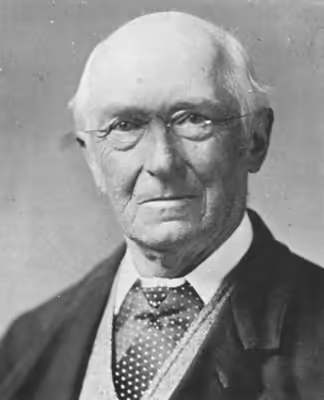
Günther was born in Esslingen in Swabia (Württemberg). His father Friedrich Gotthilf Günther (1800–1835) was a Stiftungs-Commissar in Esslingen and his mother, Eleonora Louise née Nagel (1806–1899)l, was from Bremen. He initially schooled at the Stuttgart Gymnasium. His family wished him to train for the ministry of the Lutheran Church for which he moved to the University of Tübingen. A brother shifted from theology to medicine, and he, too, turned to science and medicine at Tübingen in 1852. His first work was "Ueber den Puppenzustand eines Distoma" (On the pupal state of Distoma). He graduated in medicine with an M.D. from Tübingen in 1858, the same year in which he published a handbook of zoology for students of medicine. His mother moved to England, and when he visited the country in 1855, he met John Edward Gray and Professor Richard Owen at the British Museum. This led to an offer to work at the British Museum in 1857, where his first task was to classify 2000 snake specimens. After the death of John Edward Gray in 1875, Günther was appointed Keeper of Zoology at the Natural History Museum, a position he held until 1895. The major work of his life was the eight-volume Catalogue of Fishes (1859–1870, Ray Society). He also worked on the reptiles and amphibians in the museum collection. In 1864, he founded the Record of Zoological Literature and served as editor for six years. He was one of the editors for the Annals and Magazine of Natural History for more than thirty years. His landmark paper on tuatara anatomy was the first to establish that the tuatara reptile was not a lizard, but in fact the only living member of an entirely new group of reptiles, which he named Rhynchocephalia. Fossil and genetic evidence have subsequently confirmed Günther's assertion, and the tuatara is now recognised as the only living member of a once diverse lineage that shared a common ancestor with Squamata (lizards and snakes) over 240 million years ago.
Sign in to keep reading
4 more chapters are free with a Lably account.
Royal Society
Günther was elected fellow of the Royal Society in 1867 and served as vice-president 1875–6. He served on the council of the Zoological Society for nearly 40 years (1868–1905). He was elected a fellow of the Linnaean Society in 1877 and was president 1896–1900. He became a naturalised British citizen in 1874. Günther died at Kew Gardens on 1 February 1914.
Family
Günther married, firstly, in 1868, Roberta Mitchell née McIntosh (1842–1869), sister of William M'Intosh. They had one son, the historian Robert William Theodore Günther (1869–1940). Roberta died shortly after his birth.
In 1879 he married again, to Theodora Dowrish née Drake (1863–1944). They had a son Frederic Albert Günther (1883–1953), a merchant; and a daughter Theodora Alberta Günther (1889–1908) who died aged nineteen.
Taxon described by him
- See Category:Taxa named by Albert Günther
Legacy
Albert Günther is commemorated in the scientific names of many species of reptiles.
- Aparallactus guentheri – an African venomous snake
- Aspidura guentheri – a Sri Lankan snake
- Atractus guentheri – a Brazilian snake
- Chalcides guentheri – a Near Eastern lizard
- Christinus guentheri – an Australian lizard
- Coluber gracilis– an Indian snake, known as Günther's racer
- Draco guentheri – a Philippine lizard
- Elapsoidea guentherii – an African venomous snake
- Erythrolamprus albertguentheri – a South American snake
- Erythrolamprus guentheri – a South American snake
- Euspondylus guentheri – a South American lizard
- Holaspis guentheri – an African lizard
- Lycodryas guentheri – a Malagasy snake
- Monopeltis guentheri – an African amphisbaenian
- Perochirus guentheri – a South Pacific lizard
- Phelsuma guentheri – a Mauritian lizard
- Plectrurus guentheri – an Indian snake
- Proctoporus guentheri – a South American lizard
- Ramphotyphlops guentheri – an Australian snake
- Riopa guentheri – an Indian lizard
- Ristella guentheri – an Indian lizard
- Scelotes guentheri – an extinct South African lizard
- Sphenodon guntheri – a New Zealand rhynchocephalian
- Stegonotus guentheri – a Papua New Guinean snake
- Stenocercus guentheri – a South American lizard
- Trachischium guentheri – an Asian snake
- Uroplatus guentheri – a Malagasy lizard
- Urotheca guentheri – a Central American snake
- Xenodon guentheri – a Brazilian snake
Amphibians
- The Brazilian Frog, Boana guentheri (Boulenger, 1886)
- The Solomon Island Leaf Frog Cornufer guentheri (Boulenger, 1884
- The Andean Frog Gastrotheca guentheri (Boulenger, 1882)
- The South American Frog, Ischnocnema guentheri (Steindachner, 1864)
- The Southern Crested Toad Peltophryne guentheri (Cochran, 1941)
- The Caribbean Toad Peltophryne guentheri (Cochran, 1941)
- An Asian frog, Sylvirana guentheri (Boulenger, 1882)
- Günther's toadlet
As well as fish:
- The carnivorous species of catfish Astroblepus guentheri (Boulenger, 1887)
- The Crochet Butterfly fish, Chaetodon guentheri C. G. E. Ahl, 1923
- Lepidotrigla guentheri Hilgendorf, 1879
- The African killifish, Nothobranchius guentheri (Pfeffer, 1893) (Red-tail nothobranchius)