

Celiac plexus
Complex network of nerves located in the upper abdomen
- 1 min read
- 3 chapters

Related on Lably
Through Abdomen and Organ (biology)
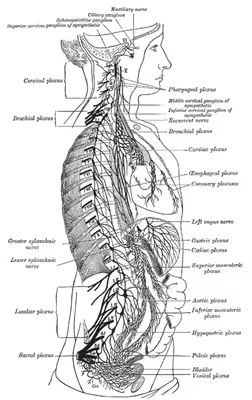
The plexus is formed in part by the greater and lesser splanchnic nerves of both sides, and fibers from the anterior and posterior vagal trunks.
The celiac plexus proper consists of the celiac ganglia with a network of interconnecting fibers. The aorticorenal ganglia are often considered to be part of the celiac ganglia, and thus, part of the plexus.
Structure
The celiac plexus includes a number of smaller plexuses:
- Hepatic plexus
- Splenic plexus
- Gastric plexus
- Pancreatic plexus
- Suprarenal plexus
Other plexuses that are derived from the celiac plexus:
- Renal plexus
- Testicular plexus / ovarian plexus
- Superior mesenteric plexus
Sign in to keep reading
2 more chapters are free with a Lably account.
Terminology
The celiac plexus is often popularly referred to as the "solar plexus". In the context of sparring or injury, a strike to the region of the stomach around the celiac plexus may cause the diaphragm to spasm, resulting in difficulty in breathing—a sensation commonly known as "getting the wind knocked out of you". It may also affect the celiac plexus itself, which can cause great pain and interfere with the functioning of the viscera.
Clinical significance
A blunt injury to the celiac plexus normally resolves with rest and deep breathing.
Intractable pain related to chronic pancreatitis may be an indication for celiac plexus ablation.
A celiac plexus block to treat intractable pain from cancers such as pancreatic cancer may be performed by pain management specialists and radiologists using a fluoroscopically or CT scan-guided injection.