


Related on Lably
Through Stereoisomerism, Lemon and Orange (fruit)
Natural Occurrence
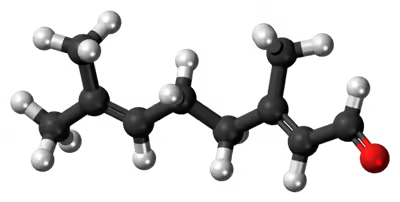
Citral is present in the volatile oils of several plants:
- lemon myrtle (90–98%)
- Litsea citrata (90%)
- Litsea cubeba (70–85%)
- lemongrass (65–85%)
- lemon tea-tree (70–80%)
- Ocimum gratissimum (66.5%)
- Lindera citriodora (about 65%)
- Calypranthes parriculata (about 62%)
- petitgrain (36%)
- lemon verbena (30–35%)
- lemon ironbark (26%)
- lemon balm (11%)
- lime (6–9%)
- lemon (2–5%)
- orange
Of the many sources of citral, the Australian tree Backhousia citriodora (family Myrtaceae) is considered superior.
Sign in to keep reading
One more chapter is free with a Lably account.
Uses
Citral is a precursor in the industrial production of vitamin A, vitamin E, vitamin K.
Citral is also precursor to lycopene, ionone and methylionone.
Fragrances
Citral has a strong lemon (citrus) scent and is used as an aroma compound in perfumery. It is used to fortify lemon oil presenting as sharp, lemon, sweet, fresh, juicy, lemon peel, tart, and green. (Neral, the (E)-isomer, has a less sweet citrus, lemon, lemon peel note, whilst Geranial, the (E)-isomer is described as citrus, lemon.) The aldehydes citronellal and citral are considered key components responsible for the lemon note with citral preferred.
It also has pheromonal effects in acari and insects.
The herb Cymbopogon citratus has shown promising insecticidal and antifungal activity against storage pests.
Food additive
Citral is commonly used as a food additive ingredient.
It has been tested (2016) in vitro against the food-borne pathogen Cronobacter sakazakii.