

Ferrocerium
Pyrophoric alloy whose primary components are cerium and iron
- 2 min read
- 3 chapters

Related on Lably
Through Alloy, Lanthanide and Friction
Ferrocerium has many commercial applications, such as the ignition source for cigarette or cigar lighters, strikers for gas welding and cutting torches, deoxidization in metallurgy, and ferrocerium rods. Because of ferrocerium's ability to ignite in adverse conditions, rods of ferrocerium (also called ferro rods, spark rods, and flint-spark-lighters) are commonly used as an emergency firelighting device in survival kits. The ferrocerium is referred to as a "flint" in this case, as both are used in fire lighting. However, ferrocerium and natural flint have opposite mechanical operation.
Discovery
Ferrocerium alloy was invented in 1903 by the Austrian chemist Carl Auer von Welsbach. It takes its name from its two primary components: iron (from Latin: ferrum), and the rare-earth element cerium, which is the most prevalent of the lanthanides in the mixture. Except for the extra iron and magnesium oxides added to harden it, the mixture is approximately the combination found naturally in tailings from thorium mining, which Auer von Welsbach was investigating. The pyrophoric effect is dependent on the brittleness of the alloy and its low autoignition temperature.
Sign in to keep reading
2 more chapters are free with a Lably account.
Composition
In Auer von Welsbach's first alloy, 30% iron (ferrum) was added to purified cerium, hence the name "ferro-cerium". Two subsequent Auermetalls were developed: the second also included lanthanum to produce brighter sparks, and the third added other heavy metals.
A modern ferrocerium firesteel product is composed of an alloy of rare-earth metals called mischmetal, containing approximately 20.8% iron, 41.8% cerium, about 4.4% each of praseodymium, neodymium, and magnesium, plus 24.2% lanthanum. A variety of other components are added to modify the spark and processing characteristics. Most contemporary ferrocerium rods are hardened with iron oxide and magnesium oxide.
Uses
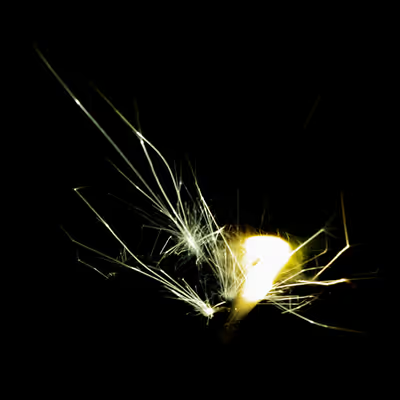
Ferrocerium is used in fire lighting in conjunction with a striker, similarly to natural flint-and-steel, though ferrocerium takes on the opposite role to the traditional system; instead of a natural flint rock striking tiny iron particles from a firesteel, a striker (which may be in the form of a hardened steel wheel) strikes particles of ferrocerium off of the "flint". This manual rubbing action creates a spark due to cerium's low ignition temperature between 150–180 °C (302–356 °F). Any material that is harder than the rod itself may be used to produce sparks. Though the striker must have a sharp corner, sharp edge, or a knurled surface in order to produce sparks, carbon steel is not required. The idea that carbon steel is needed to produce sparks from a ferrocerium rod is an oft repeated myth, though carbon steel does make the spark more prevalent when striking.
Ferrocerium is most commonly used to start Bunsen burners and oxyacetylene welding torches.
About 700 tons were produced in 2000.