

Intensive care unit
Hospital ward that provides intensive care medicine
- 4 min read
- 6 chapters

Related on Lably
Through Patient, Life support and Disease
An intensive care unit was defined by the task force of the World Federation of Societies of Intensive and Critical Care Medicine as "an organized system for the provision of care to critically ill patients that provides intensive and specialized medical and nursing care, an enhanced capacity for monitoring, and multiple modalities of physiologic organ support like an endotracheal tube, a gastric feeding pump, EEGs and EKGs to sustain life during a period of life-threatening organ system insufficiency."
Patients may be referred directly from an emergency department or from a ward if they rapidly deteriorate, or immediately after surgery if the surgery is very invasive and the patient is at high risk of complications.
History
In 1854, Florence Nightingale left for the Crimean War, where triage was used to separate seriously wounded soldiers from those with non-life-threatening conditions. Nightingale provided several simple but powerful interventions: a clean environment, medical equipment, clean water, and fruits. With this work, the mortality rate decreased from 60% to 42% and then to 2.2%
In response to a polio epidemic (where many patients required constant ventilation and surveillance), Bjørn Aage Ibsen established the first intensive care unit globally in Copenhagen in 1953.
The first application of this idea in the United States was in 1951 by Dwight Harken. Harken's concept of intensive care has been adopted worldwide and has improved the chance of survival for patients. He opened the first intensive care unit in 1951.
In 1955, William Mosenthal, a surgeon at the Dartmouth-Hitchcock Medical Center also opened an early intensive care unit. In the 1960s, the importance of cardiac arrhythmias as a source of morbidity and mortality in myocardial infarctions (heart attacks) was recognized. This led to the routine use of cardiac monitoring in ICUs, especially after heart attacks.
Sign in to keep reading
5 more chapters are free with a Lably account.
Types
Hospitals may have various specialized ICUs that cater to a specific medical requirement or patient:
Equipment and systems
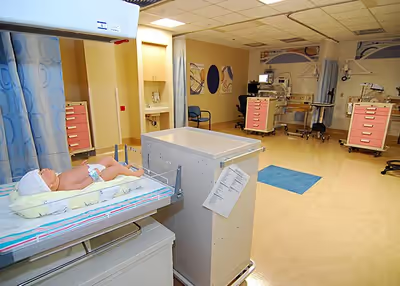
Common equipment in an ICU includes mechanical ventilators to assist breathing through an endotracheal tube or a tracheostomy tube; cardiac monitors for monitoring cardiac condition; equipment for the constant monitoring of bodily functions; a web of intravenous lines, feeding tubes, nasogastric tubes, suction pumps, drains, and catheters, syringe pumps; and a wide array of drugs to treat the primary condition(s) of hospitalization. Medically induced comas, analgesics, and induced sedation are common ICU tools needed and used to reduce pain and prevent secondary infections.
Burn recovery bed
Quality of care
The available data suggests a relation between ICU volume and quality of care for mechanically ventilated patients. After adjustment for severity of illnesses, demographic variables, and characteristics of different ICUs (including staffing by intensivists), higher ICU staffing was significantly associated with lower ICU and hospital mortality rates. A ratio of 2 patients to 1 nurse is recommended for a medical ICU, which contrasts to the ratio of 4:1 or 5:1 typically seen on medical floors. This varies from country to country, though; e.g., in Australia and the United Kingdom, most ICUs are staffed on a 2:1 basis (for high-dependency patients who require closer monitoring or more intensive treatment than a hospital ward can offer) or on a 1:1 basis for patients requiring extreme intensive support and monitoring; for example, a patient on multiple vasoactive medications to keep their blood pressure high enough to perfuse tissue. The patient may require multiple machines; Examples: continuous dialysis CRRT, a intra-aortic balloon pump, ECMO.
International guidelines recommend that every patient gets checked for delirium every day (usually twice or as much required) using a validated clinical tool. The two most widely used are the Confusion Assessment Method for the ICU (CAM-ICU) and the Intensive Care Delirium Screening Checklist (ICDSC). There are translations of these tools in over 20 languages and they are used globally in many ICU's. Nurses are the largest group of healthcare professionals working in ICUs. There are findings which have demonstrated that nursing leadership styles have impact on ICU quality measures particularly structural and outcomes measures.
Operational logistics
In the United States, up to 20% of hospital beds can be labelled as intensive-care beds; in the United Kingdom, intensive care usually will comprise only up to 2% of total beds. This high disparity is attributed to admission of patients in the UK only when considered the most severely ill.
Intensive care is an expensive healthcare service. A recent study conducted in the United States found that hospital stays involving ICU services were 2.5 times more costly than other hospital stays.
In the United Kingdom in 2003–04, the average cost of funding an intensive care unit was:
- £838 per bed per day for a neonatal intensive care unit
- £1,702 per bed per day for a pediatric intensive care unit
- £1,328 per bed per day for an adult intensive care unit
Remote collaboration systems
Some hospitals have installed teleconferencing systems that allow doctors and nurses at a central facility (either in the same building, at a central location serving several local hospitals, or in rural locations another more urban facility) to collaborate with on-site staff and speak with patients (a form of [telemedicine]). This is variously called an eICU, virtual ICU, or tele-ICU. Remote staff typically have access to vital signs from live monitoring systems, and electronic health records so they may have access to a broader view of a patient's medical history. Often bedside and remote staff have met in person and may rotate responsibilities. Such systems are beneficial to intensive care units in order to ensure correct procedures are being followed for patients vulnerable to deterioration, to access vital signs remotely in order to keep patients that would have to be transferred to a larger facility if need be he/she may have demonstrated a significant decrease in stability.