


Related on Lably
The first known use of heated metal to "iron" clothes is known to have occurred in China. The electric iron was invented in 1882, by Henry W. Seely. Seely patented his "electric flatiron" on June 6, 1882 (U.S. Patent no. 259,054).
Equipment
Iron
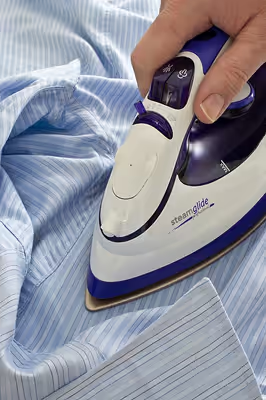
The iron is the small appliance used to remove wrinkles from fabric. It is also known as a clothes iron, steam iron, flat iron, smoothing iron or iron box.
On 15 February 1858 W. Vandenburg and J. Harvey patented an ironing table that facilitated pressing sleeves and pant legs. A truly portable folding ironing board was first patented in Canada in 1875 by John B. Porter. The invention also included a removable press board used for sleeves. In 1892 Sarah Boone obtained a patent in the United States for improvements to the ironing board, allowing for better quality ironing for shirt sleeves.
Tailor's ham
A tailor's ham or dressmaker's ham is a tightly stuffed pillow in the shape of a ham used as a mold when pressing curves such as sleeves or collars.
Commercial equipment
Commercial dry cleaning and full-service laundry providers usually use a large appliance called a steam press to do most of the work of ironing clothes. Alternatively, a rotary iron may be used.
Historically, larger tailors' shops included a tailor's stove, used to quickly and efficiently heat multiple irons. In many developing countries a cluster of solid irons, heated alternatively from a single heating source, are used for pressing clothes at small commercial outlets.
Sign in to keep reading
One more chapter is free with a Lably account.
Chemistry
When the fabric is heated, the molecules are more easily reoriented. In the case of cotton fibres, which are derivatives of cellulose, the hydroxyl groups that crosslink the cellulose polymer chains are reformed at high temperatures and become somewhat "locked in place" upon cooling the item. In permanent press pressed clothes, chemical agents such as dimethylol ethylene urea are added as crosslinking agents.