

John Macleod (physiologist)
Scottish biochemist and physiologist (1876–1935)
- 7 min read
- 1 chapter

Related on Lably
Through Physiology, Insulin and Biochemistry
Biography
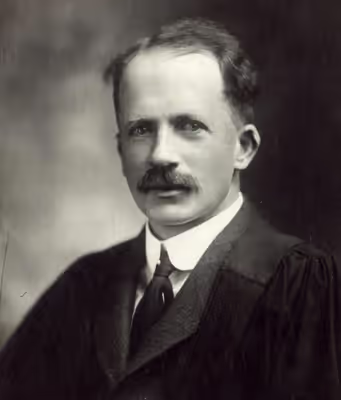
Macleod was born in Clunie, near Dunkeld in Perthshire. Soon after he was born, his father Robert Macleod, a minister of the Free Church, was transferred to Aberdeen, where John attended Aberdeen Grammar School and enrolled in the study of medicine at the University of Aberdeen. At the University of Aberdeen, one of MacLeod's principal teachers was the young professor John Alexander MacWilliam. He was awarded his medical degree with honours in 1898 and then spent a year studying biochemistry at the University of Leipzig, Germany, on a travelling scholarship. He became a demonstrator at the London Hospital Medical School, where in 1902 he was appointed lecturer in biochemistry. In the same year, he was awarded a doctorate in public health from Cambridge University. Around that time he published his first research article, a paper on phosphorus content in muscles.
In 1903, Macleod became a lecturer in physiology at the Western Reserve University in Cleveland, Ohio, where he remained for 15 years. This was the period when he developed an interest in carbohydrate metabolism that was to last for the rest of his career.
In 1910, he delivered a lecture on various forms of experimental diabetes and their significance for diabetes mellitus at the joint meeting of the section on Pharmacology and Therapeutics and the section on Pathology and Physiology of the American Medical Association.
In 1916, he was a Professor of Physiology at McGill University in Montreal, Canada. After the First World War, he went on to teach physiology at the University of Toronto, where he became director of the physiology lab and an assistant to the dean of the medical faculty, Thorburn Brailsford Robertson. He researched various topics in physiology and biochemistry, among which were the chemism of Mycobacterium tuberculosis, electroshocks, creatinine metabolism and blood circulation in the brain.
In 1905 he became interested in carbohydrate metabolism and diabetes, publishing a series of scientific papers and several monographs on the subject from then on. Additionally, Macleod was a popular lecturer and an influential contributor to the development of the six-year course in medicine at the University of Toronto.
Frederick Banting and the discovery of insulin
At the end of 1920, Macleod was approached by Frederick Banting, a young Canadian physician who had the idea of curing diabetes using an extract from a pancreas whose functioning had been disrupted. Macleod was not enthusiastic, because (unlike Banting) he knew about unsuccessful experiments in this direction by other researchers. He thought it more likely that the nervous system had a crucial role in regulating blood glucose concentration. Even though Banting had virtually no experience of physiology, he managed to convince Macleod to lend him laboratory space during a holiday in Scotland that summer. In addition to the laboratory, Macleod provided experimental animals and his student Charles Best, who worked as a demonstrator. Macleod also advised on project planning and the use of analytical techniques, and assisted with the operation on the first dog. While Macleod was away, Banting and Best achieved a breakthrough: they isolated an internal secretion of the pancreas and succeeded in reducing the blood sugar level of another dog, whose pancreas had been surgically removed.
On his return, Macleod was surprised and expressed doubt about the results. Banting took this as an attack on his integrity. They argued bitterly, but Banting finally accepted Macleod's instruction that further experiments were needed, and he even convinced Macleod to provide better working conditions and to give him and Best a salary. Further experiments were successful and the three started to present their work at meetings. Macleod was a far better orator, and Banting came to believe that he wanted to take all the credit. This was exemplified by a December 1921 presentation to the American Physiological Society at Yale, which took a toll on Banting's nerves due to the "prestige of the audience" causing him to freeze up, and as a result the "audience was highly critical of the findings presented". Macleod who was "desperate to snatch victory from the jaws of defeat" stepped in and finished the presentation. From Banting's viewpoint, "this was a brazen coup by Macleod to rob him of the credit for having discovered insulin – and to rub salt into the wound, it had been done in front of the most eminent doctors in the field".
Their discovery was first published in the February 1922 issue of The Journal of Laboratory and Clinical Medicine. Macleod declined co-authorship because he considered it Banting's and Best's work. Despite their success, there remained the issue of how to get enough pancreas extract to continue the experiments. Together, the three researchers developed alcohol extraction, which proved to be far more efficient than other methods. This convinced Macleod to divert the whole laboratory to insulin research and to bring in the biochemist James Collip to help with purifying the extract.
The first human clinical trial was unsuccessful. Banting was insufficiently qualified to participate and felt sidelined. By the winter of 1922, he was certain that all Macleod's colleagues were conspiring against him. There was a reported physical altercation between Banting and Collip, as Banting saw Collip's breakthrough on alcohol purification as a threat, while Collip was reluctant to share the details. Collip threatened to leave because of the strained atmosphere but the encouragement of others who saw the potential of their research prevented escalation of the conflict. In January 1922, the team performed the first successful clinical trial, on 13-year-old Leonard Thompson, and it was soon followed by others.
Although all the team members were listed as co-authors of their publications, Banting still felt overlooked, because Macleod took over the coordination of clinical trials and the acquisition of larger amounts of extract. Macleod's presentation at a meeting of the Association of American Physicians in Washington, D.C., on 3 May 1922 received a standing ovation, but Banting and Best refused to participate in protest. At that time, demonstrations of the method's efficiency drew huge public interest, because the effect on patients, especially children, who until then were bound to die, seemed almost miraculous. The pharmaceutical company Eli Lilly & Co. took over mass production, but without an exclusive license, as the patent was transferred to the Medical Research Council to prevent exploitation.
In the summer of 1923 Macleod resumed other research. He took interest in teleost fish, which have separate regions of islet and acinar tissue in their pancreas. Working at the Marine Biological Station in St. Andrews, New Brunswick, he made extracts from each of those parts separately and proved that insulin is derived from the insular and not the acinar tissue of the pancreas. Meanwhile, Banting remained in Toronto and relationships soon deteriorated again because of conflicting press accounts. Banting eventually started to claim that he deserved all the credit and that Macleod had only hindered him the whole time and had made no contribution other than to leave the keys to the laboratory when he went on vacation. MacLeod wrote a report on the discovery in 1922 to explain his side of the story, but otherwise refrained from active involvement in controversy about credit. Banting hated him passionately, and the two never spoke again. When Macleod left the University of Toronto in 1928, Banting harbored such enmity that he refused to attend the farewell dinner for Macleod.
Later years
Macleod returned to Scotland in 1928 to become Regius Professor of Physiology at the University of Aberdeen (in succession to his former teacher, John Alexander MacWilliam who retired in 1927) and later Dean of the University of Aberdeen Medical Faculty. Between 1929 and 1933 he was also a member of the Medical Research Council.
Macleod did not continue to work on insulin, but he remained active as a researcher, lecturer and author. His last major contribution was a proof that the central nervous system does have an important role in maintaining carbohydrate metabolism balance, as was his original hypothesis. His theory about conversion of fats into carbohydrates remained unproven, despite his provision of several indirect proofs. He devoted his spare time to golf, motorcycling and painting.
He married Mary Watson McWalter (1876–1940) in 1903, but they never had children. He died in 1935 in Aberdeen after several years of suffering from arthritis, despite which he remained active almost until his death. In 1933 he made a lecture tour of the US, and in 1934 he published the 7th edition of his book Physiology and Biochemistry in Modern Medicine.