

Lagerstätte
Sedimentary deposit with well-preserved extraordinary fossils
- 3 min read
- 3 chapters

Related on Lably
Worldwide, some of the best examples of near-perfect fossilization are the Cambrian Maotianshan shales and Burgess Shale, the Ordovician Fezouata Biota, Beecher's Trilobite Bed, and Soom Shale, the Silurian Waukesha Biota, the Devonian Rhynie Chert, Hunsrück Slates, and Gogo Formation, the Carboniferous Mazon Creek, the Triassic Madygen Formation, the Jurassic Posidonia Shale and Solnhofen Limestone, the Cretaceous Yixian, Santana, and Agua Nueva formations and the Tanis Fossil Site, the Eocene Fur Formation, Green River Formation, Messel Formation and Monte Bolca, the Miocene Foulden Maar and Ashfall Fossil Beds, the Pliocene Gray Fossil Site, and the Pleistocene Naracoorte Caves and La Brea Tar Pits.
Types
Palaeontologists distinguish two major kinds:
- Konzentrat-Lagerstätten (concentration Lagerstätten) are deposits with a particular "concentration" of disarticulated organic hard parts, such as a bone bed. Their contents invariably display a large degree of time averaging, as the accumulation of bones in the absence of other sediment takes some time. Deposits with a high concentration of fossils that represent an in situ community, such as reefs or oyster beds, are not considered Lagerstätten.
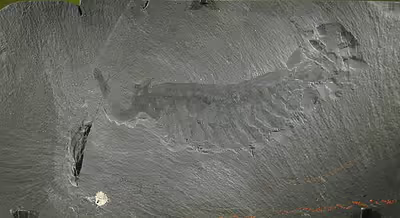
- Konservat-Lagerstätten (conservation Lagerstätten) are deposits known for the exceptional preservation of fossilized organisms or traces. The individual taphonomy of the fossils varies with the sites. Conservation Lagerstätten are crucial in elucidating important moments in the history and evolution of life. For example, the Burgess Shale of British Columbia is associated with the Cambrian explosion, and the Solnhofen limestone with the earliest known bird, Archaeopteryx.
Sign in to keep reading
2 more chapters are free with a Lably account.
Preservation
Konservat-Lagerstätten preserve lightly sclerotized and soft-bodied organisms or traces of organisms that are not otherwise preserved in the usual shelly and bony fossil record; thus, they offer more complete records of ancient biodiversity and behavior and enable some reconstruction of the palaeoecology of ancient aquatic communities. In 1986, Simon Conway Morris calculated only about 14% of genera in the Burgess Shale had possessed biomineralized tissues in life. The affinities of the shelly elements of conodonts were mysterious until the associated soft tissues were discovered near Edinburgh, Scotland, in the Granton Lower Oil Shale of the Carboniferous. Information from the broader range of organisms found in Lagerstätten have contributed to recent phylogenetic reconstructions of some major metazoan groups. Lagerstätten seem to be temporally autocorrelated, perhaps because global environmental factors such as climate might affect their deposition.
A number of taphonomic pathways may produce Konservat-Lagerstätten:
- Phosphatization (replacing soft tissues with phosphate, such as Orsten-type and Doushantuo-type preservations).
- Silicification (replacing or entombing soft tissues with silica, such as petrified wood or Bitter Springs-type preservation).
- Kerogenization (soft tissues converted into inert carbonaceous films, as found in Burgess Shale-type preservation).
- Aluminosilification (replacing or coating soft tissues with films of aluminosilicate minerals).
- Pyritization (replacing soft tissues with pyrite, such as the exquisite detail found in Beecher's trilobite-type preservation).
- Calcification (replacing or soft tissues with calcite minerals).
- Siderite or calcite nodules (chemicals released by decaying soft tissue modify the surrounding sediment into a siderite concretion or coal ball encasing the fossil, as found in the Mazon Creek fossil beds).
- Rapid sediment cementation (impressions of soft tissue preserved through casts and molds in the surrounding sediment, such as Ediacaran-type preservation facilitated by microbial mats).
- Amber (soft tissues encased in hardened tree resin).
The identification of a fossil site as a Konservat-Lagerstätte may be based on a number of different factors which constitute "exceptional preservation". These may include the completeness of specimens, soft tissue preservation, fine-scale detail, taxonomic richness, distinctive taphonomic pathways (often multiple at the same site), the extent of the fossil layer in time and space, and particular sediment facies encouraging preservation.