


Related on Lably
Through Endemism and Basal (phylogenetics)
Arillo and Engel have combined the Grylloblattodea and Mantophasmatodea into a single order, Notoptera, with the two groups ranked as suborders. Alternatively, Grylloblattodea and Mantophasmatodea are considered orders of a clade Xenonomia.
Overview
The most common vernacular name for this order is gladiators, although they also are called rock crawlers, heelwalkers, mantophasmids, and colloquially, mantos. Their modern centre of endemism is western South Africa and Namibia (Brandberg Massif), although the modern relict population of Tanzaniophasma subsolana in Tanzania and Eocene fossils suggest a wider ancient distribution.
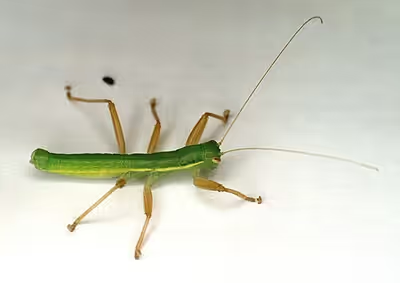
Mantophasmatodea are wingless even as adults, making them difficult to identify. They resemble a cross between praying mantises and phasmids, and molecular evidence indicates that they are most closely related to the equally enigmatic group Grylloblattodea. Initially, the gladiators were described from old museum specimens that originally were found in Namibia (Mantophasma zephyra) and Tanzania (M. subsolana), and from a 45-million-year-old specimen of Baltic amber (Raptophasma kerneggeri).
Live specimens were found in Namibia by an international expedition in early 2002; Tyrannophasma gladiator was found on the Brandberg Massif, and Mantophasma zephyra was found on the Erongoberg Massif.
Since then, a number of new genera and species have been discovered, the most recent being two new genera, Kuboesphasma and Minutophasma, each with a single species, described from Richtersveld in South Africa in 2018.
Sign in to keep reading
2 more chapters are free with a Lably account.
Biology
Mantophasmatids are wingless carnivores. During courtship, they communicate using vibrations transmitted through the ground or substrate. Both males and females have one-segmented cerci. During copulation, the male uses his cerci to grasp the female after bending his flexible abdomen around her right side, and mating can last for up to three days.
Classification
The classification of Mantophasmatodea in Arillo & Engel (2006) recognizes numerous genera, including fossils, in a single family Mantophasmatidae:
- Basal and incertae sedis
- Genus †Raptophasma Zompro, 2001 – Baltic amber, Eocene
- Genus †Adicophasma Engel & Grimaldi, 2004 – Baltic amber, Eocene
- Genus †Juramantophasma Huang et al, 2008 – Daohugou Bed, China, Middle Jurassic (Callovian)
- Genus ?†Ensiferophasma Zompro, 2005 – Baltic amber, Eocene (assignment to Mantophasmatodea considered dubious)
- Subfamily Tanzaniophasmatinae Klass, Picker, Damgaard, van Noort, Tojo, 2003
- Genus Tanzaniophasma Klass, Picker, Damgaard, van Noort, Tojo, 2003 – Tanzania
- Species Tanzaniophasma subsolana (Zompro, Klass, Kristensen, & Adis 2002)
- Genus Tanzaniophasma Klass, Picker, Damgaard, van Noort, Tojo, 2003 – Tanzania
- Subfamily Mantophasmatinae
- Tribe Tyrannophasmatini Zompro, 2005
- Genus Praedatophasma Zompro & Adis, 2002 – Namibia
- Species Praedatophasma maraisi Zompro & Adis, 2002
- Genus Tyrannophasma Zompro, 2003 – Namibia
- Species Tyrannophasma gladiator Zompro, 2003
- Genus Praedatophasma Zompro & Adis, 2002 – Namibia
- Tribe Mantophasmatini Zompro, Klass, Kristensen, Adis, 2002 (paraphyletic?)
- Genus Mantophasma Zompro, Klass, Kristensen, Adis, 2002 – Namibia
- Species Mantophasma gamsbergense Zompro & Adis, 2006
- Species Mantophasma kudubergense Zompro & Adis, 2006
- Species Mantophasma omatakoense Zompro & Adis, 2006
- Species Mantophasma zephyra Zompro, Klass, Kristensen, & Adis 2002
- Genus Pachyphasma Wipfler, Pohl, & Predel, 2012 – Namibia
- Species Pachyphasma brandbergense Wipfler, Pohl, & Predel, 2012
- Genus Sclerophasma Klass, Picker, Damgaard, van Noort, Tojo, 2003 – Namibia
- Species Sclerophasma paresisense Klass, Picker, Damgaard, van Noort, & Tojo 2003
- Genus Mantophasma Zompro, Klass, Kristensen, Adis, 2002 – Namibia
- Tribe Austrophasmatini Klass, Picker, Damgaard, van Noort, Tojo, 2003
- Genus Austrophasma Klass, Picker, Damgaard, van Noort, Tojo, 2003 – South Africa
- Species Austrophasma caledonense Klass, Picker, Damgaard, van Noort & Tojo, 2003
- Species Austrophasma gansbaaiense Klass, Picker, Damgaard, van Noort & Tojo, 2003
- Species Austrophasma rawsonvillense Klass, Picker, Damgaard, van Noort & Tojo, 2003
- Genus Hemilobophasma Klass, Picker, Damgaard, van Noort, Tojo, 2003 – South Africa
- Species Hemilobophasma montaguense Klass, Picker, Damgaard, van Noort & Tojo, 2003
- Genus Karoophasma Klass, Picker, Damgaard, van Noort, Tojo, 2003 – South Africa
- Species Karoophasma biedouwense Klass, Picker, Damgaard, van Noort & Tojo, 2003
- Species Karoophasma botterkloofense Klass, Picker, Damgaard, van Noort & Tojo, 2003
- Genus Kuboesphasma Wipfler, Theska & Predel, 2018 – South Africa
- Species Kuboesphasma compactum Wipfler, Theska & Predel, 2018
- Genus Lobatophasma Damgaard, Klass, Picker & Buder, 2008 (formerly Lobophasma Klass, Picker, Damgaard, van Noort & Tojo, 2003) – South Africa
- Species Lobatophasma redelinghuysense (Klass, Picker, Damgaard, van Noort & Tojo, 2003)
- Genus Minutophasma Wipfler, Theska & Predel, 2018 – South Africa
- Species Minutophasma richtersveldense Wipfler, Theska & Predel, 2018
- Genus Namaquaphasma Klass, Picker, Damgaard, van Noort, Tojo, 2003 – South Africa
- Species Namaquaphasma ookiepense Klass, Picker, Damgaard, van Noort, Tojo, 2003
- Genus Striatophasma Wipfler, Pohl & Predel, 2012 – Namibia
- Species Striatophasma naukluftense Wipfler, Pohl & Predel, 2012
- Genus Viridiphasma Eberhard, Picker, Klass, 2011 – South Africa
- Species Viridiphasma clanwilliamense Eberhard, Picker, Klass, 2011
- Genus Austrophasma Klass, Picker, Damgaard, van Noort, Tojo, 2003 – South Africa
- Tribe Tyrannophasmatini Zompro, 2005
Some taxonomists assign full family status to the subfamilies and tribes, and sub-ordinal status to the family. In total, there are 21 extant species described as of 2018.