


Related on Lably
Through Extinction, Basal (phylogenetics) and Fossil
Discovery and description
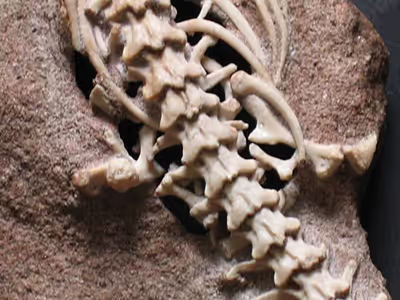
Fossils of Najash were found in the terrestrial Candeleros Formation, in Rio Negro Province, Argentina. The skull and spine of Najash show primitive features that resemble other Cretaceous snakes, such as Dinilysia patagonica and Madtsoiidae. Also, several characteristics of the neck and tail of Najash and Dinilysia patagonica show how the body plan of snakes evolved from a lizard-like ancestor.
Najash had not lost its sacrum, the pelvic bone composed of several fused vertebrae, nor its pelvic girdle, which are absent in modern snakes, and in all other known fossil snakes as well. Nearly all phylogenetic analyses place Najash as an early offshoot of the snake tree, outside of all living snakes.
Sign in to keep reading
One more chapter is free with a Lably account.
Ecology
The cranial morphology of Najash suggests that it had only limited unilateral movements of the mandibles, and lacked the attributes of macrostomatan snakes to ingest large prey, Apesteguía suggests, presumably based on the associated fauna, that this snake preyed on a variety of small vertebrates, such as ‘lizards’, micro-mammals and dinosaur hatchlings. This assumption is well supported by the snake body size.