

Old World quail
Several species of pheasant like birds
- 2 min read
- 2 chapters

Related on Lably
The buttonquails or hemipodes, despite their common name and similar resemblance to smaller members like the Asian blue quail (erroneously called "button quail"), are not related at all. They are presently placed in the family Turnicidae of the order Charadriiformes, in the same category as shorebirds.
The collective noun for a group of quail is flock, bevy or covey.
Taxonomy
"Old World quail" may denote the following genera of the tribe Coturnicini:
- Genus Synoicus
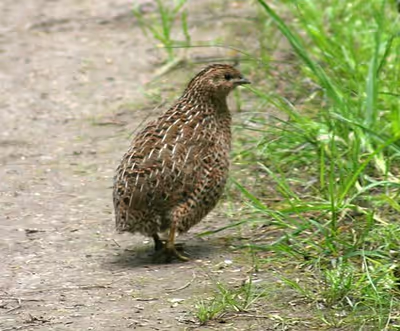
- Brown quail, Synoicus ypsilophorus
- Snow Mountain quail, Synoicus monorthonyx
- Blue quail, Synoicus adansonii
- King quail, Synoicus chinensis
- Genus Coturnix
- Rain quail, Coturnix coromandelica
- Harlequin quail, Coturnix delegorguei
- Common quail, Coturnix coturnix
- †Canary Islands quail, Coturnix gomerae (fossil)
- Japanese quail, Coturnix japonica
- †New Zealand quail, Coturnix novaezelandiae (extinct)
- Stubble quail, Coturnix pectoralis
- Genus Perdicula
- Jungle bush quail, Perdicula asiatica
- Rock bush quail, Perdicula argoondah
- Painted bush quail, Perdicula erythrorhyncha
- Manipur bush quail, Perdicula manipurensis
- Genus Ophrysia
- Himalayan quail, Ophrysia superciliosa (critically endangered/extinct)
Sign in to keep reading
One more chapter is free with a Lably account.
Behaviour
Old World quail are small, plump terrestrial birds. They are seed eaters, but will also take insects and similar small prey. They nest on the ground and are capable of short, rapid bursts of flight. Some species, such as the Japanese and common quail, are migratory and fly for long distances. Some quail are farmed in large numbers. The common and Japanese (or coturnix) quail are both raised for table meat or to produce eggs. They are also readily hunted, often artificially stocked on game farms or to supplement wild populations.
Migrating common quail are known to eat some poisonous seeds with no apparent ill effects but store the poison in their body fat, poisoning people who subsequently eat these birds; this condition is known as "coturnism".