

Olympic Peninsula
Peninsula in Washington, United States
- 3 min read
- 3 chapters

Related on Lably
Through Peninsula
Geography
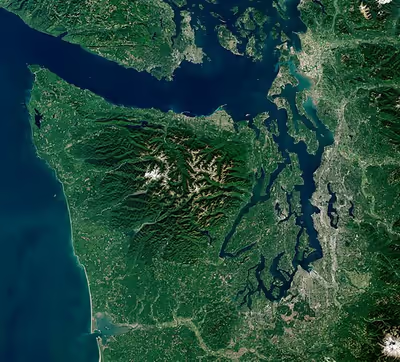
Clallam and Jefferson Counties, as well as the northern parts of Grays Harbor and Mason Counties, are on the peninsula. The Kitsap Peninsula, bounded by the Hood Canal and Puget Sound, is an entirely separate peninsula and is not connected to the Olympic Peninsula.
From Olympia, the state capital, U.S. Route 101 runs along the Olympic Peninsula's eastern, northern, and western shorelines.
The Olympic mountain range sits in the center of the Olympic Peninsula. This range is the second largest in Washington State. Its highest peak is Mt. Olympus.
A major effort called the Wild Olympics campaign is under way to protect additional wilderness areas on the Olympic Peninsula, protect salmon streams under the Wild and Scenic River Act and provide a means for Olympic National Park to offer to buy land adjacent to the Park from willing sellers.
Climate
Most of the peninsula has an oceanic climate, or Cfb under the Köppen climate classification. Most populated areas, however, have a warm-summer Mediterranean climate, or Csb.
The Olympic Peninsula is home to temperate rain forests, including the Hoh, Queets Rain Forest, and Quinault. Rain forest vegetation is concentrated primarily in the western part of the peninsula, as the interior mountains create a rain shadow effect in areas to the northeast, resulting in a much drier climate in those locales.
Rivers
Major salmon-bearing rivers on the Olympic Peninsula include, clockwise from the southwest, the Humptulips, the Quinault, the Queets, the Quillayute, Bogachiel, the Sol Duc, the Lyre, the Elwha (see Elwha Ecosystem Restoration), the Dungeness, the Dosewallips, the Hamma Hamma, the Skokomish, and the Wynoochee River.
Lakes
Natural lakes on the peninsula include Lake Crescent, Lake Ozette, Lake Sutherland, Lake Quinault, and Lake Pleasant. Two dammed rivers form the reservoirs of Lake Cushman and Wynoochee Lake; two previous reservoirs, destroyed in the Elwha Ecosystem Restoration were Lake Aldwell (behind the former Elwha Dam) and Lake Mills (behind the former Glines Canyon Dam).
Parks
The peninsula contains many state and national parks, including Anderson Lake, Bogachiel, Dosewallips, Fort Flagler, Fort Worden, Lake Cushman, Mystery Bay, Old Fort Townsend, Potlatch, Sequim Bay, Shine Tidelands, and Triton Cove state parks; Olympic National Park; and the Olympic National Forest. Within the Olympic National Forest, there are five designated wilderness areas: The Brothers, Buckhorn, Colonel Bob, Mt. Skokomish, and Wonder Mountain. Just off the west coast is the Washington Islands Wilderness.
Sign in to keep reading
2 more chapters are free with a Lably account.
Politics
The Olympic Peninsula is represented in the U.S. House of Representatives by Democrat Emily Randall. It is represented in the Washington State Legislature by Democratic state senator Kevin Van De Wege and Democratic state representatives Mike Chapman and Steve Tharinger.
Cities and towns in the Olympic Peninsula
Population of at least 10,000
- Port Angeles
- Aberdeen
- Shelton
- Port Townsend
Population of at least 5,000
- Hoquiam
- Ocean Shores
- Sequim
Population of at least 1,000
- Forks
- Port Hadlock
- Port Ludlow
Population of less than 1,000
- Amanda Park
- Brinnon
- Chimacum
- Clallam Bay
- Discovery Bay
- Eldon
- Hoodsport
- Humptulips
- Kalaloch
- La Push
- Lilliwaup
- Moclips
- Mohrweis
- Neah Bay
- Ocean City
- Ozette
- Pacific Beach
- Potlatch
- Queets
- Quilcene
- Quinault
- Sekiu
- Taholah
- Union