

Pre-industrial society
Societies before industrialization
- 2 min read
- 2 chapters

Learn it on Lably
The term "pre-industrial" is also used as a benchmark for environmental conditions before the development of industrial society: for example, the Paris Agreement, adopted in Paris on 12 December, 2015 and in force from 4 November, 2016, "aims to limit global warming to well below 2, preferably to 1.5 degrees celsius, compared to pre-industrial levels." The date for the end of the "pre-industrial era" is not defined.
Common attributes
- Limited production
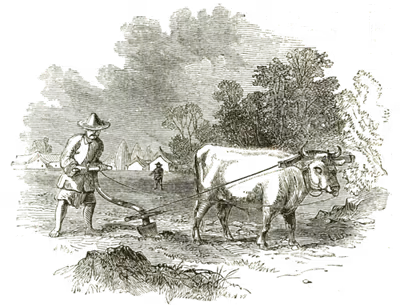
- Extreme agricultural economy
- Limited division of labor. In pre-industrial societies, production was relatively simple and the number of specialized crafts was limited.
- Limited variation of social classes
- Parochialism—Communications were limited between communities in pre-industrial societies. Few had the opportunity to see or hear beyond their own village. Industrial societies grew with the help of faster means of communication, having more information at hand about the world, allowing knowledge transfer and cultural diffusion between them.
- Populations grew at substantial rates
- Social classes: peasants and lords
- Subsistence level of living
- Population dependent on peasants for food
- People were located in villages rather than in cities
- A large amount of the population is peasants (usually around 98%)
Sign in to keep reading
One more chapter is free with a Lably account.
Economic systems
- Barter economy
- Chattel economy
- Cefeng system
- Gift economy
- Hunter gather society
- Imperialism
- Mandala
- Manorialism
- Mercantilism
- Merchant capitalism
- Iqta'
- Palace economy
- Planned economy
- Subsistence agriculture
- Subsistence
- Traditional economy
Labor conditions
Harsh working conditions had been prevalent long before the Industrial Revolution took place, especially for slaves. Pre-industrial society was very static, with child labour and dirty living conditions being common. However, long working hours were not as equally prevalent before the Industrial Revolution.