


Related on Lably
Through Economics, Property rights (economics) and Consumption (economics)
Unlike public goods, such as clean air or national defense, private goods are less likely to have the free rider problem, in which a person benefits from a public good without contributing towards it. Assuming a private good is valued positively by everyone, the efficiency of obtaining the good is obstructed by its rivalry; that is simultaneous consumption of a rivalrous good is theoretically impossible. The feasibility of obtaining the good is made difficult by its excludability, which means that people have to pay for it to enjoy its benefits.
One of the most common ways of looking at goods in the economy is by examining the level of competition in obtaining a given good, and the possibility of excluding its consumption; one cannot, for example, prevent another from enjoying a beautiful view in a public park, or clean air.
Definition matrix
Sign in to keep reading
One more chapter is free with a Lably account.
Example of a private good
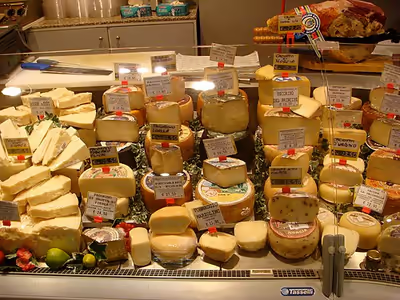
An example of the private good is bread: bread eaten by a given person cannot be consumed by another (rivalry), and it is easy for a baker to refuse to trade a loaf (exclusive).
To illustrate the horizontal summation characteristic, assume there are only two people in this economy and that:
- Person A will purchase: 0 loaves of bread at $4, 1 loaf of bread at $3, 2 loaves of bread at $2, and 3 loaves of bread at $1
- Person B will purchase: 0 loaves of bread at $6, 1 loaf of bread at $5, 2 loaves of bread at $4, 3 loaves of bread at $3, 4 loaves of bread at $2, and 5 loaves of bread at $1
As a result, a new market demand curve can be derived with the following results: