


Related on Lably
Through Supreme Court of India, Indian subcontinent and Puranas
India has a substantial commercial sex industry. Estimates regarding the number of sex workers vary widely among independent studies, government reports, and international organizations. The sector is also a destination for international sex tourism. Despite prohibitions against organised sex work, red-light districts operate de facto across several major Indian cities.
The industry encompasses escort services, digital cybersex platforms, street prostitution, and forced prostitution. Socio-economic factors, such as poverty and debt cycles, frequently contribute to entry into the profession. The country also experiences the sex trafficking of women and children, who face severe structural barriers within the sector.
Activism and judicial interventions have influenced sex workers' rights in India. Organisations such as the Durbar Mahila Samanwaya Committee have campaigned for labour rights and health initiatives, which have been associated with reductions in HIV transmission rates in certain areas. In a 2022 ruling, the Supreme Court of India affirmed that sex workers are entitled to equal protection, dignity, and constitutional rights under Article 21. The court directed law enforcement not to interfere with consenting adult sex workers, while maintaining that the operation of brothels remains a criminal offence.
History
Pre-colonial and Mughal eras
Sex work and courtesan culture have existed in the Indian subcontinent for millennia, referenced in ancient epics, the Puranas, and Buddhist texts.
From time immemorial Indian poets have sung praises of the 'public woman', the professional entertainer. The epics give us a colourful description of her intimate connection with royal splendour. The Puranas highlight her auspicious presence as a symbol of good luck. Buddhist literature also testifies to the high esteem in which she was held in society. She appears through the ages in different incarnations from apsara in divine form to ganika, devdasi, nartika [ordinary dancer], kanchani, tawaif and the nautch girl.
— Pran Nevile
During the Mughal Empire, the tawaif emerged as a courtesan catering to the nobility. This North Indian institution was central to Mughal court culture from the 16th century onwards. Tawaifs were authorities on etiquette who performed music, dance (mujra), and theatre, contributing significantly to the Urdu literary tradition. Their numbers and influence increased with the weakening of Mughal rule in the mid-18th century. They facilitated the continuation of traditional dance and music forms, paving the way for the performing art of nautch, which gained popularity during the subsequent era of the East India Company.
Colonial era
In the early 16th century, the colony of Goa was established in Portuguese India. During the late 16th and 17th centuries, the Portuguese trade in Japanese slaves resulted in traders bringing young Japanese women and girls to Goa to serve as sexual slaves.
During the period of Company rule and the subsequent British Raj, colonial officials regulated and structured prostitution to service British soldiers. While the governments of many Indian princely states had independently regulated sex work prior to the 1860s, the British Raj formalised this through the Cantonment Act of 1864. This act framed prostitution as a "necessary evil" and established military brothels (chaklas) within British military bases. These brothels housed roughly twelve to fifteen Indian women per regiment, who were licensed by military officials and permitted to consort only with soldiers. The women working in these state-sanctioned brothels were often recruited from rural families and paid directly by the authorities. Urban red-light districts in cities like Mumbai originated during this time.
In the late 19th and early 20th centuries, colonial authorities increasingly opposed sexual relations between white men and native women. Consequently, women and girls from Eastern Europe and Japan (known as Karayuki-san) were trafficked into British India. They were forced to work as prostitutes serving British colonists and military personnel, as colonial authorities viewed them as cleaner.
Sign in to keep reading
7 more chapters are free with a Lably account.
Legal status
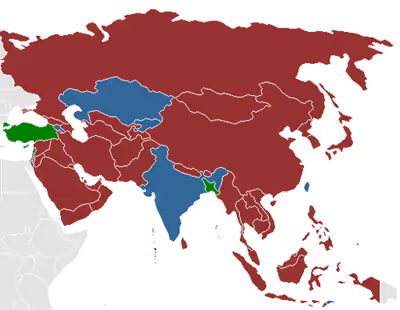
Indian law does not explicitly classify the private, voluntary exchange of sexual services for money as an illegal act. Therefore, independent prostitution is technically legal. However, legislation strictly forbids organised aspects of the trade.
Advocates and certain officials have proposed legalising and regulating prostitution to prevent the exploitation of sex workers by middlemen and to curb the spread of HIV/AIDS.
Immoral Traffic (Prevention) Act
The primary legislation governing sex work is the Immoral Traffic (Prevention) Act, 1986 (ITPA), originally passed in 1956 as the All India Suppression of Immoral Traffic Act (SITA). The law was enacted to align with the 1950 United Nations declaration on the suppression of human trafficking. The ITPA criminalises the organised aspects of prostitution. The main provisions include:
- Soliciting: A prostitute who seduces or solicits in public shall be prosecuted. Call girls are barred from publishing phone numbers to the public (imprisonment up to six months with fine). Sex workers are also punished for operating near any public place (imprisonment up to three months with fine).
- Clients: A client is guilty if he engages in sex acts within 200 yards of a public place or "notified area" (imprisonment up to 3 months). The client faces 7 to 10 years of imprisonment if the sex worker is below 18 years of age.
- Pimps and earnings: Pimps or live-in partners who live off a prostitute's earnings are guilty of a crime. Any adult male living with a prostitute is assumed guilty unless he can prove otherwise (imprisonment up to 2 years with fine).
- Brothels: Maintaining a brothel (defined as a place with two or more sex workers) is illegal, punishable by 1 to 3 years' imprisonment with a fine for a first offence. Detaining someone at a brothel carries an imprisonment of more than 7 years. Prostitution in a hotel is also an offence.
- Procuring and trafficking: Procuring individuals and moving persons for sexual exploitation carries a 7-year prison sentence for a first conviction, and up to life imprisonment thereafter.
- Rehabilitation: The government is legally obligated to provide rescue and rehabilitation in a "protective home" for any sex worker requesting assistance.
In practice, authorities often use the older Indian Penal Code (IPC) to charge sex workers with offences such as "public indecency" or causing a "public nuisance" without explicit definitions.
Political and legal debates
In 2006, the Ministry of Women and Child Development proposed a bill aimed at reducing human trafficking by criminalising the clients of trafficked prostitutes. However, the bill stalled after encountering opposition from human rights advocates and the Health Ministry. The latter argued the legislation would drive the trade further underground and hinder HIV prevention efforts. Legislation against human trafficking was subsequently effected by amendments to the Indian Penal Code.
Various groups have challenged clauses in the ITPA relating to the criminalisation of brothels, soliciting, and magistrates' eviction powers. In 2009, the Supreme Court ruled that prostitution should be legalised and convened a panel to consider amending the law. In 2011, the Supreme Court held that the "right to live with dignity" is a Constitutional right, directing the government to carry out surveys for rehabilitating willing sex workers. In 2012, the Central Government made a plea arguing that the ITPA totally bans prostitution and that sex workers could not pursue their trade under the constitutional "right to live with dignity."
On May 19, 2022, the Supreme Court of India issued an order upholding that sex workers are guaranteed the right to dignity and equal protection under Article 21 of the Constitution of India. The court directed police forces not to arrest, penalise, or harass adult, consenting sex workers. However, the ruling clarified that running brothels and procuring continue to remain criminal offences.
Typology and operations
The sex industry in India is segmented and operates through various channels and socio-economic strata:
- Brothel-based sex work: Sex workers operate out of fixed establishments, primarily located in traditional red-light districts. Although prohibited by law, these establishments remain active.
- Street prostitution: Sex workers solicit clients in public spaces such as streets, highways, and transport hubs.
- Call girls and escort agencies: Workers arrange meetings via phone, digital apps, or specialized agencies. Appointments typically occur at private residences, hotels, or hired venues.
- Front businesses: Prostitution frequently occurs under the guise of commercial establishments such as massage parlors, spas, dance bars, and nightclubs.
- Digital and cybersex: With increasing internet penetration, virtual sex, cybersex, and phone sex services have grown, facilitated by social media and messaging platforms.
- Religious prostitution: Traditional practices like the Devadasi system, where women are dedicated to deities as temple dancers, continue to exist in isolated pockets and can result in forced sex work.
Red-light districts
Although operating a brothel is prohibited, urban red-light districts exist in several cities. Conditions in these areas often feature dilapidated infrastructure, limited sanitation, and a high prevalence of sexually transmitted infections (STIs). Prominent red-light districts include:
- Sonagachi, Kolkata: Often described as Asia's largest red-light district, media and NGO reports estimate it houses over 10,000 female sex workers. A 2019 study in the Indian Journal of Public Health indicated that West Bengal accounted for nearly 25% of the country's estimated 1.82 million female sex workers.
- Kamathipura, Mumbai: One of the oldest districts, established during the colonial era, with news reports estimating a population of several thousand sex workers.
- Budhwar Peth, Pune: Reported to house hundreds of brothels and a significant population of sex workers.
- G. B. Road, New Delhi: A red-light area in the Indian capital featuring multi-story brothels operating above commercial markets.
- Other districts: Chaturbhuj Sthan in Muzaffarpur, Shivdaspur in Varanasi, Ganga Jamuna in Nagpur, Reshampura in Gwalior, Kabari Bazar in Meerut, and Meergunj in Prayagraj.
Demographics and socioeconomic factors
Research by development organisations indicates that many sex workers in India enter the profession due to severe economic pressures. Often, they lack the resources to support themselves or their dependents. Many enter the trade following the dissolution of a marriage or after being abandoned by their families.
Studies on the pathways into sex work demonstrate that many workers do not enter the profession voluntarily. Unregulated work placement agencies and individuals—such as acquaintances, neighbours, or relatives—frequently lure victims using false promises of employment or sham marriages. They subsequently sell these victims to brothels or force them into commercial sex.
Debt bondage also occurs within the industry. In regions like Bengal, the Chukri System coerces women into prostitution as a form of bonded labour to pay off debts to brothel owners for living expenses. The Indian government has instituted centrally sponsored schemes providing grants to released bonded labourers under the Bonded Labour System (Abolition) Act of 1976. Furthermore, certain tribal communities, such as the Bachara Tribe in Madhya Pradesh, possess cultural traditions where eldest daughters are expected to engage in prostitution to support the family.
Foreign sex workers
India is a destination country for foreign nationals engaging in sex work. Women and girls from Nepal, Bangladesh, Azerbaijan, Russia, Uzbekistan, the Philippines, the Arabian Peninsula, Japan, and various Post-Soviet states operate within the Indian sex industry. Nepalese women make up a proportion of foreign workers; during major raids in Mumbai in 1996, over 40% of rescued girls were from Nepal. Human rights reports suggest that thousands of Nepalese women and minors have been sold into Indian brothels over recent decades.
Trafficking and exploitation
India is a source, destination, and transit country for women and children subjected to sex trafficking. The United States Department of State Office to Monitor and Combat Trafficking in Persons ranks India as a 'Tier 2' country.
Most trafficking within India is internal, primarily affecting individuals from economically disadvantaged social strata and tribal communities. While traditional red-light districts remain hubs for trafficked individuals, exploitation also occurs in private residences, small hotels, and via online networks. Some law enforcement officials have been implicated in protecting traffickers and tipping off brothel owners to impede rescue efforts.
Underage prostitution remains a significant issue. A 2007 report by the Ministry of Women and Child Development found that of the estimated 3 million female sex workers in India, 35.47 percent entered the trade before the age of 18. The overall number of prostitutes rose by 50% between 1997 and 2004. Other independent surveys estimate there are roughly 1.2 million children involved in commercial sexual exploitation nationwide.
Health and advocacy
Sex workers in India face structural barriers to accessing healthcare, often encountering discrimination and stigma within the medical system. Challenges include being coerced into mandatory HIV testing prior to receiving unrelated treatments, being denied admission to facilities without proof of address, and facing excessive fees. Transgender sex workers face compounded discrimination due to institutional prejudice and a lack of medical knowledge regarding transgender bodies. To mitigate some of these barriers, the Supreme Court directed in 2021 that sex workers be provided with Aadhaar identification cards and food rations without requiring proof of address, improving their access to state welfare.
Several non-governmental organisations (NGOs), working in coordination with the National AIDS Control Organisation (NACO), have implemented prevention programs among high-risk communities. In Kolkata, an education and condom promotion initiative launched in 1992 targeted 5,000 workers. The project raised condom usage from 27% to 86% by 2001, lowering transmission rates. Overall, examining data from 868 prevention projects serving 500,000 female sex workers between 1995 and 2008 revealed that targeted outreach decreased HIV and syphilis infection rates among young pregnant women tested routinely at government clinics. It is estimated that HIV among prostitutes has fallen in the last decade, despite Mumbai and Kolkata possessing over 100,000 sex workers.
Unionisation has also empowered sex workers. The Durbar Mahila Samanwaya Committee (DMSC), based in Kolkata, boasts over 65,000 members and actively advocates for the labour rights of sex workers while cooperating with authorities to prevent human trafficking. Similarly, organisations like the Centre for Advocacy on Stigma and Marginalisation (CASAM), part of SANGRAM, conducted the first pan-India survey of sex workers in April 2011 to foster better policy understanding. In a positive development for their livelihoods, a state-owned insurance company in Calcutta began providing life insurance to sex workers.
Popular culture
Prostitution and courtesan culture have been themes in Indian literature and the arts for centuries. Mrichakatika, a 2nd-century BC Sanskrit play by Śhudraka, details the story of the courtesan Vasantsena and was later adapted into the 1984 Hindi film Utsav. The story of Amrapali (Ambapali), a royal courtesan of ancient Vaishali who became an enlightened Buddhist monk, was depicted in the 1966 film Amrapali.
The Mughal era tawaif (courtesan) has been depicted in Indian cinema, including in films such as Pakeezah (1972), Umrao Jaan (1981), Tawaif (1985), and Kama Sutra: A Tale of Love (1996). Contemporary films exploring modern brothels, trafficking, and street prostitution include Manoranjan (1974), Mandi (1983), Chandni Bar (2001), Chameli (2003), Dev D (2009), Chaarfutiya Chhokare (2014), Lakshmi (2014), Love Sonia (2018), and Gangubai Kathiawadi (2022). The 2008 film Slumdog Millionaire also featured narratives surrounding the exploitation of minors in Indian brothels.
Documentaries have also depicted the living conditions in India's red-light districts. Born into Brothels (2004), which chronicled the lives of the children of prostitutes in Kolkata, won the Academy Award for Best Documentary Feature. Shohini Ghosh's 2002 documentary, Tales of the Night Fairies, highlighted the advocacy work of the DMSC sex-worker union.