

Rhodochrosite
Mineral of manganese carbonate
- 2 min read
- 3 chapters

Related on Lably
Through Manganese, Relative density and China
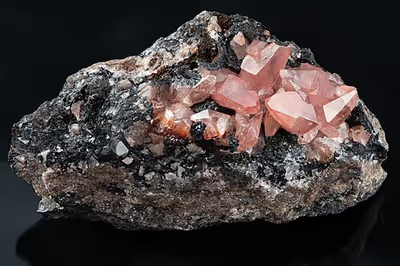
Rhodochrosite forms a complete solid solution series with iron carbonate (siderite). Calcium (as well as magnesium and zinc, to a limited extent) frequently substitutes for manganese in the structure, leading to lighter shades of red and pink, depending on the degree of substitution. This is the reason for the rose color of rhodochrosite.
Occurrence and discovery
Rhodochrosite occurs as a hydrothermal vein mineral along with other manganese minerals in low temperature ore deposits as in the silver mines of Romania where it was first found. Banded rhodochrosite is mined in Capillitas, Argentina.
It was first described in 1813 in reference to a sample from Cavnic, Maramureș, present-day Romania. The name is derived from the combination of Greek words ροδόν (rodon, meaning rose) and χρωσις (chrosis, meaning coloring).
Sign in to keep reading
2 more chapters are free with a Lably account.
Use
Rhodochrosite is mainly used as an ore of manganese, which is a key component of low-cost stainless steel formulations, many tool steels, and certain aluminium alloys. Quality banded specimens are often used for decorative stones and jewellery. Due to its softness and perfect cleavage it is rarely found faceted in jewellery and is also sought after by many collectors.
Manganese carbonate is extremely destructive to the amalgamation process historically used in the concentration of silver ores, and were often discarded on the mine dump.
Culture
Rhodochrosite is Argentina's "national gemstone". Colorado officially named rhodochrosite as its state mineral in 2002.
It is sometimes called "Rosa del Inca", "Inca Rose" or Rosinca.