


Related on Lably
Through Invertebrate, Worm and River
Behaviour
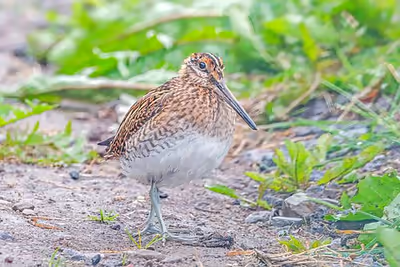
A snipe searches for invertebrates in the mud with a "sewing-machine" action of its long bill. The sensitivity of the bill is caused by filaments belonging to the fifth pair of nerves, which run almost to the tip and open immediately under the soft cuticle in a series of cells; this adaptation gives this portion of the surface of the premaxillaries a honeycomb-like appearance, and with these filaments, the bird can sense its food in the mud without seeing it. A similar adaptation is found in sandpipers.
Sign in to keep reading
3 more chapters are free with a Lably account.
Diet
Snipe species feed mainly on insect larvae. Other invertebrate prey includes snails, crustaceans, and worms. The snipe's bill allows the very tip to remain closed while the snipe slurps up invertebrates.
Habitat
Snipe can be found in various types of wet marshy settings, including bogs, swamps, wet meadows, and along rivers, coast lines, and ponds. They settle in both areas with dense vegetation and marshy areas with patchy cover to hide from predators.
Hunting
Camouflage may enable a snipe to remain undetected by hunters in marshland. The bird is also highly alert and startled easily, rarely staying long in the open. If the snipe flies, hunters have difficulty wing-shooting due to the bird's erratic flight pattern.
The difficulties involved around hunting snipe gave rise to the military term "sniper", which originally meant an expert hunter highly skilled in marksmanship and camouflaging, but later evolved to mean a sharpshooter or a shooter who makes distant shots from concealment.