


Related on Lably
Through Sodium, Hydrogen and Base (chemistry)
Basic properties and structure
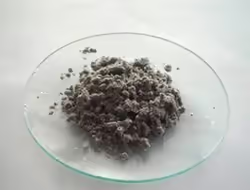
NaH is colorless, although samples generally appear grey. NaH is around 40% denser than Na (0.968 g/cm3).
NaH, like LiH, KH, RbH, and CsH, adopts the NaCl crystal structure. In this motif, each Na+ ion is surrounded by six H− centers in an octahedral geometry. The ionic radii of H− (146 pm in NaH) and F− (133 pm) are comparable, as judged by the Na−H and Na−F distances.
"Inverse sodium hydride" (hydrogen sodide)
A very unusual situation occurs in a compound dubbed "inverse sodium hydride", which contains H+ and Na− ions. Na− is an alkalide, and this compound differs from ordinary sodium hydride in having a much higher energy content due to the net displacement of two electrons from hydrogen to sodium. A derivative of this "inverse sodium hydride" arises in the presence of the base [36]adamanzane. This molecule irreversibly encapsulates the H+ and shields it from interaction with the alkalide Na−. Theoretical work has suggested that even an unprotected protonated tertiary amine complexed with the sodium alkalide might be metastable under certain solvent conditions, though the barrier to reaction would be small and finding a suitable solvent might be difficult.
Sign in to keep reading
4 more chapters are free with a Lably account.
Preparation
Industrially, NaH is prepared by introducing molten sodium into mineral oil with hydrogen at atmospheric pressure and mixed vigorously at ~8000 rpm. The reaction is especially rapid at 250–300 °C (482–572 °F).
- 2 Na + H2 → 2 NaH
The resultant suspension of NaH in mineral oil is often directly used, such as in the production of diborane.
Applications in organic synthesis
As a strong base
NaH is a base of wide scope and utility in organic chemistry. As a superbase, it is capable of deprotonating a range of even weak Brønsted acids to give the corresponding sodium derivatives. Typical "easy" substrates contain O-H, N-H, S-H bonds, including alcohols, phenols, pyrazoles, and thiols.
NaH notably deprotonates carbon acids (i.e., C-H bonds) such as 1,3-dicarbonyls such as malonic esters. The resulting sodium derivatives can be alkylated. NaH is widely used to promote condensation reactions of carbonyl compounds via the Dieckmann condensation, Stobbe condensation, Darzens condensation, and Claisen condensation. Other carbon acids susceptible to deprotonation by NaH include sulfonium salts and DMSO. NaH is used to make sulfur ylides, which in turn are used to convert ketones into epoxides, as in the Johnson–Corey–Chaykovsky reaction.
As a reducing agent
NaH reduces certain main group compounds, but analogous reactivity is very rare in organic chemistry. Notably boron trifluoride reacts to give diborane and sodium fluoride:
- 6 NaH + 2 BF3 → B2H6 + 6 NaF
Si–Si and S–S bonds in disilanes and disulfides are also reduced.
A series of reduction reactions, including the hydrodecyanation of tertiary nitriles, reduction of imines to amines, and amides to aldehydes, can be effected by a composite reagent composed of sodium hydride and an alkali metal iodide (NaH·MI, M = Li, Na).
Hydrogen storage
Although not commercially significant, sodium hydride has been proposed for hydrogen storage for use in fuel cell vehicles. In one experimental implementation, plastic pellets containing NaH are crushed in the presence of water to release the hydrogen. One challenge with this technology is the regeneration of NaH from the NaOH formed by hydrolysis.
Practical considerations
Sodium hydride is often sold as a mixture of 60% sodium hydride (w/w) in mineral oil. Such a dispersion is safer to handle and weigh than pure NaH. Reactions involving NaH usually require air-free techniques.
Safety
NaH can ignite spontaneously in air. It also reacts vigorously with water or humid air to release hydrogen, which is very flammable, and sodium hydroxide (NaOH), a quite corrosive base. In practice, most sodium hydride is sold as a dispersion in mineral oil, which can be safely handled in air. Although sodium hydride is widely used in DMSO, DMF or DMAc for SN2 type reactions there have been many cases of fires and/or explosions from such mixtures.