


Related on Lably
Through American and British English spelling differences, Area and International System of Units
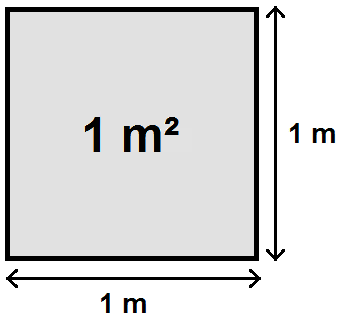
Adding and subtracting SI prefixes creates multiples and submultiples; however, as the unit is exponentiated, the quantities grow exponentially by the corresponding power of 10. For example, 1 kilometre is 103 (one thousand) times the length of 1 metre, but 1 square kilometre is (103)2 (106, one million) times the area of 1 square metre, and 1 cubic kilometre is (103)3 (109, one billion) cubic metres.
Its inverse is the reciprocal square metre (m−2), often called "per square metre".
SI prefixes applied
The square metre may be used with all SI prefixes used with the metre.
Sign in to keep reading
2 more chapters are free with a Lably account.
Unicode characters
Unicode has several characters used to represent metric area units, but these are for compatibility with East Asian character encodings and are not meant to be used in new documents.
- U+33A1 ㎡ SQUARE M SQUARED
- U+33A2 ㎢ SQUARE KM SQUARED
- U+3378 ㍸ SQUARE DM SQUARED
- U+33A0 ㎠ SQUARE CM SQUARED
- U+339F ㎟ SQUARE MM SQUARED
Instead, the Unicode superscript U+00B2 ² SUPERSCRIPT TWO can be used, as in m².
Conversions
One square metre is equal to: