

Suzanne Veil
French chemist (1886–1956)
- 2 min read
- 3 chapters

Related on Lably
Through World War I, Isotope and World War II
Early life and education
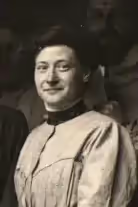
Suzanne Zélie Pauline Veil was born in Paris on 28 April 1886.
From 1912 to 1918, Veil studied at the Radium Institute in Paris under French-Polish physicist and chemist Marie Curie, in preparation for doctoral enrolment. Her studies was interrupted by the outbreak of WWI. Initially, Veil contributed to the war effort through military telegraphy under General Gustave-Auguste Ferrié but, by 1916, she was working alongside Marie Curie to train nurses in radiology methods, ensuring effective radiology services near the front line. This enabled the nurses to locate shrapnel in the bodies of wounded soldiers.
After completing her studies at Marie Curie's Radium Institute, Veil went on to undertake her doctorate with chemist Georges Urbain at the Sorbonne's École Supérieure de Chimie, successfully defending her thesis on the properties of metallic oxides in 1920.
Sign in to keep reading
2 more chapters are free with a Lably account.
Career
A year later, in 1921, she was head of the laboratory at the Faculté des sciences de Paris, where she collaborated with Francis W. Aston, a British chemist and physicist. She translated his seminal work on isotopes in 1923.
In 1930, Veil became head of research at the École Pratique des Hautes Études (EPHE), where she had served as an assistant from 1926. At EPHE, Veil remained under the direction of her long-time mentor, Georges Urbain. Simultaneously, she undertook research at the National Science Fund (French: Caisse Nationale des Sciences), an institution that preceded the French National Center for Scientific Research. During this time, Veil continued to specialise in inorganic chemistry; she studied metal oxides and their mixtures, including nickel, chromium and cobalt. Later on in the 1930s, she went on to publish her work in periodic chemical phenomena.
Veil was dismissed from her position in December 1940, during World War II. The Musée Curie suggests that this occurred because of laws restricting women's employment or because of anti-Jewish laws enacted by the Vichy government after the Nazi occupation of France began in June 1940. In 1945, Veil was reinstated to her position and continued in the post until its abolition in 1949. By the age of 63, she was still researching, continuing her work with the National Science Fund.
Personal life
Suzanne Veil died in Paris on 24 February 1956, aged 70.