

Todos los Santos Lake
Lake in Los Lagos Region, Chile
- 2 min read
- 3 chapters

Related on Lably
Through Lake
Hydrology
The main tributary of the lake is the Río Peulla/Río Negro, next to the Peulla locality. Its outflow at the Petrohué locality gives rise to the Petrohué River, with an average outflow of 270 m³ per second. Even though the lake has a regulating effect, it is subject to water level variations that may exceed 3 m and reflect in the discharge at the outflow. At a short distance from the Petrohué locality, the river flows through the Petrohué Waterfalls.
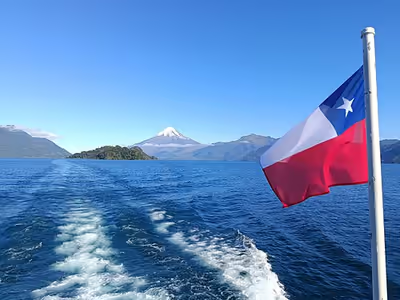
The lake may appear green, blue or silver depending on the cloud cover and weather on a given day. The majority of the greenish tint comes from glacial meltwater containing mineral debris.
Sign in to keep reading
2 more chapters are free with a Lably account.
History
As recently as 20,000 years ago, the basin of Todos los Santos Lake was filled by a large glacier that did not withdraw until approximately 10,000 years ago. At that point, the area was still a glacial basin with rivers flowing through it. The lake itself did not form until lava flows from the Osorno and Calbuco volcanoes formed a dam across the lower part of the valley, trapping the water from the rivers and gradually forming the lake.
This lake has been known by multiple indigenous names in the past: Purailla, Pichilauquen, and Quechocavi. German colonists in the 19th century labelled it Lake Esmeralda ("Emerald Lake"), due to the green color of its water. However, later practice reverted to the name given by Jesuit missionaries, Todos los Santos Lake.
Tourism
A regular road and boat transport service provides tourist transport between Puerto Montt or Puerto Varas in Chile and San Carlos de Bariloche on Nahuel Huapi Lake in Argentina. There are two main lake ports: Petrohué at the western end, and the village of Peulla at the eastern end; there is no road connecting these ports. The lake is surrounded by steep mountains leaving only minor plains. The mountains include Osorno volcano in the west, the Puntiagudo to the north, and the Tronador to the east.