


Related on Lably
Through Neolithic
The name "Anhui" derives from the names of two cities: Anqing and Huizhou (now Huangshan City). The abbreviation for Anhui is Wǎn (皖), corresponding to the historical Wan state, and is also used to refer to the Wan River and Mount Tianzhu. The provincial government of Anhui includes a Governor, Provincial Congress, the People's Political Consultative Conference, and the Provincial Higher People's Court. Aside from managing local government departments, the Anhui provincial government manages 16 cities, 62 counties, 43 county-level districts and 1,522 townships. Anhui's total GDP ranked 14th among China's 31 province-level regions as of 2022.
History
Anhui was established 1667, during the reign of the Qing dynasty's Kangxi Emperor. The province's nickname, "Wan", is taken from the name of a small state that existed in the region during the Spring and Autumn period (722–481 BC). The name "Wan" also corresponds to the province's Mount Tianzhu and Wan state. Evidence of human beings inhabiting what is now Anhui 20,000 years before present has been attested by archaeological findings in Fanchang County, related to the cultural domains of Yangshao and Longshan, dated to the Neolithic period (8000–2000 BC). In relation to these cultures, archeologists have discovered through excavation a 4500-year-old city called the Nanchengzi Ruins in Guzhen County, after they discovered a Neolithic city wall and a moat that was part of a much larger and integrated city in the region during their 2013 disinterment.
There are many historical sites located in the province dating to the pre-imperial period. The culture of northern Anhui was associated with that of the North China Plain, together with what is now Henan, northern Jiangsu, and southern Shandong. Central Anhui was densely populated, and consisted of the fertile Huai River watershed. Contrastingly, southern Anhui was closer to Jiangxi and southern Jiangsu; the hills in the southeastern part of the province formed a unique cultural sphere. After the Qin dynasty unified China in 221 BC, the territory of modern Anhui belonged to different prefectures, including Jiujiang, Zhang, Tang, and Sishui. The lands became part of the Yang, Yu, and Xu prefectures during the Han dynasty (202 BC – 220 AD). During the Three Kingdoms era (222–280), Anhui was dominated at various times by Eastern Wu and Cao Wei. By the Song dynasty (960–1279), the economy and culture of area was flourishing. Anhui became part of the province of Henan during the Yuan dynasty (1271–1368); during the Ming dynasty the area was directly administrated by the imperial capital in Nanjing.
Anhui and Jiangsu were merged into one province under the Qing dynasty (1644–1912) until 1666, during the reign of the Kangxi Emperor. It played an important role in the Self-Strengthening Movement led by Li Hongzhang during the later Qing. During this time, western weapons, factories and administrative theories were being introduced into China. Over the next 50 years, Anhui became one of the country's most radically liberal areas, with important 20th-century figures moving to the province, like the poet and diplomat Hu Shih, and Chen Duxiu, the founder of the Chinese Communist Party (CCP).
In 1938, large areas in north and central Anhui were severely damaged by the decision of President Chiang Kai-shek to demolish a critical dam on the Yellow River, hoping that this would physically impede the ongoing invasion by the Imperial Japanese Army and prevent them from capturing Zhengzhou. Within only ten days of the dam breaking, the water and sands drowned all of north and middle area of this province, resulting in the deaths of between 500,000 and 900,000 Chinese people, as well as an unknown number of Japanese soldiers. Following the end of the Second Sino-Japanese War in 1945, the capital city of Anhui moved to Hefei, then a small town. The provincial government made significant investments for its development. After 1949, the government launched projects to repair the damages suffered during World War II. Anhui was one of the worst affected provinces in The Great Chinese Famine. The province underwent significant development via the Third Front campaign to build basic and national defense industries in protected locations, in case of invasion by the Soviet Union or United States. The centerpiece of the Shanghai Small Third Front was the "rear base" in Anhui which served as "a multi-function manufacturing base for anti-aircraft and anti-tank weaponry". During the late 1990s Anhui became one of China's fastest-growing provinces. The province forms part of the China Yangtze River Delta Economic Area, which is the most developed area of China.
Sign in to keep reading
11 more chapters are free with a Lably account.
Geography
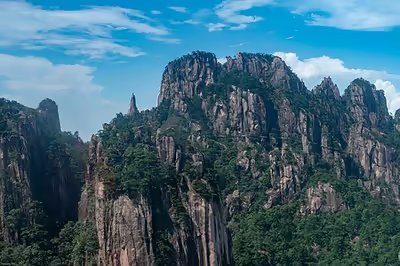
Anhui is topographically diverse. The north is part of the North China Plain while the north-central areas are part of the Huai River watershed. Both regions are flat, and densely populated. The land becomes more uneven further south, with the Dabie Mountains occupying much of southwestern Anhui and a series of hills and ranges cutting through southeastern Anhui, between which is the Yangtze River. The highest peak in Anhui is Lotus Peak, part of Huangshan in southeastern Anhui. It has an altitude of 1,873 metres (6,145 feet).
Major rivers include the Huai River in the north and the Yangtze in the south. The largest lake is Lake Chaohu situated in the center of the province, with an area of about 800 km2 (310 sq mi). The southeastern part of the province near the Yangtze River has many lakes as well.
As with topography, the province differs in climate from north to south. The north is more temperate with more distinct seasons. January temperatures average at around −1 to 2 °C north of the Huai River, and 0 to 3 °C south of the Huai River; in July temperatures average 27 °C or above. Plum rains occur in June and July and may cause flooding.
Anhui has 16 cities. In economic terms, the top three cities are: Hefei, Wuhu and Anqing.
Ecology
The Anhui elm, Ulmus gaussenii W. C. Cheng, is a medium size deciduous tree whose natural range is restricted to the valleys of the Langya limestone mountains of Chu Xian. The tree was most commonly found on the flood plains, indicating a tolerance of periodic inundation. U. gaussenii is now the world's rarest and most endangered elm species, with only approximately 30 trees known to survive in the wild in 2009.
The province is also home to the Chinese alligator (Alligator sinensis, simplified Chinese: 扬子鳄; traditional Chinese: 揚子鱷; pinyin: yángzǐ'è), also known as the Yangtze alligator, China alligator, or historically the muddy dragon, a critically endangered crocodilian.
Administrative divisions
Anhui is divided into sixteen prefecture-level divisions: all prefecture-level cities:
These 16 prefecture-level cities are in turn subdivided into 104 county-level divisions (45 districts, 9 county-level cities, and 50 counties). Those are in turn divided into 1,512 township-level divisions (997 towns, 230 townships, 9 ethnic townships, and 276 subdistricts).
Politics
The Politics of Anhui Province is structured in a dual party-government system like all other governing institutions in mainland China. The Governor of Anhui is the highest-ranking official in the Anhui Provincial People's Government. However, in the province's dual party-government governing system, the Governor has less power than the Anhui Chinese Communist Party Provincial Committee Secretary.
Most provincial government departments and the Governor office are located at No.1 Zhongshan Road, moved from old downtown of Hefei since 2016. Provincial government is responsible to manage 16 prefecture-level cities, 105 counties, 1845 townships and different departments in Anhui. The Anhui Provincial People's Congress is just located near provincial government. The Provincial Chinese People's Political Consultative Conference (CPPCC) is located at No.317, Suzhou Road. The Provincial Higher People's Court is located at no. 472 Changjiang Rd.
Typically, annual provincial congress meeting is held in the first quarter of each year shortly before national congress meeting and the annual meeting of CPPCC is held in the first quarter or the fourth quarter of each year.
Economy
Agriculture in Anhui varies according to the climate zones. To the north of the Huai River, wheat and sweet potatoes are grown, while to the south it is rice and wheat instead. As of 2022, Anhui's nominal GDP was US$670 billion (CN¥ 4.51 trilion), about 3.72% of the country's GDP and ranked 10th among province-level administrative units; the province's primary, secondary and tertiary industries were worth CN¥351.37 billion (US$52.24 billion), CN¥1.8588 trillion (US$276.36 billion) and CN¥2.29433 trillion (US$341.1 billion) respectively. Its nominal GDP per capita was US$10,943 (CN¥73,603) and ranked the 14th in the country.
Natural resources of Anhui include iron in Ma'anshan, coal in Huainan, and copper in Tongling. There are industries related to these natural resources (e.g. steel industry at Ma'anshan). One of the famous Anhui-based corporations is the automobile company Chery, which is based in Wuhu.
Compared to its more prosperous neighbours to the east, Zhejiang and Jiangsu, Anhui has lagged markedly behind in economic development, with a GDP per capita around half of those two provinces in 2017 rapidly improved from 1/3 of those two provinces in 2010. However, the provincial GDP per capita is based on the population registered in the province (that is, with local Hukou), but not necessarily residing there. There is significant regional disparity, where much of the wealth is concentrated in industrial regions close to the Yangtze River, such as Hefei, Wuhu, and Ma'anshan. The province is home to a large cluster of white goods manufacture such as Haier, Hisense, Whirlpool, Gree, Royalstar, and Meling.
Major economic and technological development zones
Hefei Economic and Technological Development Zone
Hefei Economic and Technological Development Zone is located in the southwest of Hefei and was established in 1993. It is located close to Hefei Luogang International Airport.
Hefei Hi-Tech Industrial Development Zone
Hefei Hi-Tech Industrial Development Zone was founded in October 1990 and approved by the State Council as a state-level Development Zone in March 1991. In 1997, the Development Zone was ratified as an APEC Science and Technology Industrial Park, with special open policies to APEC and EU members. Hefei High Tech Park was also approved as a National High Tech Export Base in 2000 and obtained the award of an Advanced High Tech Zone under the Torch Program in 2003. So far, more than 100 hi-tech enterprises have entered the zone. Industries encouraged in the zone include chemical production and processing, electronics assembly & manufacturing, instruments & industrial equipment, medical Equipment and telecommunications.
Wuhu Economic and Technological Development Zone
Established in 1993, Wuhu Economic and Technological Development Zone was the first state-level development zone approved by central government in Anhui, utilising the transportation advantage of the Yangtse Delta at Wuhu.
Wuhu Export Processing Zone
Wuhu Export Processing Zone was approved to be a national level export processing zone, with a total planned area of 2.95 km2 (1.14 sq mi).
Transportation
Historically, Anhui's transport network was hampered by the lack of bridges across the Yangtze River, which divides the province into northern and southern regions. The first bridge across the Yangtze in Anhui, the Tongling Yangtze River Bridge, was completed in 1995. As of October 2014, Anhui had four bridges across the Yangtze, at Ma'anshan, Wuhu, Tongling, and Anqing.
Rail
Anhui lacked a developed railway network until this century: most cities are now connected by a high-speed train system. Hefei South railway station is the high-speed train hub.
Highway system
The province set an ambitious plan from 2015 to 2025 for highways including:
G3 Beijing-Taipei Expressway
G40 Shanghai-Xi'an Expressway
G42 Shanghai-Chengdu Expressway
S24 Changshu-Hefei Expressway
Subway
Hefei and Wuhu have subway systems. The Hefei Metro has 2 completed lines, 3 lines under construction and another 10 lines planned. The Wuhu Metro has 2 subway lines under construction and another 3 lines planned.
Aviation
The province has 5 major commercial airports and another 4 are under construction. Hefei Xinqiao International Airport and Huangshan International Airport are the 2 international airports. The 5 airports in operation are:
- Hefei Xinqiao International Airport (IATA: HFE, ICAO: ZSOF)
- Huangshan Tunxi International Airport (IATA: TXN, ICAO: ZSTX)
- Fuyang Xiguan Airport (IATA: FUG, ICAO: ZSFY)
- Anqing Tianzhushan Airport (IATA: AQG, ICAO: ZSAQ)
- Chizhou Jiuhuashan Airport (IATA: JUH, ICAO: ZSJH)
Demographics
Han Chinese make up the vast majority of the population. The Huizhou Chinese-speaking Hui and She are the two largest minorities.
Anhui has a highly unbalanced gender ratio. According to a 2009 study published in the British Medical Journal, in the 1–4 age group, there are 138 boys for every 100 girls, making it among the most unbalanced of provinces in China.
Religion
The predominant religions in Anhui are Chinese folk religions, Taoist traditions and Chinese Buddhism. According to surveys conducted in 2007 and 2009, 4.64% of the population believes and is involved in ancestor veneration, while 5.30% of the population identifies as Christian. According to a 2010 survey, Muslims constitute 0.58% of the population of Anhui.
The reports didn't give figures for other types of religion; 89.48% of the population may be either irreligious or involved in worship of nature deities, Buddhism, Confucianism, Taoism and folk religious sects.
Culture
Anhui spans many geographical and cultural regions. The northern, flatter parts of the province, along the Huai River and further north, are most akin to neighboring provinces like Henan, Shandong and northern Jiangsu. In contrast, the southern, hilly parts of the province are more similar in culture and dialect to other southern, hilly provinces, like Zhejiang and Jiangxi.
Mandarin dialects are spoken over the northern and central parts of the province, north of the Yangtze river. Dialects to the north (e.g. Bengbu dialect) are classified as Zhongyuan Mandarin, together with dialects in provinces such as Henan and Shandong; dialects in the central parts (e.g. Hefei dialect) are classified as Jianghuai Mandarin, together with dialects in the central parts of neighboring Jiangsu province. Non-Mandarin dialects are spoken to the south of the Yangzi: dialects of Wu are spoken in Xuancheng prefecture-level city, though these are rapidly being replaced by Jianghuai Mandarin; dialects of Gan are spoken in a few counties in the southwest bordering Jiangxi province; and the Huizhou dialects are spoken in about ten counties in the far south, a small but highly diverse and unique group of Chinese dialects.
Huangmeixi, which originated in the environs of Anqing in southwestern Anhui, is a form of traditional Chinese opera popular across China. Huiju, a form of traditional opera originating in the Huizhou-speaking areas of southern Anhui, is one of the major precursors of Beijing Opera; in the 1950s, Huiju (which had disappeared) was revived. Luju is a type of traditional opera found across central Anhui, from east to west.
Anhui cuisine is one of the eight great traditions of Chinese cuisine. Combining elements of cooking from northern Anhui, south-central Anhui, and the Huizhou-speaking areas of southern Anhui, Anhui cuisine is known for its use of wild game and herbs, both land and sea, and comparatively simple methods of preparation.
Anhui has a high concentration of traditional products related to calligraphy: Xuanzhou (today Xuancheng) and Huizhou (today Huangshan City) are revered for producing Xuan Paper and Hui Ink respectively, which are traditionally considered the best types of paper and ink for Chinese calligraphy. She County is famous for the She Inkstone, one of the most preferred types of inkstones (a required tool in traditional calligraphy).
Education
Some of the highest-ranked universities in the country are found in Anhui. Most universities in Anhui are located in Hefei, Wuhu, Bengbu, and Maanshan. Specifically, Hefei is home to the University of Science & Technology of China.
Public universities
- University of Science & Technology of China, ranked 6th in the country
- Hefei University of Technology, China well-known Engineering School
- Anhui University, China Key University
- Anhui Agricultural University, in Hefei
- Anhui Medical University
- Anhui Normal University, in Wuhu
- Anhui University of Finance and Economics, in Bengbu
- Anhui University of Technology, in Ma'anshan
- Anhui University of Technology and Science, in Wuhu City
- Anhui University of Traditional Chinese Medicine
- Anhui University of Science & Technology, in Huainan
- Anqing Teachers College, in Anqing
- Fuyang Teachers College, in Fuyang
- Hefei Normal University, in Hefei
- Wannan Medical College, in Wuhu City
- Hefei Institutes of Physical Science, Chinese Academy of Sciences in Hefei
- Beihang University (BUAA) – Hefei Campus
- Beijing Foreign Studies University (BFSU) – Hefei Campus
- Tianjin University (TJU) – Hefei Graduate School
- Peking University (PKU) – Hefei Graduate School
- Tsinghua University (THU) – Hefei Institute of Public Safety Research
Military universities
- National University of Defense Technology (NUDT) – Hefei Campus
- PLA Artillery University
- PLA Armoured Force University
- PLA Vehicle University
- PLA Air Force Flight Academy(13th)
- Armed Police Command College(Hefei)
Tourism
Anhui's principal tourism sites include the following:
- Ancient Villages in Southern Anhui – Xidi and Hongcun (World Heritage Site).
- Bagong Mountain Scenic Spot
- Chao Lake
- Jing Ting Mountain
- Mount Huangshan (World Heritage Site)
- Mount Jiuhua
- Mount Langya
- Mount Qiyun
- Mount Tianzhu
- Old Town of Tunxi
- Taiji Cave, the longest karst cave in East China.
- Zhenfeng Pagoda, a Ming dynasty pagoda in Anqing City.
- Zuiweng Pavilion, named after the poet Ouyang Xiu (1007–1072 AD).
Development
In 2008, France helped the Anhui Provincial Tourism Bureau develop a rural tourism demonstration project.
Notable people
- Xia Jun, economist, telecom researcher and university professor
- Qiu Jianliang, professional kickboxer
- Fang Bian, sanshou fighter and professional kickboxer
- Lu Su (172–217), military general and politician serving under the warlord Sun Quan during the late Eastern Han dynasty. Main in here.
- Ouyang Feng, sanshou fighter and professional kickboxer
- Yang Rong, automotive tycoon
- Deng Linlin, artistic gymnast