

Blue hour
Period of twilight in the morning or evening
- 2 min read
- 3 chapters

Related on Lably
The blue hour occurs when the Sun is far enough below the horizon so that the sunlight's blue wavelengths dominate due to the Chappuis absorption in the ozone layer. Since the term is colloquial, it lacks an official definition such as nautical dawn, nautical dusk, or the three stages of twilight. Rather, blue hour refers to the state of natural lighting that usually occurs around the nautical stage of the twilight period (at dawn or dusk).
The blue hour is shorter in regions near the equator due to the sun rising and setting at steep angles. In places closer to the poles, the illumination and twilight periods are longer as the sun rises and sets at shallower angles.
Explanation and times of occurrence
The still commonly presented incorrect explanation claims that Earth's post-sunset and pre-sunrise atmosphere solely receives and disperses the sun's shorter blue wavelengths and scatters the longer, reddish wavelengths to explain why the hue of this hour is so blue. In fact, the blue hour occurs when the Sun is far enough below the horizon so that the sunlight's blue wavelengths dominate due to the Chappuis absorption caused by ozone.
When the sky is clear, the blue hour can be a colourful spectacle, with the indirect sunlight tinting the sky yellow, orange, red, and blue. This effect is caused by the relative diffusibility of shorter wavelengths (bluer rays) of visible light versus the longer wavelengths (redder rays). During the blue "hour", red light passes through space while blue light is scattered in the atmosphere, and thus reaches Earth's surface.
Blue hour usually lasts about 20–96 minutes right after sunset and right before sunrise. Time of year, location, and air quality all have an influence on the exact time of blue hour. For instance in Egypt (every 21st of June), when sunset is at 7:59 PM: blue hour occurs from 7:59 PM to 9:35 PM. When sunrise is at 5:54 AM: blue hour occurs from 4:17 AM to 5:54 AM. Golden hour occurs from 5:54 AM to 6:28 AM and from 7:25 PM to 7:59 PM.
Sign in to keep reading
2 more chapters are free with a Lably account.
Art
Photography
Many artists value this period for the quality of the soft light. Although the blue hour does not have an official definition, the blue color spectrum is most prominent when the Sun is between 4° and 8° below the horizon.
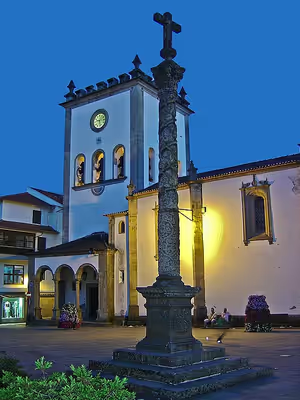
Photographers use blue hour for the tranquil mood it sets. When photographing during blue hour it can be favourable to capture subjects that have artificial light sources, such as buildings, monuments, cityscapes, or bridges.