

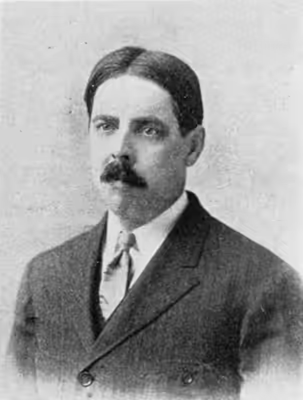
Edward Thorndike
American psychologist (1874–1949)
- 17 min read
- 10 chapters

Related on Lably
Through Learning, Connectionism and William Shakespeare
Thorndike was a member of the board of the Psychological Corporation and served as president of the American Psychological Association in 1912. A Review of General Psychology survey, published in 2002, ranked Thorndike as the ninth-most cited psychologist of the 20th century. Edward Thorndike had a powerful impact on reinforcement theory and behavior analysis, providing the basic framework for empirical laws in behavior psychology with his law of effect. Through his contributions to the behavioral psychology field came his major impacts on education, where the law of effect has great influence in the classroom.
Early life and education
Thorndike, born in Williamsburg, Massachusetts was the son of Edward R and Abbie B Thorndike, a Methodist minister in Lowell, Massachusetts. Thorndike graduated from The Roxbury Latin School (1891), in West Roxbury, Massachusetts and from Wesleyan University (B.S. 1895). He earned an M.A. at Harvard University in 1897. His two brothers (Lynn and Ashley) also became important scholars. The younger, Lynn, was a medievalist specializing in the history of science and magic, while the older, Ashley, was an English professor and noted authority on Shakespeare.
While at Harvard, he was interested in how animals learn (ethology), and worked with William James. Afterwards, he became interested in the animal 'man', to the study of which he then devoted his life. Edward's thesis is sometimes thought of as the essential document of modern comparative psychology. Upon graduation, Thorndike returned to his initial interest, educational psychology. In 1898 he completed his PhD at Columbia University under the supervision of James McKeen Cattell, one of the founding fathers of psychometrics.
In 1899, after a year of unhappy initial employment at the College for Women of Case Western Reserve in Cleveland, Ohio, he became an instructor in psychology at Teachers College at Columbia University, where he remained for the rest of his career, studying human learning, education, and mental testing. In 1937 Thorndike became the second President of the Psychometric Society, following in the footsteps of Louis Leon Thurstone who had established the society and its journal Psychometrika the previous year.
On August 29, 1900, he wed Elizabeth Moulton. They had five children, among them Frances, who became a mathematician.
During the early stages of his career, he purchased a wide tract of land on the Hudson and encouraged other researchers to settle around him. Soon a colony had formed there with him as its 'tribal' chief.
Sign in to keep reading
9 more chapters are free with a Lably account.
Connectionism
Thorndike was a pioneer not only in behaviorism and in studying learning, but also in using animals in clinical experiments. Thorndike was able to create a theory of learning based on his research with animals. His doctoral dissertation, "Animal Intelligence: An Experimental Study of the Associative Processes in Animals", was the first in psychology where the subjects were nonhumans. Thorndike was interested in whether animals could learn tasks through imitation or observation. To test this, Thorndike created puzzle boxes. The puzzle boxes were approximately 20 inches long, 15 inches wide, and 12 inches tall. Each box had a door that was pulled open by a weight attached to a string that ran over a pulley and was attached to the door. The string attached to the door led to a lever or button inside the box. When the animal pressed the bar or pulled the lever, the string attached to the door would cause the weight to lift and the door to open. Thorndike's puzzle boxes were arranged so that the animal would be required to perform a certain response (pulling a lever or pushing a button), while he measured the amount of time it took them to escape. Once the animal had performed the desired response they were allowed to escape and were also given a reward, usually food. Thorndike primarily used cats in his puzzle boxes. When the cats were put into the cages they would wander restlessly and meow, but they did not know how to escape. Eventually, the cats would step on the switch on the floor by chance, and the door would open. To see if the cats could learn through observation, he had them observe other animals escaping from the box. He would then compare the times of those who got to observe others escaping with those who did not, and he found that there was no difference in their rate of learning. Thorndike saw the same results with other animals, and he observed that there was no improvement even when he placed the animals' paws on the correct levers, buttons, or bar. These failures led him to fall back on a trial and error explanation of learning. He found that after accidentally stepping on the switch once, they would press the switch faster in each succeeding trial inside the puzzle box. By observing and recording the animals' escapes and escape times, Thorndike was able to graph the times it took for the animals in each trial to escape, resulting in a learning curve. The animals had difficulty escaping at first, but eventually "caught on" and escaped faster and faster with each successive puzzle box trial, until they eventually leveled off. The quickened rate of escape results in the s-shape of the learning curve. The learning curve also suggested that different species learned in the same way but at different speeds. From his research with puzzle boxes, Thorndike was able to create his own theory of learning. The puzzle box experiments were motivated in part by Thorndike's dislike for statements that animals made use of extraordinary faculties such as insight in their problem solving: "In the first place, most of the books do not give us a psychology, but rather a eulogy of animals. They have all been about animal intelligence, never about animal stupidity."
Thorndike meant to distinguish clearly whether or not cats escaping from puzzle boxes were using insight. Thorndike's instruments in answering this question were learning curves revealed by plotting the time it took for an animal to escape the box each time it was in the box. He reasoned that if the animals were showing insight, then their time to escape would suddenly drop to a negligible period, which would also be shown in the learning curve as an abrupt drop; while animals using a more ordinary method of trial and error would show gradual curves. His finding was that cats consistently showed gradual learning.
Adult learning
Thorndike put his testing expertise to work for the United States Army during World War I, participating in the development of the Army Beta test used to evaluate illiterate, unschooled, and non-English speaking recruits.
Thorndike believed that "Instruction should pursue specified, socially useful goals." Thorndike believed that the ability to learn did not decline until age 35, and only then at a rate of 1 percent per year. Thorndike also stated the law of effect, which says behaviors that are followed by good consequences are likely to be repeated in the future.
Thorndike identified the three main areas of intellectual development. The first being abstract intelligence. This is the ability to process and understand different concepts. The second is mechanical intelligence, which is the ability to handle physical objects. Lastly there is social intelligence. This is the ability to handle human interaction.
- Learning is incremental.
- Learning occurs automatically.
- All animals learn the same way.
- Law of effect—if an association is followed by a "satisfying state of affairs" it will be strengthened and if it is followed by an "annoying state of affairs " it will be weakened.
- Thorndike's law of exercise has two parts; the law of use and the law of disuse.
- Law of use—the more often an association is used the stronger it becomes.
- Law of disuse—the longer an association is unused the weaker it becomes.
- Law of recency—the most recent response is most likely to reoccur.
- Multiple response—problem solving through trial and error. An animal will try multiple responses if the first response does not lead to a specific state of affairs.
- Set or attitude—animals are predisposed to act in a specific way.
- Prepotency of elements—a subject can filter out irrelevant aspects of a problem and focus and respond only to significant elements of a problem.
- Response by analogy—responses from a related or similar context may be used in a new context.
- Identical elements theory of transfer—This theory states that the extent to which information learned in one situation will transfer to another situation is determined by the similarity between the two situations. The more similar the situations are, the greater the amount of information that will transfer. Similarly, if the situations have nothing in common, information learned in one situation will not be of any value in the other situation.
- Associative shifting—it is possible to shift any response from occurring with one stimulus to occurring with another stimulus. Associative shift maintains that a response is first made to situation A, then to AB, and then finally to B, thus shifting a response from one condition to another by associating it with that condition.
- Law of readiness—a quality in responses and connections that results in readiness to act. Thorndike acknowledges that responses may differ in their readiness. He claims that eating has a higher degree of readiness than vomiting, that weariness detracts from the readiness to play and increases the readiness to sleep. Also, Thorndike argues that a low or negative status in respect to readiness is called unreadiness. Behavior and learning are influenced by the readiness or unreadiness of responses, as well as by their strength.
- Identifiability—According to Thorndike, the identification or placement of a situation is a first response of the nervous system, which can recognize it. Then connections may be made to one another or to another response, and these connections depend upon the original identification. Therefore, a large amount of learning is made up of changes in the identifiability of situations. Thorndike also believed that analysis might turn situations into compounds of features, such as the number of sides on a shape, to help the mind grasp and retain the situation, and increase their identifiability.
- Availability—The ease of getting a specific response. For example, it would be easier for a person to learn to touch their nose or mouth than it would be for them to draw a line 5 inches long with their eyes closed.
Development of law of effect
Thorndike's research focused on instrumental learning, which means that learning is developed from the organism doing something. For example, he placed a cat inside a wooden box. The cat would use various methods while trying to get out, but nothing would work until it hit the lever. Afterwards, Thorndike tried placing the cat inside the wooden box again. This time, the cat was able to hit the lever quickly and succeeded in getting out from the box.
At first, Thorndike emphasized the importance of dissatisfaction stemming from failure as equal to the reward of satisfaction with success, though in his experiments and trials on humans he came to conclude that reward is a much more effective motivator than punishment. He also emphasized that the satisfaction must come immediately after the success, or the lesson would not sink in.
Eugenics
Thorndike was a proponent of eugenics. He argued that "selective breeding can alter man's capacity to learn, to keep sane, to cherish justice or to be happy. There is no more certain and economical a way to improve man's environment as to improve his nature." He stated:
I hope to have made it clear that we have much to learn about eugenics, and also that we already know enough to justify us in providing for the original intellect and character of man in the future with a higher, purer source than the muddy streams of the past. If it is our duty to improve the face of the world and human customs and traditions, so that men unborn may live in better conditions, it is doubly our duty to improve the original natures of these men themselves. For there is no surer means of improving the conditions of life.
And furthermore:
It is no part of my office to moralize on these facts. But surely it would be a pitiable thing if man should forever make inferior men as a by-product of passion, and deny good men life in mistaken devotion to palliative and remedial philanthropy. Ethics and religion must teach man to want the welfare of the future as well as the relief of the cripple before his eyes; and science must teach man to control his own future nature as well as the animals, plants, and physical forces amongst which he will have to live. It is a noble thing that human reason, bred of a myriad unreasoned happenings, and driven forth into life by whips made aeons ago with no thought of man's higher wants, can yet turn back to understand man's birth, survey his journey, chart and steer his future course, and free him from barriers without and defects within. Until the last removable impediment in man's own nature dies childless, human reason will not rest.
Thorndike on education
Thorndike's Educational psychology began a trend toward behavioral psychology that sought to use empirical evidence and a scientific approach to problem solving. Thorndike was among some of the first psychologists to combine learning theory, psychometrics, and applied research for school-related subjects to form psychology of education. One of his influences on education is seen by his ideas on mass marketing of tests and textbooks at that time. Thorndike opposed the idea that learning should reflect nature, which was the main thought of developmental scientists at that time. He instead thought that schooling should improve upon nature. Unlike many other psychologist of his time, Thorndike took a statistical approach to education in his later years by collecting qualitative information intended to help teachers and educators deal with practical educational problems. Thorndike's theory was an association theory, as many were in that time. He believed that the association between stimulus and response was solidified by a reward or confirmation. He also thought that motivation was an important factor in learning. The Law of Effect introduced the relation between reinforcers and punishers. Although Thorndike's description of the relation between reinforcers and punishers was incomplete, his work in this area would later become a catalyst in further research, such as that of B.F. Skinner.
Thorndike's Law of Effect states that "responses that produce a desired effect are more likely to occur again whereas responses that produce an unpleasant effect are less likely to occur again". The terms 'desired effect' and 'unpleasant effect' eventually became known as 'reinforcers' and 'punishers'. Thorndike's contributions to the Behavioral Psychology Society are seen through his influences in the classroom, with a particular focus on praising and ignoring behaviors. Praise is used in the classroom to encourage and support the occurrence of a desired behavior. When used in the classroom, praise has been shown to increase correct responses and appropriate behavior. Planned ignoring is used to decrease, weaken, or eliminate the occurrence of a target behavior. Planned ignoring is accomplished by removing the reinforcer that is maintaining the behavior. For example, when the teacher does not pay attention to a "whining" behavior of a student, it allows the student to realize that whining will not succeed in gaining the attention of the teacher.
Beliefs about the behavior of women
Unlike later behaviorists such as John B. Watson, who placed a very strong emphasis on the impact of environmental influences on behavior, Thorndike believed that differences in the parental behavior of men and women were due to biological, rather than cultural, reasons. While conceding that society could "complicate or deform" what he believed were inborn differences, he believed that "if we [researchers] should keep the environment of boys and girls absolutely similar these instincts would produce sure and important differences between the mental and moral activities of boys and girls". Indeed, Watson himself overtly critiqued the idea of maternal instincts in humans in a report of his observations of first-time mothers struggling to breastfeed. Watson argued that the very behaviors Thorndike referred to as resulting from a "nursing instinct" stemming from "unreasoning tendencies to pet, coddle, and 'do for' others," were performed with difficulty by new mothers and thus must have been learned, while "instinctive factors are practically nil".
Thorndike's beliefs about inborn differences between the thoughts and behavior of men and women included arguments about the role of women in society. For example, along with the "nursing instinct," Thorndike talked about the instinct of "submission to mastery," arguing that because men are typically physically larger than women, "Women in general are thus by original nature submissive to men in general." Such beliefs were commonplace during this era.
Thorndike's word books
Thorndike composed three different word books to assist teachers with word and reading instruction. After publication of The Teacher's Word Book in 1921, two other books were written and published, each approximately a decade apart from its predecessor. The second book in the series, its full title being A Teacher's Word Book of the Twenty Thousand Words Found Most Frequently and Widely in General Reading for Children and Young People, was published in 1932, and the third and final book, The Teacher's Word Book of 30,000 Words, was published in 1944.
In Appendix A to the second book, Thorndike gives credit to his word counts and how frequencies were assigned to particular words. Selected sources extrapolated from Appendix A include:
- Children's Reading: Black Beauty, Little Women, Treasure Island, A Christmas Carol, The Legend of Sleepy Hollow, Youth's Companion, school primers, first readers, second readers, and third readers
- Standard Literature: The Bible, Shakespeare, Tennyson, Wordsworth, Cowper, Pope, and Milton
- Common Facts and Trades: The United States Constitution and the Declaration of Independence, A New Book of Cookery, Practical Sewing and Dress Making, Garden and Farm Almanac, and mail-order catalogues
In the preface to the third book, Thorndike writes that the list contained therein "tells anyone who wishes to know whether to use a word in writing, speaking, or teaching how common the word is in standard English reading matter" (p. x), and he further advises that the list can best be employed by teachers if they allow it to guide the decisions they make choosing which words to emphasize during reading instruction. Some words require more emphasis than others, and, according to Thorndike, his list informs teachers of the most frequently occurring words that should be reinforced by instruction and thus become "a permanent part of [students'] stock of word knowledge" (p. xi). If a word is not on the list but appears in an educational text, its meaning only needs to be understood temporarily in the context in which it was found, and then summarily discarded from memory.
Thorndike's influence
Thorndike contributed a great deal to psychology. His influence on animal psychologists, especially those who focused on behavior plasticity, greatly contributed to the future of that field. In addition to helping pave the way towards behaviorism, his contribution to measurement influenced philosophy, the administration and practice of education, military administration, industrial personnel administration, civil service and many public and private social services. Thorndike influenced many schools of psychology as Gestalt psychologists, psychologists studying the conditioned reflex, and behavioral psychologists all studied Thorndike's research as a starting point. Thorndike was a contemporary of John B. Watson and Ivan Pavlov. However, unlike Watson, Thorndike introduced the concept of reinforcement. Thorndike was the first to apply psychological principles to the area of learning. His research led to many theories and laws of learning. His theory of learning, especially the law of effect, is most often considered to be his greatest achievement. In 1929, Thorndike addressed his early theory of learning, and claimed that he had been wrong. After further research, he was forced to denounce his law of exercise completely, because he found that practice alone did not strengthen an association, and that time alone did not weaken an association. He also got rid of half of the law of effect, after finding that a satisfying state of affairs strengthens an association, but punishment is not effective in modifying behavior. He placed a great emphasis on consequences of behavior as setting the foundation for what is and is not learned. His work represents the transition from the school of functionalism to behaviorism, and enabled psychology to focus on learning theory. Thorndike's work would eventually be a major influence to B.F. Skinner and Clark Hull. Skinner, like Thorndike, put animals in boxes and observed them to see what they were able to learn. The learning theories of Thorndike and Pavlov were later synthesized by Clark Hull. His work on motivation and attitude formation directly affected studies on human nature as well as social order. Thorndike's research drove comparative psychology for fifty years, and influenced countless psychologists over that period of time, and even still today.
Accomplishments
In 1912, Thorndike was elected president for the American Psychological Association. In 1917 he was elected as a Fellow of the American Statistical Association. He was admitted to the National Academy of Sciences in 1917. He was one of the first psychologists to be admitted to the association. Thorndike is well known for his experiments on animals supporting the law of effect. He was elected to the American Philosophical Society in 1932 and the American Academy of Arts and Sciences in 1934. That same year, Thorndike was elected president of the American Association for the Advancement of Science.
Criticism
Thorndike's connectionism has been criticized for being too simplistic and reductionistic. His law of effect and puzzle box methodology were subjected to detailed criticism by behaviorists and many other psychologists. The criticisms over the law of effect mostly cover four aspects of the theory: the implied or retroactive working of the effect, the philosophical implication of the law, the identification of the effective conditions that cause learning, and the comprehensive usefulness of the law.
Because of his "racist, sexist, and antisemitic ideals", amid the George Floyd protests of 2020, the Board of Trustees of Teachers' College in New York voted unanimously to remove his name from Thorndike Hall.