

Huronian glaciation
Severe glaciation during the Paleoproterozoic era
- 4 min read
- 4 chapters

Related on Lably
Through Glacial period, Rift and Australia
Description
The three glacial diamictite-bearing units of the Huronian are, from the oldest to youngest, the Ramsay Lake, Bruce, and Gowganda formations. Although there are other glacial deposits recognized throughout the world at this time, the Huronian is restricted to the region north of Lake Huron, between Sault Ste. Marie, Ontario, and Rouyn-Noranda, Quebec. Other similar deposits are known from elsewhere in North America, as well as Australia and South Africa.
The Huronian glaciation broadly coincides with the Great Oxygenation Event, a time of increased atmospheric oxygen and decreased atmospheric methane. The oxygen reacted with the methane to form carbon dioxide and water, both much weaker greenhouse gases than methane, greatly reducing the efficacy of the greenhouse effect, especially as water vapor readily precipitated out of the air with dropping temperature. This caused an icehouse effect and, possibly compounded by the low solar irradiation at the time as well as reduced geothermal activities, the combination of increasing free oxygen (which causes oxidative damage to organic compounds) and climatic stresses likely caused an extinction event, the first and longest lasting in the Earth's history, which wiped out most of the anaerobe-dominated microbial mats both on the Earth's surface and in shallow seas.
Sign in to keep reading
3 more chapters are free with a Lably account.
Discovery and name
In 1907, Arthur Coleman first inferred a "lower Huronian ice age" from analysis of a geological formation near Lake Huron in Ontario. In his honour, the lower (glacial) member of the Gowganda Formation is referred to as the Coleman member. These rocks have been studied in detail by numerous geologists and are considered to represent the type example of a Paleoproterozoic glaciation.
The confusion of the terms glaciation and ice age has led to the more recent impression that the entire time period represents a single glacial event. The term Huronian is used to describe a lithostratigraphic supergroup and should not be used to describe glacial cycles, according to The North American Stratigraphic Code, which defines the proper naming of geologic physical and chrono units. Diachronic or geochronometric units should be used.
Geology and climate
The Gowganda Formation (2.3 Bya) contains "the most widespread and most convincing glaciogenic deposits of this era", according to Eyles and Young. In North America, similar-age deposits are exposed in Michigan, the Medicine Bow Mountains, Wyoming, Chibougamau, Quebec, and central Nunavut. Globally, they occur in the Griquatown Basin of South Africa, as well as India and Australia.
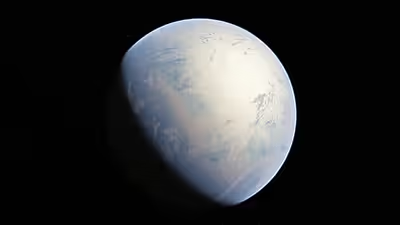
Popular perception is that one or more of the glaciations may have been snowball Earth events, when all or most of Earth's surface was covered in ice. However the palaeomagnetic evidence that suggests ice sheets were present at low latitudes is contested, and the glacial sediments (diamictites) are discontinuous, alternating with carbonate and other sedimentary rocks, indicating temperate climates, providing scant evidence for global glaciation.
Implications
Before the Huronian Ice Age, most organisms were anaerobic, relying on chemosynthesis and retinal-based anoxygenic photosynthesis for production of biological energy and biocompounds. But around this time, cyanobacteria evolved porphyrin-based oxygenic photosynthesis, which produced dioxygen as a waste product. At first, most of this oxygen was dissolved in the ocean and afterwards absorbed through the reduction by surface ferrous compounds, atmospheric methane and hydrogen sulfide. However, as the cyanobacterial photosynthesis continued, the cumulative oxygen oversaturated the reductive reservoir of the Earth's surface and spilled out as free oxygen that "polluted" the atmosphere, leading to a permanent change to the atmospheric chemistry known as the Great Oxygenation Event.
The once-reducing atmosphere, now an oxidizing one, was highly reactive and toxic to the anaerobic biosphere. Furthermore, atmospheric methane was depleted by oxygen and reduced to trace gas levels, and replaced by much less powerful greenhouse gases such as carbon dioxide and water vapor, the latter of which was also readily precipitated out of the air at low temperatures. Earth's surface temperature dropped significantly, partly because of the reduced greenhouse effect and partly because solar luminosity and/or geothermal activities were also lower at that time, leading to an icehouse Earth.
After the combined impact of oxidization and climate change devastated the anaerobic biosphere (then likely dominated by archaeal microbial mats), aerobic organisms capable of oxygen respiration were able to proliferate rapidly and exploit the ecological niches vacated by anaerobes in most environments. The surviving anaerobe colonies were forced to adapt a symbiotic living among aerobes, with the anaerobes contributing the organic materials that aerobes needed, and the aerobes consuming and "detoxing" the surrounding of oxygen molecules lethal to the anaerobes. This might have also caused some anaerobic archaea to begin invaginating their cell membranes into endomembranes in order to shield and protect the cytoplasmic nucleic acids, allowing endosymbiosis with aerobic eubacteria (which eventually became ATP-producing mitochondria), and this symbiogenesis contributed to the evolution of eukaryotic organisms during the Proterozoic.