

Keratin
Structural fibrous protein
- 7 min read
- 5 chapters

Related on Lably
Through Scale (zoology), Hair and Nail (anatomy)
Examples of occurrence
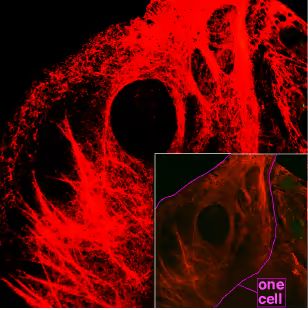
Alpha-keratins (α-keratins) are found in all vertebrates. They form the hair (including wool), the outer layer of skin, horns, nails, claws and hooves of mammals, and the slime threads of hagfish. The baleen plates of filter-feeding whales are also made of keratin. Keratin filaments are abundant in keratinocytes in the hornified layer of the epidermis; these are proteins which have undergone keratinization. They are also present in epithelial cells in general. For example, mouse thymic epithelial cells react with antibodies for keratin 5, keratin 8, and keratin 14. These antibodies are used as fluorescent markers to distinguish subsets of mouse thymic epithelial cells in genetic studies of the thymus.
The harder beta-keratins (β-keratins) are found only in the sauropsids, i.e., all living reptiles and birds. They are found in the nails, scales, and claws of reptiles, in some reptile shells (Testudines), and in the feathers, beaks, and claws of birds. These keratins are formed primarily in beta sheets. However, beta sheets are also found in α-keratins. Recent scholarship has shown that sauropsid β-keratins are fundamentally different from α-keratins at a genetic and structural level. The new term corneous beta protein (CBP) has been proposed to avoid confusion with α-keratins.
Keratins (also described as cytokeratins) are polymers of type I and type II intermediate filaments that have been found only in chordates (vertebrates, amphioxi, urochordates). Nematodes and many other non-chordate animals seem to have only type V intermediate filaments, fibers that structure the nucleus.
Sign in to keep reading
4 more chapters are free with a Lably account.
Genes
The human genome encodes 54 functional keratin genes, located in two clusters on chromosomes 12 and 17. This suggests that they originated from a series of gene duplications on these chromosomes.
The keratins include the following proteins of which KRT23, KRT24, KRT25, KRT26, KRT27, KRT28, KRT31, KRT32, KRT33A, KRT33B, KRT34, KRT35, KRT36, KRT37, KRT38, KRT39, KRT40, KRT71, KRT72, KRT73, KRT74, KRT75, KRT76, KRT77, KRT78, KRT79, KRT80, KRT81, KRT82, KRT83, KRT84, KRT85 and KRT86 have been used to describe keratins past 20.
Protein structure
The first sequences of keratins were determined by Israel Hanukoglu and Elaine Fuchs (1982, 1983). These sequences revealed that there are two distinct but homologous keratin families, which were named type I and type II keratins. By analysis of the primary structures of these keratins and other intermediate filament proteins, Hanukoglu and Fuchs suggested a model in which keratins and intermediate filament proteins contain a central ~310 residue domain with four segments in α-helical conformation that are separated by three short linker segments predicted to be in beta-turn conformation. This model has been confirmed by the determination of the crystal structure of a helical domain of keratins.
Type I and II keratins
The human genome has 54 functional annotated keratin genes, of which 28 are type I keratins and 26 are type II keratins.
Fibrous keratin molecules supercoil to form a very stable, left-handed superhelical motif to multimerise, forming filaments consisting of multiple copies of the keratin monomer.
The major force that keeps the coiled-coil structure is hydrophobic interactions between apolar residues along the keratin's helical segments.
The keratin supercoil shape has limited space in the interior of the coil. This size restriction is balanced in keratin by a high frequency of glycine residues, the smallest protein amino-acid. A high frequency of glycine residues is also seen in collagen structural proteins, which also feature a size-constrained helical shape. The connective tissue protein elastin also has a high percentage of both glycine and alanine. A preponderance of amino acids with small, nonreactive side groups is characteristic of structural proteins, for which H-bonded close packing is more important than chemical specificity.
Disulfide bridges
In addition to intra- and intermolecular hydrogen bonds, the distinguishing feature of keratins is the presence of large amounts of the sulfur-containing amino acid cysteine, required for the disulfide bridges that confer additional strength and rigidity by permanent, thermally stable crosslinking—in much the same way that non-protein sulfur bridges stabilize vulcanized rubber. Human hair is approximately 14% cysteine. The pungent smells of burning hair and skin are due to the volatile sulfur compounds formed. Extensive disulfide bonding contributes to the insolubility of keratins, except in a small number of solvents such as dissociating or reducing agents.
The more flexible and elastic keratins of hair have fewer interchain disulfide bridges than the keratins in mammalian fingernails, hooves and claws (homologous structures), which are harder and more like their analogs in other vertebrate classes. Hair and other α-keratins consist of α-helically coiled single protein strands (with regular intra-chain H-bonding), which are then further twisted into superhelical ropes that may be further coiled. The β-keratins of reptiles and birds have β-pleated sheets twisted together, then stabilized and hardened by disulfide bridges.
Thiolated polymers (thiomers) can form disulfide bridges with cysteine substructures of keratins getting covalently attached to these proteins. Thiomers therefore exhibit high binding properties to keratins found in hair, on skin and on the surface of many cell types.
Filament formation
It has been proposed that keratins can be divided into 'hard' and 'soft' forms, or 'cytokeratins' and 'other keratins'. That model is now understood to be correct. A new nuclear addition in 2006 to describe keratins takes this into account.
Keratin filaments are intermediate filaments. Like all intermediate filaments, keratin proteins form filamentous polymers in a series of assembly steps beginning with dimerization; dimers assemble into tetramers and octamers and eventually, if the current hypothesis holds, into unit-length-filaments (ULF) capable of annealing end-to-end into long filaments.
Pairing
Cornification
Cornification is the process of forming an epidermal barrier in stratified squamous epithelial tissue. At the cellular level, cornification is characterised by:
- production of keratin
- production of small proline-rich (SPRR) proteins and transglutaminase which eventually form a cornified cell envelope beneath the plasma membrane
- terminal differentiation
- loss of nuclei and organelles, in the final stages of cornification
Metabolism ceases, and the cells are almost completely filled by keratin. During the process of epithelial differentiation, cells become cornified as keratin protein is incorporated into longer keratin intermediate filaments. Eventually the nucleus and cytoplasmic organelles disappear, metabolism ceases and cells undergo a programmed death as they become fully keratinized. In many other cell types, such as cells of the dermis, keratin filaments and other intermediate filaments function as part of the cytoskeleton to mechanically stabilize the cell against physical stress. It does this through connections to desmosomes, cell–cell junctional plaques, and hemidesmosomes, cell-basement membrane adhesive structures.
Cells in the epidermis contain a structural matrix of keratin, which makes this outermost layer of the skin almost waterproof, and along with collagen and elastin gives skin its strength. Rubbing and pressure cause thickening of the outer, cornified layer of the epidermis and forms protective calluses, which are useful for athletes and on the fingertips of musicians who play stringed instruments. Keratinized epidermal cells are constantly shed and replaced.
These hard, integumentary structures are formed by intercellular cementing of fibers formed from the dead, cornified cells generated by specialized beds deep within the skin. Hair grows continuously and feathers molt and regenerate. The constituent proteins may be phylogenetically homologous but differ somewhat in chemical structure and supermolecular organization. The evolutionary relationships are complex and only partially known. Multiple genes have been identified for the β-keratins in feathers, and this is probably characteristic of all keratins.
Clinical significance
Abnormal growth of keratin can occur in a variety of conditions including keratosis, hyperkeratosis and keratoderma.
Mutations in keratin gene expression can lead to, among others:
- Alopecia areata
- Epidermolysis bullosa simplex
- Ichthyosis bullosa of Siemens
- Epidermolytic hyperkeratosis
- Steatocystoma multiplex
- Keratosis pharyngis
- Rhabdoid cell formation in large cell lung carcinoma with rhabdoid phenotype
Several diseases, such as athlete's foot and ringworm, are caused by infectious fungi that feed on keratin.
Keratin is highly resistant to digestive acids if ingested. Cats regularly ingest hair as part of their grooming behavior, leading to the gradual formation of hairballs that may be expelled orally or excreted. In humans, trichophagia may lead to Rapunzel syndrome, an extremely rare but potentially fatal intestinal condition.
Diagnostic use
Keratin expression is helpful in determining epithelial origin in anaplastic cancers. Tumors that express keratin include carcinomas, thymomas, sarcomas and trophoblastic neoplasms. Furthermore, the precise expression-pattern of keratin subtypes allows prediction of the origin of the primary tumor when assessing metastases. For example, hepatocellular carcinomas typically express CK8 and CK18, and cholangiocarcinomas express CK7, CK8 and CK18, while metastases of colorectal carcinomas express CK20, but not CK7.