

Neritic zone
Relatively shallow part of the ocean above the drop-off of the continental shelf
- 3 min read
- 4 chapters

Related on Lably
Through Ocean, Marine life and Fish
Definition (marine biology), context, extra terminology
In marine biology, the neritic zone, also called coastal waters, the coastal ocean or the sublittoral zone, refers to the zone of the ocean where sunlight reaches the ocean floor, that is where the water is never so deep as to take it out of the photic zone.
It extends from the low tide mark to the edge of the continental shelf, with a relatively shallow depth extending to about 200 meters (660 feet). Above the neritic zone lie the intertidal (or eulittoral) and supralittoral zones; below it the continental slope begins, descending from the continental shelf to the abyssal plain and the pelagic zone.
Within the neritic, marine biologists also identify:
- The infralittoral zone is the algal-dominated zone down to around five metres below the low water mark.
- The circalittoral zone is the region beyond the infralittoral, which is dominated by sessile animals such as oysters.
- The subtidal zone is the region of the neritic zone which is below the intertidal zone, therefore never exposed to the atmosphere.
Sign in to keep reading
3 more chapters are free with a Lably account.
Physical characteristics
The neritic zone is covered with generally well-oxygenated water, receives plenty of sunlight, is relatively stable temperature, has low water pressure and stable salinity levels, making it highly suitable for photosynthetic life. There are several different areas or zones in the ocean. The area along the bottom of any body of water from the shore to the deepest abyss is called the benthic zone. It is where decomposed organic debris (also known as ocean 'snow') has settled to form a sediment layer. All photosynthetic life needs light to grow and how far out into the ocean light can still penetrate through the water column to the floor or benthic zone is what defines the neritic zone. That photic zone, or area where light can penetrate through the water column, is usually above ~100 meters (~328 feet). Some coastal areas have a long area of shallow water that extends far out beyond the landmass into the water and others, for example islands that have formed from ancient volcanos where the 'shelf' or edge of the land mass is very steep, have a very short neritic zone.
Life forms
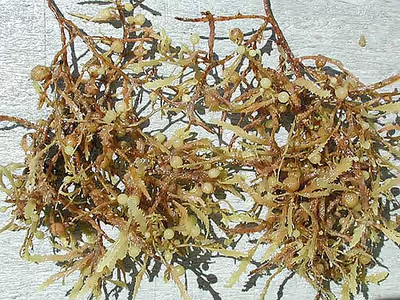
The above characteristics make the neritic zone the location of the majority of sea life. The result is high primary production by photosynthetic life such as phytoplankton and floating sargassum; zooplankton, free-floating creatures ranging from microscopic foraminiferans to small fish and shrimp, feed on the phytoplankton (and one another); both trophic levels in turn form the base of the food chain (or, more properly, web) which supports most of the world's great wild fisheries. Corals are also mostly found in the neritic zone, where they are more common than in the intertidal zone as they have less change with which to deal.
Definition (physical oceanography)
In physical oceanography, the sublittoral zone refers to coastal regions with significant tidal flows and energy dissipation, including non-linear flows, internal waves, river outflows and ocean fronts. As in marine biology, the zone typically extends to the edge of the continental shelf.