

Nubian Sandstone Aquifer System
Fossil water aquifer system in northeastern Africa
- 2 min read
- 2 chapters

Related on Lably
Through Africa, Groundwater and Water resources
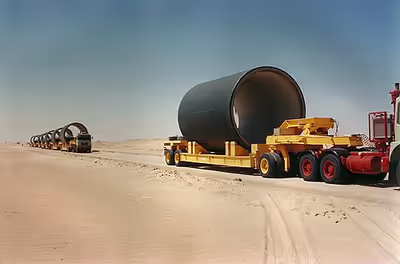
The NSAS covers a land area spanning just over two million km2, including northwestern Sudan, northeastern Chad, southeastern Libya, and most of Egypt. Containing an estimated 150,000 km3 of groundwater, the significance of the NSAS as a potential water resource for future development programs in these countries is immense. The Great Man-Made River (GMMR) project in Libya makes use of the system, extracting substantial amounts of water from this aquifer, removing an estimated 2.4 km3 of fresh water for consumption and agriculture per year.
Characteristics
Since 2001, the Nubian Sandstone aquifer situated between the Toshka and Abu Simbel areas of Egypt has undergone intensive drilling and development as part of a land reclamation project. Drilling information was used to conduct a variety of studies regarding the hydrogeological setting of the area's aquifer.
Results indicated that lithological characteristics and tectonic settings have a substantial effect on groundwater flow patterns and the area's overall aquifer potentiality, which is considered relatively low when compared to neighboring areas in eastern Oweinat or Dakhla.
Geology
The aquifer is largely composed of hard ferruginous sandstone with great shale and clay intercalation, having a thickness that ranges between 140 and 230 meters. Groundwater type varies from fresh to slightly brackish (salinity ranges from 240 to 1300 ppm). The ion dominance ordering shows that sodium cation is most commonly predominating over calcium and magnesium – whereas chloride is predominant over sulfate and bicarbonate. The groundwater is of meteoric origin (the term meteoric water refers to water that originated as precipitation; most groundwater is meteoric in origin).
High concentrations of sodium, chloride, and sulfates reflect the leaching and dissolution processes of gypsiferous shales and clay, in addition to a lengthy duration of water residence. Two recharge locations tied to specific epochs have been identified by Reika Yokochi et al.: one 38,000 years ago originating from the Mediterranean, and the second dated at around 361,000 years ago from the tropical Atlantic.
Sign in to keep reading
One more chapter is free with a Lably account.
International development projects
Since 2006, the International Atomic Energy Agency has been working in cooperation with the four NSAS countries to help increase understanding of the aquifer's complexities through the IAEA-UNDP-GEF Nubian Project. Project partners include the United Nations Development Programme (UNDP)/Global Environment Facility (GEF), IAEA, United Nations Educational, Scientific and Cultural Organization (UNESCO) and government representatives from the NSAS countries. The project's long-term goal is establishing rational and equitable management of the NSAS as a productive way of advancing socio-economic development in the region and protecting biodiversity and land resources.