


Related on Lably
Through Renewable energy, Hydroelectricity and Wind power
The 1948 elimination of the military of Costa Rica freed up millions of dollars from the government defense budget which are now invested in social programs and renewable energy generation. As president of Costa Rica in 1948, José Figueres announced that the nation's former military budget would be refocused specifically in healthcare, education, and environmental protection.
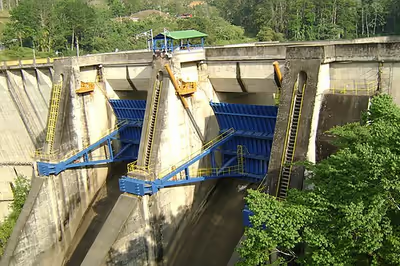
Costa Rica has a geographic advantage over others in that its high concentration per capita of rivers, dams, and volcanoes allows for a high renewable energy output. In addition, Costa Rica is the fourth highest nation in terms of rainfall per capita: it receives an average of 2,926 mm of precipitation per year. As a smaller nation with a population of only 5 million and no major industry, the need for strong energy infrastructure is less than for larger countries of higher population density. While Costa Rica's largest source of energy is hydroelectricity, other sources include geothermal energy, biomass, solar power, and wind power.
Energy consumption in Costa Rica
The commercial consumption of energy in Costa Rica has tripled from 1980 to 2009. The electricity consumption has increased by 4.2 times due to a high level of electrification. According to the World Bank, 99.5% of the country's population has access to electricity. Meanwhile, fossil fuel's consumption has increased by 2.4 times, caused by a significant growth of the number of motor vehicles.
The average yearly growing of hydrocarbons consumption in the last 20 years has been about 4.7% and electricity of 5.3%. At this rate, demand of electricity will double in 13 years and hydrocarbons in 15 years. The dependency of Costa Rica for fossil fuels reached in 2009 the 64% of commercial energy while electricity 22%. The rest of the basket consumption is completed by biomass (12%) and other energy products (2%). According with the World Bank, as of 2013, the energy use per capita of Costa Rica was 1029 kg of oil equivalent and the electric power consumption per capita 1955 kWh.
Costa Rica’s new Minister of Environment and Energy, Mónica Navarro del Valle was appointed to office in May 2026. Some see her as a way to reset the country's energy policies and align them with environmental organizations. Others see her as more of the same. As a lawyer, she has represented both environmental organizations and private interests. While some environmentalists remain skeptical due to her ties to real estate and development, many industry groups view her appointment as a positive move toward reducing bureaucratic friction for major infrastructure projects.
Sign in to keep reading
5 more chapters are free with a Lably account.
Energy organizations
Ministry of Environment and Energy
The Ministry of Environment and Energy of Costa Rica (MINAE, in English), is the governmental institution responsible of the management of the resources of Costa Rica in the environmental and energy field. The president of Costa Rica, Luis Guillermo Solis Rivera, appointed engineer Irene Cañaz Díaz – a former consultant of the Deutsche Gesellschaft für Internationale Zusammenarbeit - as Vice-minister of Energy in May 2014. According with the Ministry's goals, the energy agenda of Costa Rica aims to generate a more rational and efficient use of energy resources, reduce the dependency to international markets and prepare the country to face climate change and oil depletion. The Viceministry of Energy has three general departments: Sectoral Energy, Hydrocarbons and Transportation and Fuels Marketing.
Sectoral Energy Department
The Sectoral Energy Department (Dirección Sectorial de Energía, or DSE in Spanish) is responsible to create and promote the integral energy planning, using policies and strategic actions for guaranteeing the supply and quality of energy of Costa Rica. Among the objectives of the DSE, they are responsible of creating the National Energy Plan taking into account the National Development Plan of Costa Rica, as well as the demands of the Ministry of Environment and Energy.
Costa Rican Institute of Electricity (ICE)
The Costa Rican Institute of Electricity (Spanish: Instituto Costarricense de Electricidad, ICE) was created on 8 April 1949 as an autonomous state-owned institution, as a way to solve the issues of electric energy availability that the country was faced during the 1940s. Since then, the ICE has been executing the electrical development of Costa Rica. In the last years, the institution has evolved as a corporation (Grupo ICE) clustering other public companies that include "Radiográfica Costarricense" (RACSA) and the National Company of Power and Illumination (Compañía Nacional de Fuerza y Luz, CNFL).
"Grupo ICE" has used as primary source the hydroelectricity for developing its infrastructure, but it has also built (and is currently building) several geothermal, wind and solar energy projects. It has more than 15,000 workers and has customer service offices in the whole country. Although the first large-scale hydroelectric station began to function at the beginning of the 1900s, large-scale hydroelectric power and electricity did not begin to be developed until the formation of Grupo ICE.
Costa Rican Petroleum Refinery (RECOPE S.A.)
The Costa Rican Petroleum Refinery (Refinadora Costarricense de Petróleo, RECOPE in Spanish) is a state-owned institution, considered the biggest company in Central America. Since its creation in 1963 (and nationalized in 1974), RECOPE focuses its operations on import and distribution of fossil fuels in Costa Rica.
In the research field, RECOPE has an experimental plant of biodiesel and through internships and agreements, works with public universities of Costa Rica and research centers in the developing of alternative fuels like biofuels, natural gas and hydrogen.
Hydrogen research
In 2011, the board of directors of RECOPE signed a partnership with Ad Astra Rocket Company, an American rocket propulsion company with facilities in Costa Rica, to jointly research hydrogen technologies for the transport sector.
The project comprehends three phases: phase A (focused in the development of a feasibility study and to generate capacities for designing a station of compression and storage of hydrogen, delivered in 2012); phase B (designing and implementation of the storage system, delivered in 2013) and phase C (development of the integrated and autonomous system of energy supply from hydrogen).
The research work has been stranded since 2014, when the new administration of RECOPE decided to not continue with the initiative arguing doubts about the legal authority of RECOPE to invest in clean energy. In March 2015, the CEO of Ad Astra Rocket Company and former Costa Rican-American astronaut, Dr. Franklin Chang Diaz, announced the end of relations with RECOPE due their lack of definition and the delays the project was suffering. The announcement was followed by harsh criticism of the population and national media against RECOPE's board of directors as well as other governmental institutions involved in the decision.
ACOPE
Asociación Costarricense de Productores de Energía (ACOPE) was founded in 1989 and represents more than 40 private hydroelectric, wind, and biomass units generating in the country. Though there are a few large private energy companies in Costa Rica, most primarily generate power to sell to ICE.
Consorcio Nacional de Empresas de Electrificación de Costa Rica (CONELECTRICAS R.L.)
Consorcio Nacional de Empresas de Electrificacion de Costa Rica (Conelectricas), formed in 1989, is a union that aims to develop hydroelectric projects. The union consists of four smaller agencies: Coopeguanacaste, R.L, Coope Alfaro Ruiz, R.L, Coopelesca, R.L, and Coopesantos, R.L. Together, these four cooperatives provide electricity to around 500,000 people, or 22% of the country.
This consortium operates the San Lorenzo Hydroelectric Center and the Sigifredo Solís Solís Hydroelectric Center, both in San Ramón.
Costa Rican Association of Solar Energy (ACESOLAR)
The Asociación Costarricense de Energía Solar (ACESOLAR, in Spanish) is a NGO which its main objective is to promote the use and development of solar energy in the country. The organization collaborate with the private and public representatives related to the sector.
2017: 300 days of renewable energy
At the start of January 2017, Costa Rica's 4.9 million-person population ran entirely on renewable energy power for 75 days straight. This was a record-breaking achievement in that Costa Rica was the first nation to power itself completely clean of fossil fuels for this long a timeframe. This summer was an exceptionally rainy one for Costa Rica: while usually the dry season, the sheer amount of power provided from an unusually high amount of precipitation led to a higher than usual amount of hydroelectricity generated.
Carbon neutrality
In 2007, the administration of former president of Costa Rica Oscar Arias Sánchez announced the national goal to become Costa Rica the second carbon neutral country in the world (first one was Bhutan) by 2021, the same year when the country will celebrate 200 years of independence from Spain. The proposal was officially presented to the United Nations Framework for Climate Change Convention (UNFCCC) in 2010. The initiative has been kept by the next administrations of President Laura Chinchilla Miranda and Luis Guillermo Solís Rivera and aims to evolve the national economy's carbon footprint to no more than 1 ton of CO2 emissions per capita.
Costa Rica aims to generate 100% carbon neutral electricity by 2021. Apart from relying 99% on renewable (low carbon) electricity, carbon neutrality is to be achieved by resort to electric and hybrid transportation. In addition, the Costa Rican government is also beginning to offset the country's carbon dioxide emissions with new budgeting, laws, and incentives, including measures to promote biofuels, hybrid vehicles, and clean energy. Another way of offsetting emissions will be a "C-Neutral" levy which will certify that ecotourism and other industrial practices are offsetting their carbon emissions. At $10 per one ton of carbon, the money will fund conservation, reforestation, and research.
The proposal requires the substitution of low emission technologies for fossil hydrocarbon (FHC) energy in the country and the transformation of the transport subsector – which represents 66% of national FHC emissions and 54% of the total CO2 emissions – into lower carbon footprint technologies such as electric vehicles, biofuels, hybrid cars and hydrogen vehicles, as well as the promotion among the population of greater reliance on the public transport system. 41% of the total CO2 emissions in the transport subsector come from particular vehicles, according to the government. These measures could allow the country to save between US$1.5 and $2 billion per year. In order to achieve the goal, Costa Rica also needs to improve its waste management practices and agriculture methods as these account for significant proportions of national GHG emissions.
In recent years, the private sector has been actively involved in adoption of energy efficiency policies and developing low carbon certification. The National Institute of Technical Norms of Costa Rica (INTECO, in Spanish) published the regulations that private companies should follow to get carbon neutral certification.
Regulatory framework
The energy policy of the current administration is guided by the concept of energy sustainability with low emissions. The "VII Plan Nacional de Energía 2015-2030" was designed according to the priorities of the National Development Plan 2015-2018 and the government plan of President Luis Guillermo Solís Rivera.
The plan is based in five main objectives that are: 1) introducing changes in the National Power System for increasing energy efficiency, savings and improve the management of electricity demand; 2) encouraging the development of distributed generation and self-consumption electricity; 3) to update the law and institutional framework specialized in promoting energy efficiency; 4) to improve the calculation methods of electricity tariffs and 5) to raise the management efficiency of public entities of the electricity sector.
Regarding the transport sector, the national energy plan is also including as its main goals to promote "cleaner systems and clients of collective transport for hence mitigate the effects of global warming as well as encouraging the use of alternative fuels in the transport system, reducing the dependency of hydrocarbons, the emission of polluting gases and improve the regulations for importing new and used vehicles in order to promote energy efficiency and polluting reduction".
In addition, the National Development Plan of Costa Rica 2015-2018 establish the sectoral objectives for the energy policy: 1) "To promote actions facing global climate change through citizens' participation, technological change, innovation processes, research and knowledge for ensuring the welfare, human security and competitiveness of the country" and 2) "supply energy demand of the country using an energy matrix that ensure an optimal and continuous supply of electricity and fuels, promoting an efficient use of energy for keeping and improve the competitiveness of the country".
Utility private scale projects are regulated by the Law 7200 ("Ley que Autoriza la Generación Eléctrica Autónoma o Paralela", in Spanish), approved by the Legislative Assembly of Costa Rica in 1990. The private sector provides to Instituto Costarricense de Electricidad (ICE) nearly a quarter of the electricity generation capacity available and 10% of generated. However, there is still debate about how much private participation should be in the market.
By 2013, approximately 14.5% of the total generation in the country was provided by private companies and 23% of installed capacity in the National Power System, according with ICE. The Law 7200 establishes that ICE has two ways to buy private electric generation. In Chapter I it is defined the regimen of autonomous or parallel generation, that regulates the BOO (Build, Own and Operate) contracts. Article 7 of the law states that the "ICE will be able to declare eligible a project for the use of a plant of limited capacity, meanwhile the power, with the exception of parallel generation, doesn't represent more than 15% of the collective power of electric plants that constitutes the National Power System".
In Chapter II it is defined the competitive regimen that regulates the BOT (Build, Operate and Transfer) contracts. Article 20 allows the ICE to "buy electric energy from private companies up to an additional 15% of the limit specified in Article 7. This authorization is entitled for acquiring energy from hydro, geothermal, wind and any other non-conventional source, in bundles equal or smaller than 50,000 kW of maximum power (added by Law 7508 on May 9, 1995)". By 2014, ICE had 25 BOO contracts and 9 BOT contracts.
Despite political pressure to increase the participation of private companies and opening the market for reducing the costs of electricity, ICE is opposing the idea arguing their expansion plan is already solving the demand for 20 years ahead and the costs of the generation matrix are the lowest. According to ICE, until 2020 the country will need 850 MW of power generation, and all this demand is already considered with the current on-going projects.
Although the country has abundant renewable energy resources, more than 25% of Costa Rican territory has been entitled as natural protected land, reducing and limiting the possibility to explore and exploit these renewable sources, like geothermal energy in national parks.
In 2016, continuous discussions in the Legislative Assembly of Costa Rica have been occurring for a reform that would allow the ICE to exploit geothermal energy in protected areas. The Project 19.233 was presented by the former candidate to the Presidency of the Republic and incumbent Congress Representative, Ottón Solís from the Citizen Action Party. In turn, the ICE would compensate land used for the projects with land outside the parks. The bill addresses concerns over geothermal electricity generation in Rincón de la Vieja, Tenorio, and Arenal Volcano national parks. This initiative has raising concerns from some activists that claim the environmental controls led in the country by the National Technical Bureau of Environment (Secretaría Técnica Nacional del Ambiente, SETENA in Spanish) are weak. The activists also argue the process of exploration for geothermal energy is similar than those used in oil and mining.
However, in June 2015, the Minister of Environment and Energy, Edgar Gutierrez Espeleta, alleged MINAE is not currently planning to exploit geothermal energy in national parks and will postpone the decision until further research about its impact in the country and its biodiversity is made.
Conflicts
Transportation
The biggest obstacle to carbon neutrality is the transportation sector. Vehicles consume 70% of the petroleum consumed in the nation, which is 40% of the total carbon emissions. The primary mode of public transportation is diesel-powered buses. More than 50% of Costa Rica's personal passenger cars are over 20 years old with high polluting engines, though the government is beginning to propose new hybrid and plug-in electric vehicle initiatives. The existing rail network is limited to the Central Valley and not electrified. Other proposed solutions include an upgrade of the rail network (including electrification), gondolas (Tiquisia 3S Gondola Mesetransporte), and trolleys in the metropolitan Costa Rican Central Valley.
Reliability
Though hydroelectricity from dams is a high-density and high-power energy source, it is also highly dependent on weather conditions. Hydropower is reliant on rainfall and is therefore not the most reliable form of energy during seasons of drought. After an extreme season of drought in 2014, Costa Rica was forced to resort to diesel generators since sufficient rainfall was unavailable to power any of the hydroelectric dams.
Solar is an energy source that is highly dependent on weather conditions and has therefore been used on a much smaller scale than hydroelectric, wind and geothermal energy.
Environmental and social impact
One main barrier to extensive geothermal power is the abundance of national parks and protected areas that prevent excavation near many of Costa Rican's volcanoes. For example, though Rincon de la Vieja has the potential to fuel a high density of geothermal energy, Costa Rican law currently prohibits the extraction of resources inside national parks in order to preserve the land. Hydroelectric dams have also been criticized for their effects on the surrounding ecosystems. Controversy around hydroelectric dam usage stems from both environmental impact on a surrounding region and from human displacement of land. Hydroelectric dams have been equated to interference in fish migration patterns, ecosystem disrupt, interference in water quality, and land degradation from flooding the land.
The Pirrís dam especially caused much controversy regarding the displacement of people who lived in the area, especially in relation to the indigenous peoples of Costa Rica. Though dams provide job opportunities for locals, they also displace large populations of humans.
Controversy with El Diquís Hydroelectric Project
The El Diquís Hydroelectric Project has been one of the most important projects for the Instituto Costarricense de Electricidad. It will be the biggest hydropower dam in the Central American region and it is designed to provide stability and reliability to the Costa Rican electricity generation grid. Diquís will produce 655 MW, for a total of 3050 MW. Its reservoir will extend over an area of approximately 7.407 ha (900 ha of it in indigenous protected lands) and its tunnel of 9 m diameter will be more than 11 km long. The project will require seven communities to move from the area - that's more than a thousand families. The project's total expected cost is around US$2 billion.
The size of the project and its impact on the local population have raised concerns throughout the years. Among the actions deployed by the activists against the project are lawsuits for environmental damages, protests and communication breaks with the government and Grupo ICE. The Diquís reservoir is projected to flood 10% of the China Kichá territory (104 ha) and 8% of Térraba land (726 ha).
Diquís is currently in the pre-investment phase but its impact on culture, the environment and life in general for the indigenous got the United Nations involved Committee on the Elimination of Racial Discrimination (CERD) as a key actor since 2011, after a letter was sent to it by representatives of the indigenous Térraba community. In their notification letter, CERD reminded Costa Rica of their obligations to consult and allow the participation of all indigenous communities affected by the project. Costa Rica replied to the U.N. to inform it of the status of the project and to highlight that construction has not been initiated yet.
In July 2015, a US$200 million lawsuit against ICE and the Government of Costa Rica was started by one of the associations representing the indigenous communities, alleging presumed environmental damage during the preliminary exploration works. It was dismissed by a court.
In October 2016, after a failed meeting with authorities of the Government of Costa Rica led by the Vice-minister of the Presidency Ana Gabriel Zuñiga, a group of indigenous representatives and local leaders confirmed their non-negotiable position against the project. The Government argued that they are currently working on a decree to facilitate the consultation process, which should be released by January 2017.
In November 2016, the Constitutional Court of Costa Rica declared unconstitutional Article 8 of the presidential decree that established that ICE is allowed to exploit materials for the dam, the powerhouse and collateral works in the areas where indigenous communities are located.
On 2 November 2018, ICE indefinitely suspended the Diquís project.