

Sebastinae
Subfamily of fishes
- 1 min read
- 4 chapters

Related on Lably
Through Fishery
Taxonomy
Sebastinae, or Sebastidae, was first formally recognised as a grouping in 1873 by the German naturalist Johann Jakob Kaup. Some authorities recognise this family as distinct from Scorpaenidae. FishBase, a finfish database generated by a consortium of academic institutions, does, but the United States Federal government's Integrated Taxonomic Information System and the 5th Edition of Fishes of the World do not, FotW classify it as a subfamily of the Scorpaenidae. Eschmeyer's Catalog of Fishes classifies it as a subfamily of Scorpaenidae, but also classifies the Sebastolobinae (previously considered a tribe of the Sebastinae) as a different subfamily.
Sign in to keep reading
3 more chapters are free with a Lably account.
Genera
The following genera are placed in this group:
- Subfamily Sebastinae Kaup, 1873
Characteristics
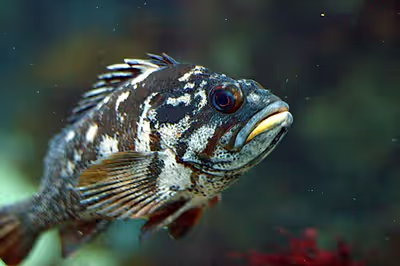
Sebastinae species have a compressed body with the head typically having ridges and spines. The gill membranes are not attached to the isthmus. There is a venom gland in the spines of the dorsal, anal and pelvic fins. The largest species is the shortraker rockfish ( Sebastes borealis) which attains a maximum total length of 108 cm (43 in) while the smallest species is Sebastes koreanus which reaches a maximum total length of 13.7 cm (5.4 in).
Distribution and habitat
Sebastinae rockfishes are found in the Pacific, Indian and Atlantic Oceans with most species in the largest genus, the ovoviviparous Sebastes with over 100 species, in the North Pacific. They can be found in marine and brackish waters.