


Related on Lably
Through Chemical formula, Sodium and Sulfur
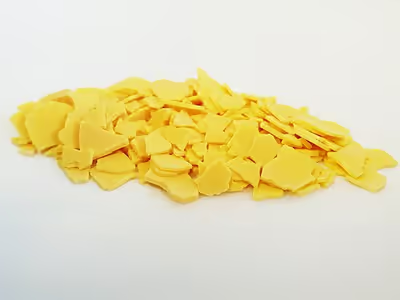
Some commercial samples are described as Na2S·xH2O, where a weight percentage of Na2S is specified. Commonly available grades have around 60% Na2S by weight, which means that x is around 3. These grades of sodium sulfide are often marketed as "sodium sulfide flakes". These samples consist of NaSH, NaOH, and water.
Structure
The structures of sodium sulfides have been determined by X-ray crystallography. The nonahydrate features S2- hydrogen-bonded to 12 water molecules. The pentahydrate consists of S2- centers bound to Na+ and encased by an array of hydrogen bonds. Anhydrous Na2S, which is rarely encountered, adopts the antifluorite structure, which means that the Na+ centers occupy sites of the fluoride in the CaF2 framework, and the larger S2− occupy the sites for Ca2+.
Sign in to keep reading
4 more chapters are free with a Lably account.
Production
Industrially Na2S is produced by carbothermic reduction of sodium sulfate often using coal:
- Na2SO4 + 2 C → Na2S + 2 CO2
A similar process is used to regenerate sodium sulfide from sodium sulfate in the Kraft process, used to produce paper.
In the laboratory, the salt can be prepared by reduction of sulfur with sodium in anhydrous ammonia, or by sodium in dry THF with a catalytic amount of naphthalene (forming sodium naphthalenide):
- 2 Na + S → Na2S
Reactions with inorganic reagents
The sulfide ion in sulfide salts such as sodium sulfide can incorporate a proton, e.g. by hydrolysis:
- S2− + H2O → SH− + OH−
When heated with oxygen and carbon dioxide, sodium sulfide can oxidize to sodium carbonate and sulfur dioxide:
- 2 Na2S + 3 O2 + 2 CO2 → 2 Na2CO3 + 2 SO2
Oxidation with hydrogen peroxide gives sodium sulfate:
- Na2S + 4 H2O2 → 4 H2O + Na2SO4
Upon treatment with sulfur, sodium polysulfides are formed:
- 2 Na2S + S8 → 2 Na2S5
Pulp and paper industry
In terms of its dominant use, sodium sulfide is primarily used in the kraft process in the pulp and paper industry. It aids in the delignification process, affording cellulose, which is the main component of paper.
It is used in water treatment as an oxygen scavenger agent and also as a metals precipitant; in chemical photography for toning black and white photographs; in the textile industry as a bleaching agent, for desulfurising and as a dechlorinating agent; and in the leather trade for the sulfitisation of tanning extracts. It is used in chemical manufacturing as a sulfonation and sulfomethylation agent. It is used in the production of rubber chemicals, sulfur dyes and other chemical compounds. It is used in other applications including ore flotation, oil recovery, making dyes, and detergent. It is also used during leather processing, as an unhairing agent in the liming operation.
Reagent in organic chemistry
Installation of carbon-sulfur bonds
In view of its high basicity, sulfide essentially does not exist in solutions of protic solvents (water, alcohols). Nonetheless, sodium sulfide is a useful shorthand. It readily alkylates to give thioethers:
- Na2S + 2 RX → R2S + 2 NaX
Even aryl halides participate in this reaction. Sodium sulfide can be used as nucleophile in Sandmeyer type reactions.
Reducing agent
Aqueous solution of sodium sulfide will reduce nitro groups to amine. This conversion is applied to production of some azo dyes since other reducible groups, e.g. azo group, remain intact. The reduction of nitro aromatic compounds to amines using sodium sulfide is known as the Zinin reaction in honor of its discoverer. Hydrated sodium sulfide reduces 1,3-dinitrobenzene derivatives to the 3-nitroanilines.
Other reactions
Sulfide has also been employed in photocatalytic applications.
Safety
Consisting of the equivalent of sodium hydroxide, sodium sulfide is strongly alkaline and can cause chemical burns. It reacts rapidly with acids to produce hydrogen sulfide, a gas which is both highly toxic and potentially explosive. Sodium sulfide hydrolyses in water to form smaller amounts of hydrogen sulfide which also makes it very toxic to aquatic life.