


Related on Lably
Through China, Tropical monsoon climate and United Kingdom
Definition
Southern China
"Southern China" (simplified Chinese: 中国南方; traditional Chinese: 中國南方) is geographically defined as the vast region south of the Qinling–Huaihe Line. This division is based on differences in climate, economic production, transportation, and culture. The southern region is characterized by a subtropical monsoon climate and tropical monsoon climate, with winters that are mild and rarely snowy. The climate is generally warm, rice is the primary grain crop, and historically, waterways were the main mode of transportation.
South China
"South China" (simplified Chinese: 华南; traditional Chinese: 華南) specifically refers to Lingnan, meaning the region "south of the Wuling Mountains", the mountain which roughly goes near the 28th parallel north.
When Republic of China held its power in the mainland before 1949, South China was defined as comprising six provinces: Guangdong, Guangxi, Guizhou, Yunnan, Fujian, and Taiwan, collectively referred to as the 'Six Provinces of South China'.
In June 1946, the Chinese Communist Party established CCP Bureau of South China in Hong Kong. During the Second Chinese Civil War, CCP Bureau of Southeast China was established, following the incorporation of Guizhou and Yunnan into that region.
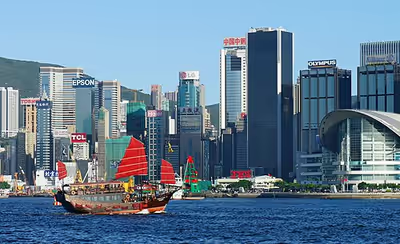
From 1949 to 1997, there were only three provinces in South China region, which were Guangdong Province, Guangxi Zhuang Autonomous Region, and Hainan Province. After the handover of Hong Kong and Macau by the United Kingdom and Portugal, these two regions are now also considered part of South China.
Sign in to keep reading
4 more chapters are free with a Lably account.
Administrative divisions
Cities with urban area over one million in population
Provincial capitals in bold.
Education
South China has accumulated substantial wealth and established several prestigious universities. Notably, the University of Hong Kong was founded in 1887 in British Hong Kong, becoming the region’s first modern university and a leading institution for English-language higher education in Asia. In 1924, Sun Yat-sen University was established in Guangzhou by Sun Yat-sen, serving as a cornerstone of modern Chinese higher education in the mainland.
After the founding of the People's Republic of China in 1949, Guangzhou was designated as the central city of South China, leading to the establishment of several key regional universities. These include South China University of Technology, known for its engineering and materials science; South China Normal University, a major center for teacher education; South China Agricultural University, specializing in tropical and subtropical agriculture; and Jinan University, one of the oldest institutions in China, with a unique focus on overseas Chinese education.
Following China's Reform and opening-up policy in the late 1970s, the city of Shenzhen experienced rapid economic growth and emerged as a major innovation and technology hub. In response, Shenzhen University got rapid development, and several prominent universities established branch campuses or new institutions in this city. For example, Tsinghua University launched the Tsinghua Shenzhen International Graduate School, and Peking University established the Peking University Shenzhen Graduate School. In addition, the newly founded Southern University of Science and Technology (SUSTech) quickly gained recognition as a high-caliber research university with international faculty and strong emphasis on science and engineering.
Guangdong
- Sun Yat-sen University
- South China University of Technology
- Southern University of Science and Technology
- South China Normal University
- Jinan University
- Shenzhen University
- Guangdong University of Foreign Studies
Guangxi and Hainan
- Guangxi University
- Guangxi Normal University
- Hainan University
Hong Kong and Macau
- University of Hong Kong
- Chinese University of Hong Kong
- Hong Kong University of Science and Technology
- City University of Hong Kong
- University of Macau
- Macau University of Science and Technology
Namesake
- South China tiger (southern China)
- South China Morning Post (Hong Kong, South China)
- Huanan Seafood Wholesale Market (Wuhan, Central China)
- South China Athletic Association (Hong Kong SAR, China)