


Related on Lably
Through Pumpkin, Carbohydrate and Calorie
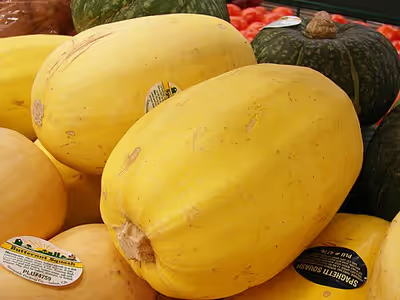
When raw, the flesh is solid and similar to other raw squash. When cooked, the flesh of the fruit falls away from the rind in ribbons or strands that look like and can be used as a vegetable, whole-food, gluten-free alternative to spaghetti.
Preparation
Spaghetti squash can be cooked by baking, boiling, steaming, air frying, or microwaving. Once cooked, the flesh of this fruit can be prepared in a way that its "strands" look like and are as long as traditional spaghetti noodles. It can be served with or without sauce as a substitute for pasta, and its seeds can be roasted, similar to pumpkin seeds.
Sign in to keep reading
2 more chapters are free with a Lably account.
Nutrition
Raw spaghetti squash is 92% water, 7% carbohydrates, and contains less than 1% each of protein and fat (table). In a reference amount of 100 g (3.5 oz), raw spaghetti squash supplies 31 calories of food energy, and has overall a low content of micronutrients (table).
Cultivation
Spaghetti squash is relatively easy to grow, thriving in gardens or pots.
The plants are monoecious, with male and female flowers on the same plant. Male flowers have long, thin stems that extend upwards from the vine. Female flowers are shorter, with a small round growth underneath the petals. This round growth turns into the squash if the flower is successfully pollinated.