

Treponema pallidum
Species of bacterium
- 16 min read
- 7 chapters

Related on Lably
Through Gram-negative bacteria, Bacteria and Citric acid cycle
Subspecies
Three subspecies of T. pallidum are known:
- Treponema pallidum pallidum, which causes syphilis
- T. p. endemicum, which causes bejel or endemic syphilis
- T. p. pertenue, which causes yaws
The three subspecies causing yaws, bejel, and syphilis are morphologically and serologically indistinguishable. The genomes of three of the T. p. pertenue strains are similar to those of the T. p. pallidum strain, differing by only 0.2%, corresponding to virulence factors. The three subspecies can be distinguished by genetics, using restriction fragment length polymorphism (RFLP), which utilizes techniques such as PCR, restriction digest and gel electrophoresis. Genes tprC, tprI, and the 5' flanking region of tpp15 can be used to differentiate between the three subspecies based on DNA fragment lengths and location of bands in gel electrophoresis. These bacteria were originally classified as members of separate species, but DNA hybridization analysis indicates they are members of the same species. Treponema carateum, the cause of pinta, remains a separate species because no isolate is available for DNA analysis. Disease transmittance in subspecies T. p. endemicum and T. p. pertenue is considered non-venereal. T. p. pallidum is the most invasive pathogenic subspecies, while T. carateum is the least invasive of the species. T. p. endemicum and T. p. pertenue are intermediately invasive.
Laboratory identification
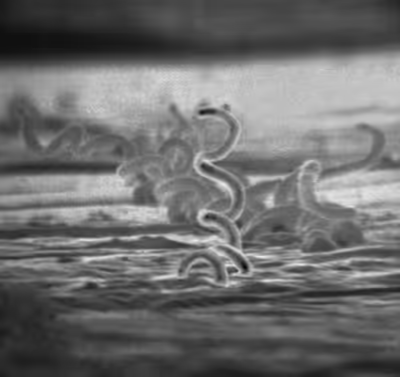
Treponema pallidum was first microscopically identified in syphilitic chancres by Fritz Schaudinn and Erich Hoffmann at the Charité in Berlin in 1905. Historically, this bacterium was identified in the clinical laboratory through visualization in dark-field microscopy. This bacterium can be detected with special stains, such as the Dieterle stain. T. pallidum is also detected by serology, including nontreponemal VDRL, rapid plasma reagin, treponemal antibody tests (FTA-ABS), T. pallidum immobilization reaction, and syphilis TPHA test.
Sign in to keep reading
6 more chapters are free with a Lably account.
Microbiology
Physiology
Treponema pallidum is a helically shaped bacterium with high motility consisting of an outer membrane, peptidoglycan layer, inner membrane, protoplasmic cylinder, and periplasmic space. It is often described as gram-negative, but its outer membrane lacks lipopolysaccharide, which is found in the outer membrane of other gram-negative bacteria. It has an endoflagellum (periplasmic flagellum) consisting of four main polypeptides, a core structure, and a sheath. The flagellum is located within the periplasmic space and wraps around the protoplasmic cylinder. The flagellum is arranged in a helical shape. The flagellar motor for T. pallidum lacks a P-ring, normally used for motility, and has a collar component instead, which is imbedded in the periplasm. The peptidoglycan layer interacts with the endoflagellum which may aid in motility. T. pallidum's outer membrane has the most contact with host cells and contains few transmembrane proteins, limiting antigenicity, while its cytoplasmic membrane is covered in lipoproteins. The outer membrane adhesins of T. pallidum, including fibronectin- and laminin-binding proteins, have the main function of attaching to host cells and cell-surface receptors, and they share antigenically related functional domains. The genus Treponema has ribbons of cytoskeletal cytoplasmic filaments that run the length of the cell just underneath the cytoplasmic membrane.
Outer membrane and surface antigens
The of T. pallidum has several features that have made it historically difficult to research. These include details such as its fragility. The treponemal outer membrane (OM) proteins are key factors for the bacterium's pathogenesis, persistence, and immune evasion strategies. Treponema's reputation as a "stealth pathogen" is primarily due to this unique (OM) structure, which serves to evade immune detection.
The outer membrane of Treponema pallidum contains a strikingly low concentration of transmembrane proteins, approximately 100-fold lower than other gram-negative bacteria or other spirochetes. This protects the cells from antibodies attacking it, hence they exhibit a "puzzling lack of antigenicity". The genome also revealed a bundle of 12 proteins and some putative hemolysins are potential virulence factors of T. pallidum. One protein, TprK, appears to constantly mutate to avoid immune response from its host.
TP0126
The TP0126 protein has been linked to the outer membrane protein family (OMP). This protein will sit in the outer membrane like a porin, which is supported by circular dichroism recombinant TP0126, and will increase the virulence factor. Researchers have classified the TP0126 protein in this class due to the homology between the protein and the porins of the OMPs. This protein is encoded by the TP0126 gene, which is conserved over all strains of T. pallidum.
TP0326
TP0326 is an ortholog of the β-barrel assembly machine Bam A. BamA apparatus inserts newly synthetized and exported outer membrane proteins into the outer membrane.
TP0453
TP0453 is a 287 amino acid protein associated with the inner membrane of the microbe's outer membrane. This protein lacks the extensive beta sheet structure that is characteristic of other membrane proteins, and does not traverse the outer membrane. This protein's function has been hypothesized to be involved with control of nutrient uptake.
TP0624
Outer Membrane Protein A (OmpA) domain-containing proteins are necessary for maintaining structural integrity in gram-negative bacteria. These domains contain peptidoglycan binding sites which creates a "structural bridge between the peptidoglycan layer and the outer memebrane." The protein TP0624 found in T. pallidum has been proposed to facilitate this structural link, as well as interactions between outer membrane proteins and corresponding domains on the thin peptidoglycan layer.
TP0751
The TP0751 protein is a protein that is unique to T. pallidum, and it is thought to aid in attachment to the host's extra cellular membrane. Since this protein aids in the attachment to the host, it sits on the surface of the cells, and in 2005, it was discovered that the TP0751 protein will attach to the laminin component in the host's extracellular matrix. With that, it is thought that the TP0751 protein plays a key role in dissemination with the host.
TP0965
TP0965 is a protein that is critical for membrane fusion in T. pallidum, and is located in the periplasm. TP0965 causes endothelial barrier dysfunction, a hallmark of late-stage pathogenesis of syphilis. It does this by reducing the expression of tight junction proteins, which in turn increases the expression of adhesion molecules and endothelial cell permeability, which eventually leads to disruption of the endothelial layer.
Treponema repeat family of proteins
The Treponema repeat family of proteins (Tpr) are proteins expressed during the infection process. Tprs are formed by a conserved N-terminal domain, an amino-terminal stretch of about 50 amino acids, a central variable region, and a conserved C-terminal domain. The many different types of Tpr include TprA, TprB, TprC, TprD, and TprE, but variability of TprK is the most relevant due to the immune escape characteristics it allows.
Antigen variation in TprK is regulated by gene conversion. In this way, fragments of the seven variable regions (V1–V7), by nonreciprocal recombination, present in TprK and the 53 donor sites of TprD can be combined to produce new structured sequences. TprK antigen variation can help T. pallidum to evade a strong host immune reaction and can also allow the reinfection of individuals. This is possible because the newly structured proteins can avoid antibody-specific recognition. It is also suspected that the genes that encode for the TprK protein are essential in pathogenesis during the infection of syphilis.
To introduce more phenotypic diversity, T. pallidum may undergo phase variation. This process mainly happens in TprF, TprI, TprG, TprJ, and TprL, and it consists of a reversible expansion or contraction of polymeric repeats. These size variations can help the bacterium to quickly adapt to its microenvironment, dodge immune response, or even increase affinity to its host.
Culture
In the past century since its initial discovery, culturing the bacteria in vitro has been difficult. Without the ability to grow and maintain the bacteria in a laboratory setting, discoveries regarding its metabolism and antimicrobial sensitivity were greatly impaired. However, successful long-term cultivation of T. pallidum in vitro was reported in 2017. This was achieved using Sf1Ep epithelial cells from rabbits, which were a necessary condition for the continued multiplication and survival of the system. The medium TpCM-2 was used, an alteration of more simple media which previously only yielded a few weeks of culture growth. This success was the result of switching out minimal essential medium (MEM) with CMRL 1066, a complex tissue culture medium. With development, new discoveries about T. pallidum's requirements for growth and gene expression may occur and in turn, yield research beneficial for the treatment and prevention of syphilis, outside of a host. However, continuous efforts to grow T. pallidum in axenic culture have been unsuccessful, indicating that it does not satisfy Koch's postulates. The challenge likely stems from the organism's strong adaptation to residing in mammalian tissue, resulting in a reduced genome and significant impairments in metabolic and biosynthetic functions.
Optimal growth occurs at 33-35 °C, hence infection and lesion development occur on warmer skin areas, but not on colder ones such as the colder ear.
Metabolism
The bacteria rely on the enzyme glycerol-3-phosphate dehydrogenase (GPDH). GPDH is an alternative when managing electrons that are produced during metabolism. In the absence of the electron transport chain, T. pallidum uses GPDH to recycle the NAD+ by oxidizing glycerol-3-phosphate to dihydroxyacetone phosphate and make NAD+ to keep glycolysis and other redox-dependent energy reactions. By doing this, it helps balance the ATP yield without weighing down the protein's limited supply for essential tasks.
T. pallidum uses an enzyme called pyrophosphate-dependent phosphofructokinase rather than ATP as a way to save energy and optimize its limited resources.
T. pallidum manages without a complete tricarboxylic acid cycle and oxidative phosphorylation by using different efficient strategies including redox balancing and substrate-level to survive the nutrient-limited host environment.
T. pallidum lacks enzyme orthologs for superoxide dismutase, however it does possess a superoxide reductase, maintaining the ability to reduce reactive oxygen species. In addition, T. pallidum encodes an alkyl hydroperoxide reductase C, which allows for the reduction of hydrogen peroxide to water and alcohols. This enzyme relies on TP0919, a protein present in the cytoplasm of T. pallidum.
T.pallidum primarily relies on glucose as its primary carbon source through glycolysis, but one study has proposed the bacterium uses an acetogenic-energy conservation pathway as a way to catabolize D-lactate as an alternative carbon source. Currently, three proteins from the pathway have been identified, of which include D-lactate dehydrogenase, phosphotransacetylase, and the acetate kinase. The acetate kinase specifically acts to catabolize D-lactate for substrate-level phosphorylation of ADP into ATP, producing acetate as a byproduct. This pathway, which takes place in the cytoplasm, can also generate ATP by assisting the maintenance of the electrochemical gradient that lies between the periplasm and cytoplasm of T.pallidum.
Genome
The genome of T. pallidum was first sequenced in 1998 and revealed a small 1.14 Mbp genome, one of the smallest bacterial genomes. The GC-content is 52.8%. The DNA sequences of T. pallidum species are more than 99.7% identical, and PCR-based assays are effective at differentiating these species. About 92.9% of DNA was determined to be open reading frames, 55% of which had predicted biological functions, while 17% matched hypothetical proteins of unknown function in other organisms and the remainder (28%) did not have significant similarity to other known sequences.
The small size of the T. pallidum genome indicates that the species has limited metabolic capabilities, and thus mostly relies on its host for many molecules typically provided by biosynthetic pathways. For instance, it is missing genes encoding key enzymes in oxidative phosphorylation and the tricarboxylic acid cycle. Thus, T. pallidum is no longer able to synthesize fatty acids, nucleic acids, and amino acids, instead relying on its mammalian hosts for these materials. T.pallidum's low levels of diversity within its DNA sequence, forces the pathogen to utilize horizontal gene transfer for genetic diversity, although the specific mechanism is not well understood. It may possibly be a clonal species that still employs recombination.
The strains T. pallidum pertenue (TPE) and T.pallidum endemicum (TEN) also experience gene transfer via different subspecies but are notably geographically isolated. Coinfection in humans of two separate subspecies strains may be possible, as indicated by a recombination event at the T.pallidium clade within their phylogenetic lineage.
Clinical significance
The clinical features of syphilis, yaws, and bejel occur in multiple stages that affect the skin. The skin lesions observed in the early stage last for weeks or months. The skin lesions are highly infectious, and the spirochetes in the lesions are transmitted by direct contact. The lesions regress as the immune response develops against T. pallidum. The latent stage that results can last a lifetime in many cases. In a few cases, the disease exits latency and enters a tertiary phase, in which destructive lesions of skin, bone, and cartilage ensue. Unlike yaws and bejels, syphilis in its tertiary stage often affects the heart, eyes, and nervous system, as well.
Syphilis
Treponema pallidum pallidum is a motile spirochete that is generally acquired by close sexual contact, entering the host via breaches in squamous or columnar epithelium. The organism can also be transmitted to a fetus by transplacental passage during the later stages of pregnancy, giving rise to congenital syphilis. The helical structure of T. p. pallidum allows it to move in a corkscrew motion through mucous membranes or enter minuscule breaks in the skin. In women, the initial lesion is usually on the labia, the walls of the vagina, or the cervix; in men, it is on the shaft or glans of the penis. It gains access to the host's blood and lymph systems through tissue and mucous membranes. In more severe cases, it may gain access to the host by infecting the skeletal bones and central nervous system of the body. Despite effective antibiotic treatment since the mid twentieth century, this infection has been emerging globally in the last few decades. In 2021, approximately 6 million new infections occurred globally. In laboratory cultures, some contemporary variants of T. p. pallidum strains have been failing to respond to the second line antibiotic azithromycin. This phylogenetic divergence and global presence point to the emergence of a pandemic strain cluster. In addition to phylogenetic divergence, the switch to confidential record keeping resulted in an overall decrease in quality of tracking and recording disease prevalence.
The incubation period for a T. p. pallidum infection is usually around 21 days, but can range from 10 to 90 days.
Due to its problematic cultivation in laboratory conditions, much is still unknown about the pathogenesis of T. pallidum. In 2023, Hu YT et al. published an article about the in vitro interaction between microglia cells and T. pallidum, which could prove to be significant in case of neurosyphilis. They have confirmed underlying mechanism of how the bacteria induce microglial apoptosis and simultaneously inhibit its clearance. They have discovered that T. pallidum activates microglia and induces autophagy on one side, but on the other side it interferes with mTORC1/TFEB pathway. This pathway is an important pathway, where the inhibition of mTORC1 signalling causes the nuclear translocation of transcription factor EB (TFEB). TFEB is a master regulator of lysosome biogenesis and its translocation to the nucleus induces the transcription of lysosomal genes and the production of lysosomes. T. pallidum interferes in this pathway by activating mTORC1, which inhibits nuclear translocation of TFEB, which consequently inhibits lysosomal biogenesis and autophagic flux. That leads into accumulation of autophagosomes, which in turn leads to microglial apoptosis and prevents the clearance of T. pallidum. This study offers good foundation for further studies of T. pallidum pathogenesis and potentially new therapeutic targets.
Yaws
The causative agent of yaws is Treponema pallidum pertenue, which is transmissible by direct physical contact between infected people. Yaws is not sexually transmitted, and occurs in tropical, humid environments of Africa, Pacific Islands, Asia and South America. Unlike syphilis, which displays vertical transmission, one strain of T. p. pertenue researched was not vertically transmissible in a guinea pig model, and yaws cannot be spread from mother to offspring. Yaws appears as skin lesions, usually papules, commonly on the lower extremities, but present in other areas such as the arms, trunk and hands. Three stages of yaws disease have been documented: primary yaws which presents as inflamed sores on the lower body, secondary yaws which presents as a variety of skin abnormalities along with bone inflammation, and tertiary yaws, also referred to as latent yaws, which occurs when T. p. pertenue is serologically detected in the host but no clinical signs are displayed until relapse, which often occurs years later. Yaws is treated with antibiotics such as azithromycin and benzathine penicillin-G.
Bejel
Bejel is caused by Treponema pallidum endemicum and is a disease that is endemic in hot and dry climates. The transmission path has not been fully mapped, however infections are thought to be transmitted via direct contact with lesion secretions or fomites rather than by sexual transmission. Bejel typically causes skin lesions, which first appear as small ulcers in the mouth, and secondary lesions that form in the oropharynx, or around the nipples of nursing women. Bejel can be treated with benzathine penicillin-G.
Non-human infection
Treponema pallidum has been found in non-human primates in multiple different geographical regions. In Tanzania specifically, T. pallidum geographical distribution closely aligns with the distribution of yaws in humans. The most common strains in NHPs are T. p. pertenue and T. p.endemicum. It is unclear however whether or not these NHP strains can naturally infect humans, but flies have been proposed as possible vectors in an alternative transmission route. Clinically, these infections range from asymptomatic to severe skin ulceration that affect the face or genitalia in these primates. Infection of NHPs is largely reliant on ecological patterns, behaviors, and interactions between the species. There are no current treatments available for infected NHPs.
Treatment
During the early 1940s, rabbit models in combination with the drug penicillin allowed for a long-term drug treatment. These experiments established the groundwork that modern scientists use for syphilis therapy. Penicillin can inhibit T. pallidum in 6–8 hours, though the cells still remain in lymph nodes and regenerate. Penicillin is not the only drug that can be used to inhibit T. pallidum; any β-lactam antibiotics or macrolides can be used. The T. pallidum strain 14 has built-in resistance to some macrolides, including erythromycin and azithromycin. Resistance to macrolides in T. pallidum strain 14 is believed to derive from a single-point mutation that increased the organism's livability. Many of the syphilis treatment therapies only lead to bacteriostatic results, unless larger concentrations of penicillin are used for bactericidal effects. Penicillin overall is the most recommended antibiotic by the Centers for Disease Control, as it shows the best results with prolonged use. It can inhibit and may even kill T. pallidum at low to high doses, with each increase in concentration being more effective. The Guideline Development Group has recommended the development of a new treatment, a short course treatment that is administered orally and can cross the placental barriers in pregnant women.
Vaccine
No vaccine for syphilis is currently available, but doxycycline postexposure prophylaxis can be used to prevent infections. The outer membrane of T. pallidum has too few surface proteins for an antibody to be effective.The outer membrane of T. pallidum has very few confirmed surface-exposed proteins, which due to the organism's elaborate biology and slow growth, has hindered progress towards the development of an effective syphilis vaccine. In contrast, some of the antigenic targets of T. pallidum are located in the periplasmic space or inner membrane, rather than being fully surface-exposed, which limits antibodies' effectiveness when trying to clear the infection. In the last century, several prototypes have been developed, and while none of them provided protection from the infection, some prevented bacteria from disseminating to distal organs and promoted accelerated healing.