


Related on Lably
Through Atmospheric pressure, Pascal (unit) and South Korea
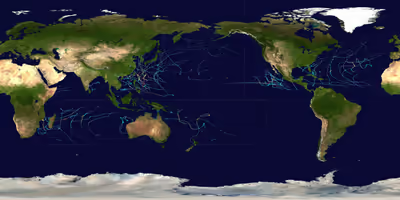
The most active basin in the year was the Western Pacific, which documented 25 named systems, while the North Atlantic saw its fifth-most-active season on record, tied with 1887, 1995, 2010, and 2011. Conversely, the Eastern Pacific hurricane season experienced an average number of cyclones reaching tropical storm intensity, numbering 17 respectively. The least-active basin of the year was the North Indian Ocean, which had a late start with its first system forming in October. Activity across the southern hemisphere's three basins—South-West Indian, Australian, and South Pacific—was spread evenly, with each region recording seven named storms apiece. So far, twenty-four Category 3 tropical cyclones formed, including three Category 5 tropical cyclones in the year. The accumulated cyclone energy (ACE) index for the 2012 (seven basins combined), as calculated by Colorado State University was 740.5 units.
The strongest tropical cyclone was Typhoon Sanba, which strengthened to a minimum barometric pressure of 900 mbar (hPa; 26.58 inHg) before striking South Korea. The costliest tropical cyclone of the year was Hurricane Sandy, which caused $68.7 billion (2012 USD) in damages after striking the Caribbean and United States. The deadliest tropical cyclone of the year was Typhoon Bopha which caused widespread destruction on Mindanao, leaving thousands of people homeless and killing 1,901 people.
Global atmospheric and hydrological conditions
The Atlantic Ocean began an organization favorable to the sea surface temperatures, while the Eastern and Central Pacific Ocean began on unfavorable conditions due to dissipation of the 2010–12 La Niña event in April 2012. During the month of May to November along the Pacific hurricane season a favorable organization began due to the sea surface temperatures and the formation of El Niño–Southern Oscillation.
Sign in to keep reading
2 more chapters are free with a Lably account.
Summary
Nineteen tropical cyclones formed in the Atlantic hurricane season, the third-most active in history with previous 1887, 1995, 2010 and 2011 seasons. On East Pacific and Central Pacific, a total of 17 named storms formed during the season.
Systems
A total of 132 systems formed globally in the year with 52 of them causing significant damage, deaths, and/or setting records for their basin.
January
January was the most active month of the year with 21 tropical cyclones forming, However, only six were named by specific tropical cyclone naming agencies. Intense Tropical Cyclone Funso produced flooding rains as it looped in the Mozambique Channel, killing at least 21 people, soon after Subtropical Depression Dando killed 10 people across southern Africa.
February
A total of nine tropical systems of all intensities were monitored during February 2012, of which five developed further and were named by the various warning centres. Intense Tropical Cyclone Giovanna was a powerful tropical cyclone that affected Madagascar. Giovanna is still blamed for 33 deaths along the Madagascar coast, and it is the first intense tropical cyclone to impact Madagascar, since Cyclone Bingiza in February 2011.
March
A total of twelve tropical systems of all intensities were monitored during March 2012, of which four developed further and were named by the various warning centres. Cyclone Lua affected a sparsely populated region of Western Australia.
April
A total of 4 tropical cyclones formed during this month, making this month the least active of 2012. None of these tropical cyclones were tropical storm strength or higher. Although Tropical Storm Daphne persisted into April, it was counted for the month of March, as that was the month it had formed in.
May
June
July
July was slightly active with only seven tropical cyclones being named, with all of them being named.
August
September
October
November
December
There are a total of seven tropical cyclone basins that tropical cyclones typically form in this table, data from all these basins are added.