

Campylobacter jejuni
Species of bacterium
- 21 min read
- 13 chapters

Related on Lably
Through Helix, Gram-negative bacteria and Laboratory
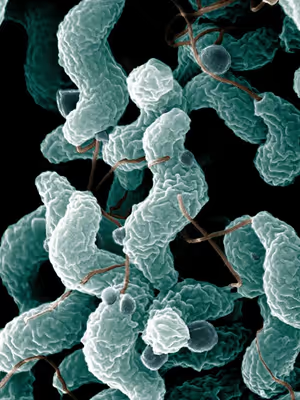
Campylobacter is a genus of bacteria that is among the most common causes of bacterial infections in humans worldwide. Campylobacter means "curved rod", deriving from the Greek kampylos (curved) and baktron (rod). Of its many species, C. jejuni is considered one of the most important from both a microbiological and public health perspective.
C. jejuni is commonly associated with poultry, and is also commonly found in animal feces. Campylobacter is a helical-shaped, non-spore-forming, Gram-negative, microaerophilic, nonfermenting motile bacterium with a single flagellum at one or both poles, which are also oxidase-positive and grow optimally at 37 to 42 °C. When exposed to atmospheric oxygen, C. jejuni is able to change into a coccal form. This species of pathogenic bacteria is one of the most common causes of human gastroenteritis in the world. Food poisoning caused by Campylobacter species can be severely debilitating, but is rarely life-threatening. It has been linked with subsequent development of Guillain–Barré syndrome, which usually develops two to three weeks after the initial illness. Individuals with recent C. jejuni infections develop Guillain-Barré syndrome at a rate of 0.3 per 1000 infections, about 100 times more often than the general population. Another chronic condition that may be associated with campylobacter infection is reactive arthritis. Reactive arthritis is a complication strongly associated with a particular genetic make-up. That is, persons who have the human leukocyte antigen B27 (HLA-B27) are most susceptible. Most often, the symptoms of reactive arthritis will occur up to several weeks after infection.
History
Campylobacter jejuni was originally named Vibrio jejuni due to its likeness to Vibrio spp. until 1963. Seabald and Vernon proposed the genus Campylobacter due to its low levels of guanine and cytosine, non-fermentative metabolism, and microaerophilic growth requirements. The first well recorded incident of Campylobacter infection occurred in 1938. Campylobacter found in milk caused diarrhea among 355 inmates in two state institutions in Illinois. C. jejuni was first discovered in the small intestines of humans in the 1970s, however, symptoms have been noted since the early 20th century. The CDC, USDA and FDA collectively identified C. jejuni as responsible for over 40% of bacterial gastroenteritis found in laboratories as of 1996.
Sign in to keep reading
12 more chapters are free with a Lably account.
Metabolism
C. jejuni is unable to use sugars as a carbon source, primarily using amino acids for growth instead. The main reason C. jejuni lacks glycolytic capabilities is a lack of glucokinase and a lack of the 6-phosphofructokinase enzyme to employ the EMP pathwayTooltip Embden–Meyerhof–Parnas pathway. The four main amino acids C. jejuni takes in are serine, aspartate, asparagine, and glutamate, which are listed in order of preference. If all of these are depleted, some strains can use proline as well. Either the host or metabolic activity of other gut microbes can supply these amino acids.
The metabolic pathways C. jejuni is capable of include the TCA cycleTooltip tricarboxylic acid cycle, a non-oxidative pentose phosphate pathway, gluconeogenesis, and fatty acid synthesis. Serine is the most important amino acid used for growth, brought into the cell by SdaC transport proteins and further broken down into pyruvate by the SdaA dehydratase. Though this pyruvate cannot directly be converted into phosphoenolpyruvic acid (as C. jejuni lacks this synthetase), the pyruvate can enter the TCA cycle to form oxaloacetic acid intermediates that can be converted to phosphoenolpyruvic acid for gluconeogenesis. This production of carbohydrates is important for the virulence factors of C. jejuni. The pyruvate created from serine can also be converted to acetyl CoA and be applied to fatty acid synthesis or continue into the TCA cycle to create precursors for other biosynthetic pathways. Aspartate and glutamate are both brought into the cell via Peb1A transport proteins. Glutamate can be transaminated into aspartate, and aspartate can be deaminated to make fumerate that feeds into the TCA cycle as well. Asparagine is also able to be deaminated into aspartate (which follows the process into the TCA cycle mentioned above). While the amino acids listed above are able to be metabolized, C. jejuni is capable of taking in many of the other amino acids which helps to lower the anabolic cost of de novo synthesis.
If other sources of carbon are exhausted, C. jejuni can also use acetate and lactate as carbon sources. Acetate is a normal secreted byproduct of C. jejuni metabolism stemming from the recycling of CoA, and the absence of other carbon sources can cause C. jejuni to "switch" this reaction to take in acetate for the conversion to acetyl-CoA (catalyzed by phosphate acetyltransferase and acetate kinase enzymes). Lactate is a normal byproduct of many fermentative bacteria in the gut, and C. jejuni can take in and oxidize this lactate to supply pyruvate through the activity of dehydrogenase iron-sulfur enzyme complexes.
The energetic needs of these anabolic pathways are met in multiple ways. The cytochrome c and quinol terminal oxidases allow for C. jejuni to use oxygen as a terminal electron acceptor for the reduced carriers produced through the TCA cycle (hence why C. jejuni is considered an obligate microaerophile). The conversion of acetyl-CoA to acetate mentioned above has substrate-level phosphorylation take place, giving another form of energy production without the use of microaerophilic respiration.
C. jejuni can use many different electron donors for its metabolic processes, using NADH and FADH most commonly – though C. jejuni uses NADH poorly compared to FADH due to a replacement of genes encoding subunits for NADH dehydrogenases for genes contributing to processes relating to FADH electron donation. Aside from these donors, C. jejuni can turn to products from the host gut microbiota including hydrogen, lactate, succinate, and formate to contribute electrons; formate, for example, is generated through intestinal mixed-acid fermentation. Unlike almost all other Campylobacter or Helicobacter species, C. jejuni can also accept electrons from sulfite and metabisulfite through its cytochrome c oxidoreductase system.
While oxygen is mainly used as a terminal electron acceptor, C. jejuni can use nitrate, nitrite, sulfur oxides (such as dimethyl sulfoxide or trimethylamine N-oxide), or fumarate as terminal electron acceptors as well to survive as a microaerophilic bacterium. Due to oxygen-limited conditions in the common areas of colonization, C. jejuni possesses two separate terminal oxidases with different affinities for oxygen, where the low affinity oxidase can directly retrieve electrons from menaquinones. The adaptations allowing for multiple electron acceptors help to combat the problem with reactive oxygen species arising from the sole use of oxygen as well; C. jejuni cannot grow under strictly aerobic conditions. Enzymes C. jejuni carries to impede the effects of reactive oxygen species include: superoxide dismutase SodB, alkyl hydroxide reductase AhpC, catalase KatA, and thiol peroxidases Tpx and Bcp.
Disease
Campylobacteriosis is an infectious disease caused by bacteria of the genus Campylobacter. In most patients presenting with campylobacteriosis, symptoms develop within two to five days of exposure to the organism and illness typically lasts seven days following onset. Infection with C. jejuni typically results in enteritis, or inflammation of the small intestine, which is characterized by abdominal pain, voluminous diarrhea (often bloody), fever, and malaise. Individuals infected with this bacteria can experience a prodromal phase of symptoms for the first 1 to 3 days, in which the more severe portion of the disease occurs. The prodromal phase presents with symptoms including rigors, high fever, body aches, and dizziness. Other than the prodromal phase, the acute diarrheal phase of enteritis usually lasts around 7 days, however abdominal pain can persist for weeks afterward. The disease is usually self-limiting; however, it does respond to antibiotics. Severe (accompanying fevers, blood in stools) or prolonged cases may require erythromycin, azithromycin, ciprofloxacin, or norfloxacin. Fluid replacement via oral rehydration salts may be needed and intravenous fluid may be required for serious cases. Possible complications of campylobacteriosis include Guillain–Barré syndrome and reactive arthritis.
Transmission
C. jejuni is a zoonotic disease meaning it is more commonly spread from animals to people than in between humans. People most often contract it by touching something that has been in contact with raw or undercooked chicken in addition to eating or touching poultry that is raw or undercooked. Additionally, it can also be obtained from being in contact with animals or eating undercooked seafood. The fecal oral route is the most common way it spreads as the bacterium is excreted in animal feces. C. jejuni seldomly causes disease in animals and infections are more common in lower income countries. Deadly infections are not often seen in young adults but rather among the young and elderly. Due to poor sanitation practices in some areas, the bacteria can also be found in ice and water. It is difficult to know the science behind its transmission due to its sporadic nature. The use of antibiotics and other treatments help in slowing and preventing the transmission of C. jejuni. C. jejuni is a fastidious microaerophile meaning it does need some oxygen to grow, spread, and transmit. However, it is highly adaptable and has adapted to grow in higher concentrations of oxygen. Another source of infection is contaminated water or unpasteurized milk. This is the case when people have been exposed to animal feces because poultry animals carry C. jejuni without showing symoptims. The bacteria then spreads to people via food preparation or animal contact.
Pathogenesis
C. jejuni employs unique strategies to breach the intestinal epithelial layer of its host cells. It uses proteases, particularly HtrA, to cleverly disrupt cell junctions and temporarily traverse the cells. The membrane-bound protein Fibronectin is a critical binding site for C. jejuni on the basolateral side of the polarized epithelial cell, facilitating this process. Once inside the cell, C. jejuni leverages dynein to access the perinuclear space within the Clathrin-Coated Vesicle, avoiding lysosomal digestion for up to 72 hours.
To initiate infection, C. jejuni must penetrate the gut enterocytes. C. jejuni releases several different toxins, mainly enterotoxin and cytotoxins, which vary from strain to strain and correlate with the severity of the enteritis (inflammation of the small intestine). During infection, levels of all immunoglobulin classes rise. Of these, IgA is the most important because it can cross the gut wall. IgA immobilises organisms, causing them to aggregate and activate complement, and also gives short-term immunity against the infecting strain of organism. The bacteria colonize the small and large intestines, causing inflammatory diarrhea with fever. Stools contain leukocytes and blood. The role of toxins in pathogenesis is unclear. C jejuni antigens that cross-react with one or more neural structures may be responsible for triggering the Guillain–Barré syndrome.
Hypoacylated lipopolysaccharide (LPS) from C. jejuni induces moderate TLR4-mediated inflammatory response in macrophages and such LPS bioactivity may eventually result in the failure of local and systemic bacterial clearance in patients. At the same time, moderation of anti-bacterial responses may be advantageous for infected patients in clinical practice, since such an attenuated LPS may not be able to induce severe sepsis in susceptible individuals.
One of the most important virulence factors of C. jejuni are flagella. The flagellar protein FlaA has been proven to be one of the abundant proteins in the cell. Flagella are required for motility, biofilm formation, host cell interactions and host colonization. The flagella in C. jejuni can also aid in the secretion intracellular proteins. The production of flagella is energetically costly so the production must be regulated from metabolic standpoint. CsrA is a post-transcriptional regulator that regulates the expression of FlaA by binding to flaA mRNA and is able to repress its translation. CsrA mutant strains have been studied and the mutant strains exhibit dysregulation of 120–150 proteins that are included in motility, host cell adherence, host cell invasion, chemotaxis, oxidative stress resistance, respiration and amino acid and acetate metabolism. Transcriptional and post-transcriptional regulation of flagellar synthesis in C. jejuni enables proper biosynthesis of flagella and it is important for the pathogenesis of this bacteria.
C. jejuni employs a highly sophisticated navigation system called chemotaxis. This system is crucial when the bacterium requires guidance through chemical signals. The chemotaxis system uses specific chemoattractants that direct the bacterium toward areas with a higher concentration of the attractants. The exact nature of chemoattractants is dependent on the surrounding environmental conditions. Additionally, when the bacterium needs to move away, it uses negative chemotaxis to move in the opposite direction.
Other important virulence factors of C. jejuni include the pgl locus, which confers the ability to produce N-linked glycosylation of at least 22 bacterial proteins, at least some of which appear to be important for competence, host adherence and invasion. C. jejuni secretes Campylobacter invasive antigens (Cia), which facilitate invasion. The bacteria also produce cytolethal distending toxins that participate in cell cycle control and induction of host cell apoptosis. C. jejuni also exploits different adaptation strategies in which the host factors seem to play a role for pathogenesis of this bacteria.
DNA repair
In the intestines, bile functions as a defensive barrier against colonization by C. jejuni. When C. jejuni is grown in a medium containing the bile acid deoxycholic acid, a component of bile, the DNA of C. jejuni is damaged by a process involving oxidative stress. To survive, C. jejuni cells repair this DNA damage by a system employing proteins AddA and AddB that are needed for repair of DNA double-strand breaks.
C. jejuni uses homologous recombination to repair its DNA, facilitated by the AddA and AddB proteins. These proteins replace RecBCD, which is used in other bacteria like Escherichia coli. AddA and AddB are crucial for nuclease, helicase, and Chi recognition, which allow for successful homologous recombination.
When AddA and AddB are introduced into a wild C. jejuni variant, an added deletion mutant gene addAB gene is formed, which repairs DNA damaged by oxidative stress. This inclusion protects C. jejuni from deoxycholate found in bile, allowing for survival. However, the added gene is absent during growth in deoxycholate from 10 to 16 hours and may be up-regulated in response to environmental conditions. Additionally, AddAB proteins enhance C. jejuni colonization of chicken intestines.
Immune response
Campylobacter jejuni infection and eventual destruction of host cell cause the release of chemokines that cause inflammation and activate immune response cells. Inflammatory chemokines such as CXCL1, CCL3/CCL4, CCL2, and CXCL10 are upregulated, further triggering the immune response. The immune response activation is primarily driven by the use of ADP-heptoses to activate ALPK1, by a C. jejuni infection
Neutrophil granulocytes use phagocytosis to combat C. jejuni infection, releasing antimicrobial proteins and proinflammatory substances. However, C. jejuni can influence the differentiation process of specific types of neutrophil granulocytes, triggering hypersegmentation and increased reactivity, which leads to delayed apoptosis and higher production of reactive oxygen species. In experimental processes, T cells from an immune response only start to grow in number at the inflammation site from the seventh day after infection.
After 11 days of having a Campylobacter jejuni infection, the B lymphocytes in the body increase the production of antibodies that specifically fight against C. jejuni flagellin. The persistence of these antibodies in the body can last up to one-year post-infection. In this case, the development of Guillain-Barré syndrome (GBS) is associated with autoimmune IgG1 antibodies.
Campylobacter infections often precede GBS, indicating that molecular mimicry between the bacteria and host nervous tissues may be the underlying cause. C. jejuni, the most common causative agent of human campylobacteriosis, can survive in the gut for several days but does not establish a long-term infection due to its low replication rate, which is incompatible with a persistent bacterial presence. The bacteria-induced apoptosis of infected gut cells results in the rapid clearance of the pathogen, which likely contributes to the self-limiting nature of the disease.
Complications
Local complications of campylobacter infections occur as a result of direct spread from the gastrointestinal tract and can include cholecystitis, pancreatitis, peritonitis, and massive gastrointestinal hemorrhage. Extraintestinal manifestations of campylobacter infection are quite rare and may include meningitis, endocarditis, septic arthritis, osteomyelitis, and neonatal sepsis. Bacteremia is detected in <1% of patients with campylobacter enteritis and is most likely to occur in patients who are immunocompromised or among the very young or very old. Transient bacteremia in immunocompetent hosts with C. jejuni enteritis may be more common but not detected because the killing action rapidly clears most normal human serotypes, and blood cultures are not routinely performed for patients with acute gastrointestinal illness.
Serious systemic illness caused by campylobacter infection rarely occurs, but can lead to sepsis and death. The case-fatality rate for campylobacter infection is 0.05 per 1000 infections. For instance, one major possible complication that C. jejuni can cause is Guillain–Barré syndrome, which induces neuromuscular paralysis in a sizeable percentage of those who suffer from it. Over time, the paralysis is typically reversible to some extent; nonetheless, about 20% of patients with GBS are left disabled, and around 5% die. In March 2025, India reported 300 GBS cases; while only about one in 1000 individuals infected with C. jejuni develops GBS, India had more than 1000 C. jejuni outbreaks during 2024 and it is suspected that that a specific strain of C.jejuni with neurotoxic potential has been circulating.
Another chronic condition that may be associated with campylobacter infection is reactive arthritis, which is strongly associated with a particular genetic make-up. That is, persons who have the human leukocyte antigen B27 (HLA-B27) are most susceptible. Most often, the symptoms of reactive arthritis will occur up to several weeks after infection.
Epidemiology
Frequency
United States
An estimated 2 million cases of campylobacter enteritis occur annually, accounting for 5–7% of cases of gastroenteritis. Campylobacter has a large animal reservoir, with up to 100% of poultry, including chickens, turkeys, and waterfowl, having asymptomatic intestinal infections. The major reservoirs of C. fetus are cattle and sheep. More than 90% of campylobacter infections occur during the summer months due to undercooked meats from outdoor cooking. Nonetheless, the incidence of campylobacter infections has been declining. Changes in the incidence of culture-confirmed Campylobacter infections have been monitored by the Foodborne Diseases Active Surveillance Network (FoodNet) since 1996. In 2010, campylobacter incidence showed a 27% decrease compared with 1996–1998. In 2010, the incidence was 13.6 cases per 100,000 population, and this did not change significantly compared with 2006–2008.
Europe
In 2020, there were around 120,000 cases of C. jejuni infection, which showed a decline of about 25.4% compared to the previous year. However, the COVID-19 pandemic may have influenced this decrease, and its statistical significance is yet to be determined. C. jejuni infections tend to peak in July, which could be linked to the rise in temperature worldwide. This pattern is associated with an increased reflection rate of the bacteria, which needs further investigation to establish any potential correlations.
Globally
Campylbacter jejuni infections are extremely common worldwide, although exact figures are not available. New Zealand reported the highest national rate, which peaked in May 2006 at 400 per 100,000 population. C. jejuni infection is a significant global health issue, with infection rates ranging from 0.3 to 2.9%. It is a widespread infection that affects individuals of all ages but is more prevalent in developing countries. In these areas, diarrhea is the most common clinical presentation, and it has a severe impact on children.
Sex
Campylobacter is more frequently isolated in males than females, and homosexual men appear to have a higher risk of infection by atypical campylobacter-related species such as Helicobacter cinaedi and Helicobacter fennelliae.
Age
Campylobacter infections can occur in all age groups. Studies show a peak incidence in children younger than 1 year and in people aged 15–29 years. The age-specific attack rate is highest in young children. In the United States, the highest incidence of Campylobacter infection in 2010 was in children younger than 5 years and was 24.4 cases per 100,000 population. Community based studies done in developing countries show about 60,000 out of every 100,000 children under five years old are affected by campylobacter infections. However, the rate of fecal cultures positive for campylobacter species is greatest in adults and older children.
Diagnosis
Diagnostic tests are available to identify campylobacter infections, including those caused by C. jejuni. The stool culture is considered the gold standard for diagnosing C. jejuni, and selective culture techniques are used to distinguish it from other variants. Stool cultures are grown at 42 degrees Celsius in an atmosphere of 85% N2, 10% CO2, and 5% O2, as C. jejuni requires these conditions due to being thermophilic and microaerophilic. A final diagnosis from a stool sample requires a gram stain or phase contrast microscopy.
Aside from stool cultures, C. jejuni can be detected using enzyme immunoassay (EIA) or polymerase chain reaction (PCR). These methods are more sensitive than stool cultures, but PCR tends to be the most sensitive especially in children and developing countries.
Treatment
Campylobacter infections tend to be mild, requiring only hydration and electrolyte repletion while diarrhea lasts. Maintenance of electrolyte balance, not antibiotic treatment, is the cornerstone of treatment for campylobacter enteritis. Depending on the degree of dehydration, alternate measures may be taken including parenteral methods of hydration. Indeed, most patients with this infection have a self-limited illness and do not require antibiotics at all; however, they may be the best form of treatment in more severe cases of infection.
Antibiotic treatment
Antibiotic treatment for Campylobacter infections is usually not required nor recommended. Antibiotics are limited for treating high-risk patients including immunocompromised and older individuals. Severe cases exhibiting symptoms such as bloody stools, fever, severe abdominal pain, pregnancy, infection with HIV, and prolonged illness (symptoms that last > 1 week) may also require treatment by antibiotics which can help to shorten the duration of the symptoms. It is advisable to treat these infections with macrolide antibiotics, such as erythromycin or azithromycin. Erythromycin is inexpensive and limits toxic exposure to patients, however resistance rates are reportedly increasing; its use is continued however, as resistance rates remain below 6%. Azithromycin usage is increasing due to various drug characteristics, including its once-a-day dosage, tolerability by patients, decreased relation to Infantile hypertrophic pyloric stenosis (IHPS), and less negative symptoms; this is comparative to erythromycin. Fluoroquinolones are another source of treatment, however resistance rates of bacteria to this type of antibiotic are greatly increasing.
Antibiotic resistance
Fluoroquinolones were first approved as a treatment for campylobacter infections in 1986, and were later U.S. Food and Drug Administration (FDA) approved in 1996, so as to control infections in poultry flocks. The CDC began monitoring campylobacter in 1997 in the National Antimicrobial Resistance Monitoring System (NARMS). On September 12, 2005, the FDA suspended the use of all fluoroquinolones in poultry production, and the prevalence of campylobacter strains that are fluoroquinolone resistant in poultry flocks, poultry products, production facilities, and human infections became vital to monitor; this was in an effort to determine if the fluoroquinolone ban led to a reduction in the antibiotic-resistant strains. Despite this, data from NARMS indicated ciprofloxacin, a fluoroquinolone, had microbial resistance rates of 17% in 1997–1999, which further increased to 27% in 2015–2017, and now may be as high as 34%. A presence of drug-resistance to ciprofloxacin has been observed in isolate studies, as well as significant drug-resistance among campylobacter to the antibiotics nalidixic acid and tetracyclines. There is a low rate of resistance to erythromycin, the preferred source of antibiotic treatment for campylobacter infections, however resistant strains have been detected in many countries among sources of the origin of food from farm animals.
Prevention
Some simple food-handling practices can help prevent campylobacter infections.
- Cook all poultry products thoroughly. Make sure that the meat is cooked throughout (no longer pink) and any juices run clear. All poultry should be cooked to reach a minimum internal temperature of 165 °F (74 °C).
- Wash hands with soap before preparing food.
- Wash hands with soap after handling raw foods of animal origin and before touching anything else.
- Prevent cross-contamination in the kitchen by using separate cutting boards for foods of animal origin and other foods and by thoroughly cleaning all cutting boards, countertops, and utensils with soap and hot water after preparing raw food of animal origin.
- Do not drink unpasteurized milk or untreated surface water.
- Make sure that people with diarrhea, especially children, wash their hands carefully and frequently with soap to reduce the risk of spreading the infection.
- Wash hands with soap after contact with pet feces.
Clinical Microbiology
Under light microscopy, C. jejuni has a characteristic "sea-gull" shape as a consequence of its helical form. Campylobacter is grown on specially selective "CAMP" agar plates at 42 °C, the normal avian body temperature, rather than at 37 °C, the temperature at which most other pathogenic bacteria are grown. A selective blood agar medium (Skirrow's medium) can be used. Greater selectivity can be gained with an infusion of a cocktail of antibiotics: vancomycin, polymixin-B, trimethoprim, and actidione (Preston's agar), and growth under microaerophilic conditions at 42 °C. Microaerophilic conditions are required for luxurious growth.
Suspicious colonies should be screened for oxidase and catalase activity. C. jejuni can be readily identified by commercial phenotypic assays. Alternatively, molecular assays based on PCR amplification of the 16S rRNA are also available.
Genome
The genome of C. jejuni strain NCTC11168 was published in 2000, revealing 1,641,481 base pairs (30.6% G+C) predicted to encode 1,654 proteins and 54 stable RNA species. The genome is unusual in that virtually no insertion sequences or phage-associated sequences and very few repeat sequences are found. One of the most striking findings in the genome was the presence of hypervariable sequences. These short homopolymeric runs of nucleotides were commonly found in genes encoding the biosynthesis or modification of surface structures, or in closely linked genes of unknown function. The apparently high rate of variation of these homopolymeric tracts may be important in the survival strategy of C. jejuni. The genome was re-annotated in 2007 updating 18.2% of product functions. Analysis also predicted the first pathogenicity island in C. jejuni among select strains, harbouring the bacteria's Type VI secretion system and putative cognate effectors.
Initial transposon mutagenesis screens revealed 195 essential genes, although this number is likely to go up with additional analysis.
Natural genetic transformation
C. jejuni is naturally competent for genetic transformation. Natural genetic transformation is a sexual process involving DNA transfer from one bacterium to another through the intervening medium, and the integration of the donor sequence into the recipient genome by homologous recombination. C. jejuni freely takes up foreign DNA harboring genetic information responsible for antibiotic resistance. Antibiotic resistance genes are more frequently transferred in biofilms than between planktonic cells (single cells that float in liquid media).