


Related on Lably
Through Pollination, Pumpkin and Calorie
Melon were domesticated four times independently. Research has revealed that seeds and rootstocks were among the goods traded along the caravan routes of the Ancient World. Some botanists consider melons native to the Levant and Egypt, while others place their origin in Iran, India or Central Asia. Still others support an African origin; in modern times, wild melons can still be found in some African countries.
Cultivation
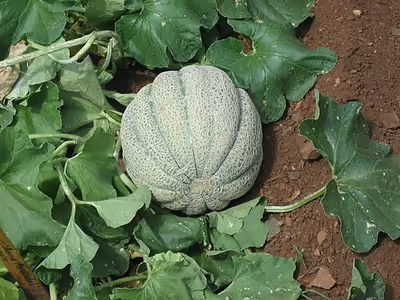
The melon is an annual, trailing herb. It grows well in subtropical or warm, temperate climates. It can be found as a weed around sites of recently built airports in American Samoa.
Melons prefer warm, well-fertilized soil with good drainage that is rich in nutrients, but are vulnerable to downy mildew and anthracnose. Disease risk is reduced by crop rotation with non-cucurbit crops, avoiding crops susceptible to similar diseases as melons. Cross pollination has resulted in some varieties developing resistance to powdery mildew.
Arthropod pest species attracted to melons include the cucumber beetle, Aphis gossypii, melonworm moth and the pickleworm.
Sign in to keep reading
4 more chapters are free with a Lably account.
Genetics
Melons are monoecious or andromonoecious plants. They do not cross with watermelon, cucumber, pumpkin, or squash, but varieties within the species intercross frequently. The genome of Cucumis melo was first sequenced in 2012. Some authors treat C. melo as having two subspecies, C. melo agrestis and C. melo melo. Variants within these subspecies fall into groups whose genetics largely agree with their phenotypic traits, such as disease resistance, rind texture, flesh color, and fruit shape. Variants or landraces (some of which were originally classified as species; see the synonyms list to the right) include C. melo var. acidulus (Mangalore melon), adana, agrestis (wild melon), ameri (summer melon), cantalupensis (cantaloupe), reticulatus (muskmelon), chandalak, chate, chito, conomon (Oriental pickling melon), dudaim (pocket melon), flexuosus (snake melon), inodorus (winter melon), momordica (snap melon), tibish, chinensis and makuwa (Oriental melon).
Not all varieties are sweet melons. The snake melon, also called the Armenian cucumber and Serpent cucumber, is a non-sweet melon found throughout Asia from Turkey to Japan. It is similar to a cucumber in taste and appearance. Outside Asia, snake melons are grown in the United States, Italy, Sudan and parts of North Africa, including Egypt. The snake melon is more popular in Arab countries.
Other varieties grown in Africa are bitter, cultivated for their edible seeds.
For commercially grown varieties certain features such as protective hard netting and firm flesh are preferred for purposes of shipping and other requirements of commercial markets.
Nutrition
For a reference amount of 100 g (3.5 oz), a raw cantaloupe melon provides 34 calories and is a rich source (defined as at least 20% of Daily Value, DV) of both vitamin A and vitamin C; other micronutrients are at a negligible level. A raw melon is 90% water and 9% carbohydrates, with less than 1% each of protein and fat.
Uses
In addition to their consumption when fresh, melons are sometimes dried. Other varieties are cooked, or grown for their seeds, which are processed to produce melon oil. Still other varieties are grown only for their pleasant fragrance. The Japanese liqueur Midori is flavored with melon.
It was once a frequently cultivated plant in Tonga (katiu) as a snack and its flowers used for leis, but has since been extirpated.
History
Melon were domesticated independently in Northeast Africa, twice in India and in China. Over time many cultivars developed with variety in shape and sweetness. Iran, India, Uzbekistan, Afghanistan and China became centers for melon production. Melons were consumed in Ancient Greece and Rome.
Debate exists among scholars whether the abattiach in The Book of Numbers 11:5 refers to a melon or a watermelon. Both types of melon were known in Ancient Egypt and other settled areas. Some botanists consider melons native to the Levant and Egypt, while others place the origin in Persia, India or Central Asia, thus the origin is uncertain. Researchers have shown that seeds and rootstocks were among the goods traded along the caravan routes of the Ancient World. Several scientists support an African origin, and in modern times wild melons can still be found in several African countries in East Africa such as Ethiopia, Somalia and Tanzania.