

Greater Tokyo Area
Metropolitan area in Japan
- 7 min read
- 6 chapters

Related on Lably
Through Japan, United Nations and Proportional representation
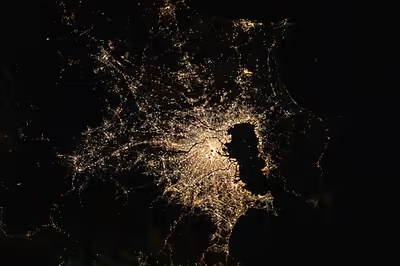
As of 2026, the United Nations estimates the total population at 36,954,512, making it the third-most populous urban area in the world. It is the second-largest single metropolitan area in the world in terms of built-up or urban function landmass at 8,547 square kilometres (3,300 sq mi), behind only the New York City metropolitan area at 4,495 square miles (11,640 km2). With around US$1.8 trillion in GDP, Tokyo remains the second-largest metropolitan economy in the world, also behind New York. According to the WIPO Innovation Cluster Rating 2025, the region is one of the three leading science and technology clusters in the world.
Definition
There are various definitions of the Greater Tokyo Area, each of which tries to incorporate different aspects. Some definitions are clearly defined by law or government regulation, some are based coarsely on administrative areas, while others are for research purposes such as commuting patterns or distance from Central Tokyo. Each definition has a different population figure, granularity, methodology, and spatial association.
Various definitions of Tokyo, Greater Tokyo, and Kantō
Notes and sources: All figures issued by Japan Statistics Bureau, except for Metro Employment Area, a study by Center for Spatial Information Service, the University of Tokyo. Abbreviations: CF for National Census Final Data (every 5 years by JSB), CR for Civil Registry (compiled by local governments, monthly as per legal requirement), CP for Census Preliminary.
National Capital Region
The National Capital Region (首都圏, Shutoken) of Japan refers to the Greater Tokyo Area as defined by the Metropolitan Area Readjustment Act (首都圏整備法, Shutoken-seibi-hō) of 1956, which defines it as "Tokyo and its surrounding area declared by government ordinance." The government ordinance defined it as Tokyo and all six prefectures in the Kantō region plus Yamanashi Prefecture. While this includes all of Greater Tokyo, it also includes sparsely populated mountain areas as well as the far-flung Bonin Islands which are administered under Tokyo.
International comparison
Using the "One Metropolis Three Prefectures" definition, Tokyo is 13,555.65 square kilometres (5,233.87 sq mi), a similar size to that of Los Angeles County, and almost two-thirds smaller than the combined statistical area of New York City, at 30,671 square kilometres (11,842 sq mi) and 21.9 million people. Other metropolitan areas such as Greater Jakarta are considerably more compact as well as more densely populated than Greater Tokyo.
Metropolitan Area definition ambiguities and issues
- The South Kantō region (南関東, Minami Kantō) is a potentially ambiguous term. Informally, it may mean the One Metropolis, Two Prefectures, or the area without Saitama Prefecture. Formally, it may mean the South Kantō Block, which is not the Greater Tokyo Area, but a proportional representation block of the national election, comprising Kanagawa, Chiba, and Yamanashi Prefectures.
- In informal occasions, the term National Capital Region (首都圏, Shuto-ken) often means Greater Tokyo Area. Officially, the term refers to a much larger area, namely the whole Kantō region and Yamanashi Prefecture.
- Tokyo as a metropolis includes some 394 km2
of islands (the Izu and Ogasawara islands), as well as some mountainous areas to the far west (331 km2
), which are officially part of Greater Tokyo, but are wilderness or rustic areas.
Sign in to keep reading
5 more chapters are free with a Lably account.
Cities
(populations listed for those over 300,000)
Cities within Tokyo
Tokyo is legally classified as a to (都), which translates as "metropolis", and is treated as one of the forty-seven prefectures of Japan. The metropolis is administered by the Tokyo Metropolitan Government as a whole.
Eastern Tokyo Metropolis
Central Tokyo, situated in the eastern portion of Tokyo Metropolis, was once incorporated as Tokyo City, which was dismantled during World War II. Its subdivisions have been reclassified as special wards (特別区, tokubetsu-ku). The twenty three special wards currently have the legal status of cities, with individual mayors and city councils, and they call themselves "cities" in English. However, when listing Japan's largest cities, Tokyo's twenty three wards are often counted as a single city.
Western Tokyo Metropolis
Western Tokyo, known as the Tama Area (Tama-chiiki 多摩地域) comprises a number of municipalities, including these suburban cities:
Cities outside Tokyo
The core cities of the Greater Tokyo Area outside Tokyo Metropolis are:
- Chiba (population 940,000)
- Kawasaki (population 1.36 million)
- Sagamihara (population 730,000)
- Saitama (population 1.19 million)
- Yokohama (population 3.62 million)
The other cities in Chiba, Kanagawa and Saitama Prefectures are:
source: stat.go.jp census 2005
Additional cities
In the major metropolitan area (MMA) definition used by the Japanese Statistics Bureau, the following cities in Ibaraki, Tochigi, Gunma, Yamanashi, and Shizuoka Prefectures are included:
Gunma Prefecture
- Tatebayashi
- Ota
Ibaraki Prefecture
Shizuoka Prefecture
- Atami
Tochigi Prefecture
- Oyama
Yamanashi Prefecture
- Ōtsuki
- Uenohara
Border areas
Tighter definitions for Greater Tokyo do not include adjacent metropolitan areas of Numazu-Mishima (approx. 450,000) to the southwest, Maebashi-Takasaki-Ōta-Ashikaga (approx. 1,500,000 people) on the northwest, and Greater Utsunomiya (approx. 1,000,000) to the north. If they are included, Greater Tokyo's population would be around 39 million. Takasaki-Maebashi is included as part of the Tokyo-Yokohama area in the definition of urban areas by Demographia.
Geography
At the center of the main urban area (approximately the first 10 kilometres (6.2 mi) from Tokyo Station) are the 23 special wards, formerly treated as a single city but now governed as separate municipalities, and containing many major commercial centers such as Shinjuku, Shibuya, Ikebukuro and Ginza. Around the 23 special wards are a multitude of suburban cities which merge seamlessly into each other to form a continuous built up area, circumnavigated by the heavily travelled Route 16 which forms a (broken) loop about 40 kilometres (25 mi) from central Tokyo. Situated along the loop are the major cities of Yokohama (to the south of Tokyo), Hachiōji (to the west), Ōmiya (now part of Saitama City, to the north), and Chiba (to the east).
Within the Route 16 loop, the coastline of Tokyo Bay is heavily industrialised, with the Keihin Industrial Area stretching from Tokyo down to Yokohama, and the Keiyō Industrial Zone from Tokyo eastwards to Chiba. Along the periphery of the main urban area are numerous new suburban housing developments such as the Tama New Town. The landscape is relatively flat compared to most of Japan, most of it comprising low hills.
Outside the Route 16 loop the landscape becomes more rural. To the southwest is an area known as Shōnan, which contains various cities and towns along the coast of Sagami Bay, and to the west the area is mountainous.
Many rivers run through the area, the major ones being Arakawa and Tama River.
Demographics
Economy
Tokyo metropolitan area is the second largest metropolitan economy in the world only behind New York.
Metropolitan Employment Area
Sources: Conversion rates – Exchange rates – OECD Data
Transportation
Air
The Greater Tokyo Area has two major airports, Tokyo International Airport, commonly known as Haneda Airport (once chiefly domestic, now turning international) and Narita International Airport (chiefly international as well). Minor facilities include Chōfu and Ibaraki Airport. Tokyo Heliport serves helicopter traffic, including police, fire, and news. Japan Civil Aviation Bureau handles air traffic in large part but various military facilities handle air traffic in part: Hyakuri Air Base (Japan Air Self-Defense Force), Utsunomiya Air Field (Japan Ground Self-Defense Force), and Yokota Air Base (United States Air Force).
Rail
Greater Tokyo has an extensive railway network comprising high-speed rail, commuter rails, subways, monorails, private lines, trams and others. There are around 136 individual rail lines in the Greater Tokyo Area, and between 1,000 and 1,200 railway stations depending on one's definition of the area, most designed for heavy use, usually long enough to accommodate 10-car (200 metres (660 ft) long) trains. Stations are designed to accommodate hundreds of thousands of passengers at any given time, with miles of connecting tunnels linking vast department stores and corporate offices. Tokyo Station has underground connections that stretch well over 4 kilometres (2.5 mi), and Shinjuku Station has well over 200 exits. Greater Tokyo's Railway Network is easily considered the world's largest in terms of both daily passenger throughput with a daily trips of over 40 million (20 million different passengers) as well as physical extent with approximately 2,578 kilometres (1,602 mi) of track. Shinjuku station is used by an average of 3.34 million people per day, making it the world's busiest train station. Some 57 percent of all Greater Tokyo residents used rail as their primary means of transport in 2001.
JR East and many other carriers crisscross the region with a network of rail lines. The most important carriers include Keihin Kyūkō Electric Railway (Keikyū), Keisei Electric Railway, Keiō Electric Railway, Odakyū Electric Railway, Seibu Railway, Tōbu Railway, and Tōkyū Corporation. In addition to Tokyo's two subway systems — Tokyo Metro and Tokyo Metropolitan Bureau of Transportation (Toei and Toden lines), Yokohama also has two subway lines.
The Tokyo Monorail provides an important shuttle service between Haneda Airport and Hamamatsucho station on the Yamanote line.
Others
The Shuto Expressway system connects to other national expressways in the capital region.
Tokyo and Yokohama are major commercial seaports, and both the Japan Maritime Self-Defense Force and United States Navy maintain naval bases at Yokosuka.