

Gulf of Tonkin
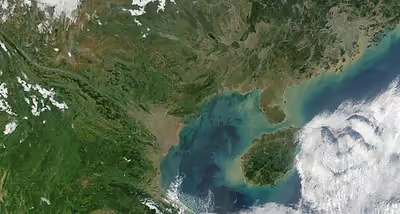
Gulf in the northwestern South China Sea
- 2 min read
- 2 chapters

Related on Lably
English sources from the People's Republic of China also refer to the Gulf of Tonkin as Beibu Wan (simplified Chinese: 北部湾; traditional Chinese: 北部灣; lit. 'Northern Gulf').
Description and etymology
The name Tonkin, written 東京 in chữ Hán characters and Đông Kinh in the Vietnamese alphabet, means "eastern capital", and is the former toponym for Hanoi, the present capital of Vietnam. The characters 東京 are the same source for the name Tokyo, also meaning "eastern capital". Tonkin later became an exonym for northern Vietnam, and during the colonial era, referred to a French protectorate.
Bắc Bộ is a native Vietnamese name for the region of Northern Vietnam. The bay's Vietnamese and Chinese names – Vịnh Bắc Bộ and Běibù Wān, respectively – both mean "Northern Bay".
The Gulf of Tonkin is a relatively shallow portion of the Pacific Ocean; the majority of the gulf's ocean floor is less than 75 metres (246 ft) in depth, and no part of the gulf is submerged in more than 100 metres (330 ft) of water.
Sign in to keep reading
One more chapter is free with a Lably account.
History
Gulf of Tonkin incident
On 4 August 1964, United States President Lyndon B. Johnson claimed that North Vietnamese forces had twice attacked American destroyers in the Gulf of Tonkin. Known today as the Gulf of Tonkin Incident, this event spawned the Gulf of Tonkin Resolution of 7 August 1964, ultimately leading to open war between North Vietnam and South Vietnam. It furthermore foreshadowed the major escalation of the Vietnam War in South Vietnam, which began with the landing of US regular combat troops at Da Nang in 1965.
Maritime border issue in the Gulf of Tonkin
On December 25, 2000, Vietnam and China signed an Agreement on the Delimitation of the Gulf of Tonkin. An Agreement took effect on June 30, 2004, officially defining the maritime border between the two countries in the Gulf of Tonkin.
On March 1, 2024, China issued a “Declaration on the baselines of the territorial waters in the northern part of the Gulf of Tonkin”. Vietnam calls on China to respect international law. One year later, in February 2025, Vietnam also announced baseline for determining its territorial waters width in the Gulf of Tonkin.