

Hypercarnivore
Animals with more than 70% meat in their diets
- 2 min read
- 1 chapters

Related on Lably
As an example of related species with differing diets, even though they diverged only 150,000 years ago, the polar bear is the most highly carnivorous bear (more than 90% of its diet is meat) while the grizzly bear is one of the least carnivorous in many locales, with less than 10% of its diet being meat.
The genomes of the Tasmanian devil, killer whale, polar bear, leopard, lion, tiger, cheetah and domestic cat were analysed: shared positive selection for two genes have been found related to bone development and repair (DMP1, PTN), which is not a development seen in either omnivores or herbivores. This indicates that a stronger bone structure is a crucial requirement and drives selection towards predatory hypercarnivore lifestyle in mammals. Positive selection of one gene related to enhanced bone mineralisation has been found in the Scimitar-toothed cat (Homotherium latidens).
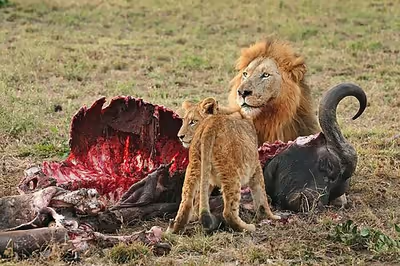
Animals that live almost exclusively on food of animal origin are incapable of biosynthesizing arachidonic acid. This characteristic has been found in the lion, the domestic cat, the turbot, and even the haematophagous mosquito.
In hypercarnivore mammals, the enzyme alanine:glyoxylate aminotransferase is expressed mainly or exclusively in the mitochondria, which would allow glyoxylate to be metabolised from the hydroxyproline present in animal matter.