


Related on Lably
Through Census, Governor and Extreme poverty
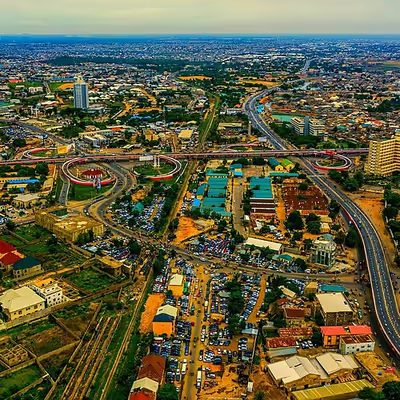
Two major ethnic groups, the Hausa and Fulani, make up the majority of Kano State's population. Hausa is the dominant language in the state, as in most parts of Northern Nigeria. Kano State has most recently faced challenges such as attacks by the Islamist terrorist group Boko Haram, inter-religious violence, and extreme poverty. Kano State operates under Sharia law, within the legal framework of the Nigerian Constitution.
History
Modern-day Kano State was the site of a number of kingdoms and empires including the Kingdom of Kano, which was centred on Dalla Hill (Hausa: Dutsen Dala) from to 1000CE to 1349. In 1349, the Sultanate of Kano was established when Yaji I converted to Islam and became its first Sultan. In 1463, Kurmi Market was opened, which helped the city of Kano become a centre of commercial activity in Hausaland. The market remains open today and its historic importance is reflected in the state's nickname, the Centre of Commerce.
During the 16th and 17th centuries, the Sultanate of Kano became one of the most powerful of the Hausa Kingdoms. After the Fulani jihad of 1804-08, the Kano Emirate deposed the former sultanate. Emir Ibrahim Dabo made a number of administrative reforms, seeking to increase commerce in the region.
Leaders during this time encouraged traders to move from Katsina, capitalising on raids from the Hausa Sultanate of Maradi. The leaders of the caliphate encouraged the kola nut trade, and Kano was the greatest beneficiary with an annual turnover of about $30 million. Craft industries also evolved in the pre-colonial period contributing to the prosperity of the province.
In 1903, the British Empire conquered the Kano Emirate, incorporating it into the Northern Nigeria Protectorate. The major ethnic groups in pre-colonial Kano were the Hausa, Fulani, Barebari (Kanuri), Tuareg, Arab, and Nupe. Most people in Kano speak Hausa as a first language, while some identify as ethnically Hausa.
Since Nigerian independence, Kano State has developed a diverse economy, establishing itself as a centre for industry, agriculture, and Islamic banking. Kano State was created on 27 May 1967. In 1991, part of Kano State was separated to form Jigawa State.
Sign in to keep reading
10 more chapters are free with a Lably account.
Geography
Climate
The rainfall in Kano State has variable rainfall with drought and near-drought conditions between the 1970s and 1980s. Between the 1990s and the year 2015, the moisture conditions improved considerably but rainfall still fluctuated. Since 2015, there has been a considerable increase in rainfall. Based on a report of the Nigerian Meteorological Agency (NIMET), rainfall averaged by a mean of 897.7 mm (35.34 in).
In the first quarter of 2022, NIMET sounded an early warning for floods in some states, including Kano. The agency asserted that their warning was based on the amount and distribution of rainfall that had been observed in the nation during the rainy season. According to the Kano State Emergency Management Agency (SEMA), 25 local government districts experienced flooding as a result of the extreme rain.
Temperature
The temperature of Kano has risen significantly since the 1960s. The annual temperature of the state is between 26 °C to 30 °C for the diurnal temperature, which is high, and measurable between the range of 13.1%, with the relative humidity of between 17% and 90% respectively.
Economy
Many large markets exist within Kano today, such as Kurmi Market, Kantin Kwari Market, Sabon Gari Market, Dawanau Market, Kofar Wanbai Market, Galadima Market, Yankura Market and Bata Market. Many of these markets specialise in certain products, such as textiles or grain. The dye industry beginning in the 19th century contributed greatly to Kano's economy.
Agriculture
Subsistence and commercial agriculture are mostly practised in the outlying districts of the state. Some of the food crops cultivated are millet, cowpeas, sorghum, maize and rice for local consumption while groundnuts and cotton are produced for export and industrial purposes. During the colonial period and several years after the country's independence, the groundnuts produced in the state constituted one of the major sources of revenue of the country. Kano State is a major producer of hides and skins, sesame, soybeans, cotton, garlic, gum arabic and chili peppers.
A 2018 study of Tudun Wada found that both temperature and rainfall were likely to increase with climate change, causing increased stress on crops, and would require increased climate change adaptation for agricultural practices.
Industry
Kano State is the second-largest industrial centre after Lagos State in Nigeria and the largest in northern Nigeria. Some of its industries include but are not limited to, textiles, tanning, footwear, cosmetics, plastics, enamelware, pharmaceuticals, ceramics, furniture. including agricultural implements, soft drinks, food and beverages, dairy products, vegetable oil, and animal feed. Kano is also the centre of a growing Islamic banking industry in Nigeria.
Tourism
Tourist attractions in the state include:
- Kurmi Market established in the 15th century
- Kano's centuries-old city wall
- Gidan Rumfa (Emir's Palace, the oldest continuous site of authority in Nigeria)
- Kano Zoo
- Dala and Gwauron Dutse
- Gidan Makama (Kano Museum)
- Bashir Tofa Mosque
- Gidan dan Hausa Museum
Natural resources
Kano State has various natural resources in abundance, including:
Mineral raw materials
- Cassiterite
- Copper
- Gemstone
- Glass-sand
- Lead
- Zinc
- Pyrochinre
- Tantalite
Transport
Federal highways
- A2 (part of the Trans-Sahara Highway or TAH2) north from Kaduna State at Gidan Mallam Idi for 166 km as Zaria Road via Kura, Nassarawa, Kano, Bankaura, Kunya, Dambarta and Ajumawa to Jigawa State at Yanzaki,
- A9 (part of the Dakar-Ndjamena Trans-Sahelian Highway or TAH 5) northwest from A2 at Bankaura (14 km north of Kano city) for 71 km via Bichi, Dan Zabuwa and Tsanyawa as IBB Way to Katsina State at Yan Kamaye,
- A237 continuing TAH5 east from A2 in Kano for 110 km across the Hadejia River at Wudil via Takai and Kachako to Jigawa State as the Kano Rd.
Other major roads
- The Kunya-Mutum road northeast from A2 to Jigawa State at Duma,
- The Kano-Gumel road northeast via Dosai, Gezawa, Kirazare and Dadin Diniya to Jigawa State near Magama,
- The Kano-Ringim road east from Dosai via Gwandu, Wangara, Zugachi and Zakirai to Jigawa State at Gorshinsi,
- south from Gwandu via Gogel to A237 at Zogarava,
- the Gaya-Wudil Rd east from A237 to Jigawa at Dundubis as the Gaya-Azare Rd,
- south from A2 at Karfi Ruga as the Kano-Kumbotso-Rano or Rano-Karfin Ruga Rd via Bunkure, Rano, Kibiya, Tarai, Burunburum, Sitti and Masu to Bauchi State at Gwanda as the Sabon Gari-Gwanda-Kafin-Birgi Rd,
- the Kafin Maiyaki-Sabin Bimi Rd south from A2 via Arna, Tudun Wada, Falgore Game Reserve, Tagwaye and Dadin Kowa to Kaduna State at Murai,
- the Kiru-Rurum Rd north from A2 at Kafin Maiyaki via Yako and Karaye to Gwarzo as the Kafi-Jamaa Kosa Rd,
- Murtala Mohammed Rd west from Kano to Katsina State at Gangara,
- the Gwarzo-Shanono Rd north via Bagawi to A9 at Bichi.
Railways
Kano is on the 1067 mm Cape Gauge Western Railway Line from Lagos via Kaduna to Jigawa State (rehabilitated 2013), with a new double-track standard-gauge line under construction.
Airports
Mallam Aminu Kano International Airport (1936) is the headquarters of Kabo Air, Azman Airlines and Max Air.
Education
Secondary schools
- Dawakin Tofa Science College
- Rumfa College, Kano
Universities
Kano State is home to five universities: one federal university, one regimented federal university, two state universities, and one private university.
- Bayero University Kano (BUK), founded in 1977.
- Kano University of Science and Technology (KUST), founded in 2001.
- Nigeria Police Academy Wudil, founded as the 37th federal university in 2011.
- Northwest University, Kano (YUSMUK), founded in 2012.
- Skyline University, Kano, founded in 2018.
Polytechnics and colleges
The following is a list of the approved polytechnic schools and colleges in the state of Kano:
- Aminu Kano College of Islamic Legal Studies, Kano
- Audu Bako School of Agriculture, Dambatta
- Federal College of Education, Kano
- Kano State Polytechnic
- Sa'adatu Rimi College of Education
Local government areas
Kano State consists of 44 local government areas (LGAs):
Demographics
Population
According to the 2006 PON census figures, Kano State had a population totalling 9,401,288. Based on the official data by the National Bureau of Statistics, Kano is the most populous state in the country followed by Lagos State. The state is mostly populated by the Hausa and Fulani people.
Languages
The official languages of Kano State are Hausa and Fulfulde. Several Kainji languages, namely Moro, Kurama, and Map, are also spoken in the Doguwa local government area.
Notable people
- Sani Abacha (1943–1998), 10th Military Head of State of Nigeria
- Ja'afar Mahmud Adam (1960–2007), a popular Islamic scholar
- Dije Abdu Aboki (born 1964), jurist and the first female Chief Judge of Kano State
- Nazifi Asnanic, kannywood actor and musician
- Mubarak Bala, atheist and president of the Humanist Association of Nigeria; is currently imprisoned for comments he made on social media about Islam.
- Aminu Ala, Nigerian Hausa-language musician and writer.
- Aliko Dangote (born 1957), Nigerian business magnate and philanthropist, Africa's richest person
- Aminu Dantata (born 1931), Nigerian business magnate and philanthropist
- Aminu Ibrahim Daurawa, Islamic preacher
- Abdullahi Umar Ganduje (born 1949), Nigerian politician and Kano State Governor from 2015 to 2023
- Ahmad Sulaiman Ibrahim, Islamic preacher
- Nura M Inuwa, Hausa musician
- Ali Jita, Hausa musician
- Abduljabbar Nasiru Kabara, Islamic preacher
- Qaribullah Nasiru Kabara, Islamic preacher
- Aminu Kano (1920–1983), politician and teacher
- Sheikh Ibrahim Khaleel, Islamic preacher
- Rabiu Kwankwaso (born 1956), former Governor of Kano and former Minister of Defence of Nigeria
- Murtala Muhammed, 4th Military Head of State of Nigeria, 1975 to 1976
- Abdul Samad Rabiu (born 4 August 1960), Nigerian business magnate and philanthropist, Africa's 6th richest person
- Isyaku Rabiu, businessman
- Sanusi Lamido Sanusi (born 1961), former Central Bank of Nigeria Governor, 14th and 16th Emir of Kano
- Ibrahim Shekarau (born 1955), former Governor and former Minister of Education (2003–2011)
- Barau Jibrin, CFR (born 19 June 1959), Deputy President of the Nigerian Senate since 2023
- Yusuf Babangida Suleiman (born 1976), politician in the 7th, 8th and 9th Kano State House of Assembly
- Abdullahi Aliyu Sumaila, former Secretary to the Kano State Executive Council, retired Permanent Secretary, former Principal Secretary to the Kano State Governor, former board chairman of the Hadejia-Jama'are River Basin Development Authority and Kano State Television Corporation
- Abba Kabir Yusuf (born 1963), Kano State Governor since May 2023
Politics
The state government is led by a democratically elected governor who works closely with the state House of Assembly. The capital city of the state is Kano.
Electoral system
The governor of each state is selected using a modified two-round system. To be elected in the first round, a candidate must receive the plurality of the vote and over 25% of the vote in at least two-thirds of the state's LGAs. If no candidate passes this threshold, a second round of voting is held between the two, highest-ranking candidates.