

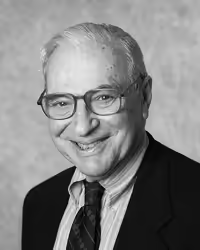
Kenneth Arrow
American economist (1921–2017)
- 6 min read
- 3 chapters

Related on Lably
Through Information asymmetry, Great Depression and Justice
In economics, Arrow was a major figure in postwar neoclassical economic theory. Four of his students (Roger Myerson, Eric Maskin, John Harsanyi, and Michael Spence) went on to become Nobel laureates themselves. His contributions to social choice theory, notably his "impossibility theorem", and his work on general equilibrium analysis are significant. His work in many other areas of economics, including endogenous growth theory and the economics of information, was also foundational.
Education and early career
Arrow was born on August 23, 1921, in New York City. Arrow's mother, Lilian (Greenberg), was from Iași, Romania, and his father, Harry Arrow, was from nearby Podu Iloaiei. The family was of Romanian-Jewish descent, and very supportive of Kenneth's education. Growing up during the Great Depression, he embraced socialism in his youth. He would later move away from socialism, but his views retained a left-leaning philosophy.
He graduated from Townsend Harris High School and then earned a bachelor's degree in mathematics from the City College of New York in 1940, where he was a member of Sigma Phi Epsilon. He then attended Columbia University for graduate studies, obtaining a master's degree in mathematics in June 1941. At Columbia, Arrow studied under Harold Hotelling, who influenced him to switch fields to economics. He served as a weather officer in the United States Army Air Forces from 1942 to 1946.
Sign in to keep reading
2 more chapters are free with a Lably account.
Academic career
From 1946 to 1949, Arrow was a graduate student at Columbia University, and also worked as a research associate at the Cowles Commission. During that time he also was an assistant professor of economics at the University of Chicago and worked at the RAND Corporation in California. He left the University of Chicago to become an acting assistant professor of economics and statistics at Stanford University. In 1951, he received a PhD degree from Columbia University. He served in the government on the staff of the Council of Economic Advisers in the 1960s with Robert Solow. In 1968, he left Stanford for Harvard University, where he was appointed Professor of Economics; it was during his tenure there that he received the Nobel Prize in Economics.
Arrow returned to Stanford University in 1979 and became the Joan Kenney Professor of Economics and Professor of Operations Research. He retired in 1991. As a Fulbright Distinguished Chair, in 1995 he taught economics at the University of Siena. He was also a founding member of the Pontifical Academy of Social Sciences and a member of the board at the Santa Fe Institute. At various stages in his career he was a Fellow of Churchill College, Cambridge. He was one of the founding editors of the Annual Review of Economics, which was first published in 2009.
Four of his former students have gone on to become Nobel Prize winners, namely John Harsanyi, Eric Maskin, Roger Myerson, and Michael Spence. A collection of Arrow's papers is housed at the Rubenstein Library at Duke University.
Arrow's impossibility theorem
Arrow's monograph Social Choice and Individual Values derives from his 1951 PhD thesis.
If we exclude the possibility of interpersonal comparisons of utility, then the only methods of passing from individual tastes to social preferences which will be satisfactory and which will be defined for a wide range of sets of individual orderings are either imposed or dictatorial.
In what he named the General Possibility Theorem, he theorized that, unless we accept to compare the levels of utility reached by different individuals, it is impossible to formulate a social preference ordering that satisfies all of the following conditions:
- Nondictatorship: The preferences of an individual should not become the group ranking without considering the preferences of others.
- Individual Sovereignty: each individual should be able to order the choices in any way and indicate ties
- Unanimity: If every individual prefers one choice to another, then the group ranking should do the same
- Freedom From Irrelevant Alternatives: If a choice is removed, then the others' order should not change
- Uniqueness of Group Rank: The method should yield the same result whenever applied to a set of preferences. The group ranking should be transitive.
The theorem has implications for welfare economics and theories of justice, and for voting theory (it extends the Condorcet paradox). Following Arrow's logical framework, Amartya Sen formulated the liberal paradox which argued that given a status of "Minimal Liberty" there was no way to obtain Pareto optimality, nor to avoid the problem of social choice of neutral but unequal results.
General equilibrium theory
Work by Arrow and Gérard Debreu and simultaneous work by Lionel McKenzie offered the first rigorous proofs of the existence of a market clearing equilibrium. For this work and his other contributions, Debreu won the 1983 Nobel Prize in Economics. Arrow went on to extend the model and its analysis to include uncertainty, the stability. His contributions to the general equilibrium theory were influenced by Adam Smith's Wealth of Nations. Written in 1776, The Wealth of Nations is an examination of economic growth brought forward by the division of labor, by ensuring interdependence of individuals within society.
In 1974, The American Economic Association published the paper written by Kenneth Arrow, General Economic Equilibrium: Purpose, Analytic Techniques, Collective Choice, where he states:
From the time of Adam Smith's Wealth of Nations in 1776, one recurrent theme of economic analysis has been the remarkable degree of coherence among the vast numbers of individual and seemingly separate decisions about the buying and selling of commodities. In everyday, normal experience, there is something of a balance between the amounts of goods and services that some individuals want to supply and the amounts that other, different individuals want to sell. Would-be buyers ordinarily count correctly on being able to carry out their intentions, and would-be sellers do not ordinarily find themselves producing great amounts of goods that they cannot sell. This experience of balance is indeed so widespread that it raises no intellectual disquiet among laymen; they take it so much for granted that they are not disposed to understand the mechanism by which it occurs.
Fundamental theorems of welfare economics
In 1951, Arrow presented the first and second fundamental theorems of welfare economics and their proofs without requiring differentiability of utility, consumption, or technology, and including corner solutions.
Endogenous-growth theory
Arrow was one of the precursors of endogenous growth theory, which seeks to explain the source of technical change, which is a key driver of economic growth. Until this theory came to prominence, technical change was assumed to occur exogenously—that is, it was assumed to occur outside economic activities, and was outside (exogenous) to common economic models. At the same time there was no economic explanation for why it occurred. Endogenous-growth theory provided standard economic reasons for why firms innovate, leading economists to think of innovation and technical change as determined by economic actors, that is endogenously to economic activities, and thus belong inside the model. Endogenous growth theory started with Paul Romer's 1986 paper, borrowing from Arrow's 1962 "learning-by-doing" model which introduced a mechanism to eliminate diminishing returns in aggregate output. A literature on this theory has developed subsequently to Arrow's work.
Information economics
In other pioneering research, Arrow investigated the problems caused by asymmetric information in markets. In many transactions, one party (usually the seller) has more information about the product being sold than the other party. Asymmetric information creates incentives for the party with more information to cheat the party with less information; as a result, a number of market structures have developed, including warranties and third party authentication, which enable markets with asymmetric information to function. Arrow analysed this issue for medical care (a 1963 paper entitled "Uncertainty and the Welfare Economics of Medical Care", in the American Economic Review); later researchers investigated many other markets, particularly second-hand assets, online auctions and insurance.
Personal life and death
Arrow was a brother to the economist Anita Summers, uncle to economist and former Treasury Secretary and Harvard President Larry Summers, and brother-in-law of the late economists Robert Summers and Paul Samuelson. In 1947, he married Selma Schweitzer, graduate in economics at the University of Chicago and psychotherapist, who died in 2015; they had two children, David Michael (b. 1962), an actor, and Andrew Seth (b. 1965), an actor/singer.
Arrow died in his Palo Alto, California, home on February 21, 2017, at the age of 95.