

Pinto bean
Variety of the common bean (Phaseolus vulgaris)
- 3 min read
- 4 chapters

Related on Lably
Through Starch
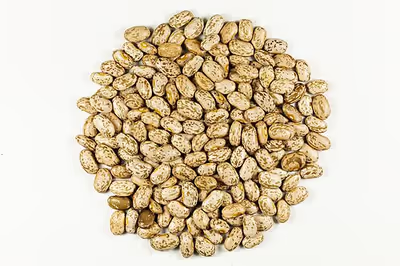
In South America, it is known as the poroto frutilla, literally "strawberry bean". In Portuguese, the Brazilian name is feijão carioca (literally "carioca bean"; contrary to popular belief, the beans were not named after Rio de Janeiro, but after a pig breed that has the same color as the legume), which differs from the name in Portugal: feijão catarino. Additionally, the young immature pods may be harvested and cooked as green pinto beans. There are a number of different varieties of pinto bean, notably some originating from Northern Spain, where an annual fair is dedicated to the bean.
In many languages, "pinto" means "colored" or "painted", as derived from the Late Latin pinctus and Classical Latin pictus. In Spanish, it means "painted", "dappled", or "spotted". The coloration of pinto beans is similar to that of pinto horses.
Use
The dried pinto bean is used in many dishes, especially refried beans. It is popular in chili con carne, although kidney beans, black beans, and many others may be used in other locales. Pinto beans are often found in Brazilian cuisine. Legumes, mainly the common bean, are a staple food everywhere in the country, cultivated since 3000 BCE, along with starch-rich foods, such as rice, manioc, pasta, and other wheat-based products, polenta and other corn-based products, potatoes and yams. Pinto beans are also a very important ingredient in Spanish cuisine and Mexican cuisine. In Spanish cuisine pinto beans are mostly used in a dish named after them. In the Southern United States, pinto beans are commonly a staple, especially during the winter months. Some organizations and churches in rural areas sponsor "pinto bean suppers" for social gatherings and fund raisers.
Sign in to keep reading
3 more chapters are free with a Lably account.
Varieties
Pinto bean varieties include: 'Burke', 'Hidatsa', and 'Othello'.
The alubia pinta alavesa, or the "Alavese pinto bean", a red variety of the pinto bean, originated in Añana, a town and municipality located in the province of Álava, in the Basque Country of northern Spain. In October, the Feria de la alubia pinta alavesa (Alavese pinto bean fair) is celebrated in Pobes.
Cooking
Pinto beans are often soaked, which greatly shortens cooking time. If unsoaked, they are frequently boiled rapidly for 10 minutes. They will then generally take two to three hours to cook on a stove to soften. In a pressure cooker they will cook very rapidly, perhaps 3 minutes if soaked, and 20–45 minutes if unsoaked. Cooking times vary considerably however and may depend on the source of the bean, hardness of the cooking water and many other factors.
Nutrition
A nutrient-dense legume, the pinto bean contains many essential nutrients. It is a good source of protein, phosphorus and manganese, and very high in dietary fiber and folate.
Rice and pinto beans served with cornbread or maize tortillas are often a staple meal where meat is unavailable. This combination contains the essential amino acids necessary for humans in adequate amounts: maize complements beans' relative scarcity of methionine and cystine and beans complement maize's relative scarcity of lysine and tryptophan.
Studies have indicated pinto beans can lower the levels of both HDL and LDL cholesterol.