


Related on Lably
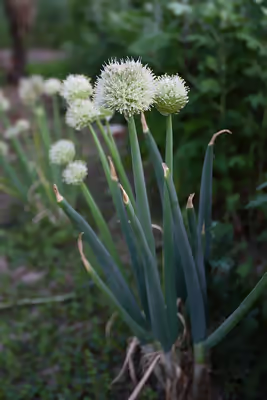
The species is very similar in taste and odor to the related common onion, Allium cepa, and hybrids between the two (tree onions) exist. A. fistulosum, however, does not develop bulbs, and its leaves and scapes are hollow (fistulosum means 'hollow'). Larger varieties of A. fistulosum, such as the Japanese negi, resemble the leek, and smaller varieties resemble chives. A. fistulosum can multiply by forming perennial evergreen clumps. It is also grown in a bunch as an ornamental plant.
Names
The common name "Welsh onion" does not refer to Wales; indeed, the plant is neither indigenous to Wales nor particularly common in Welsh cuisine (the green Allium common to Wales is the leek, A. ampeloprasum, the national vegetable of Wales). Instead, it derives from a near-obsolete botanical use of Welsh in the sense 'foreign, non-native' because the species is native to China, although it is cultivated in many places and naturalized in scattered locations throughout Eurasia and North America.
Historically, A. fistulosum was known as the cibol. In Cornwall, they are known as chibols, and in Scotland as sybows or sybies.
The plant may also be called stone-leek or rock onion. Other names that may be applied to this plant include green onion, salad onion and spring onion. These names are ambiguous, as they may also be used to refer to any young green onion stalk, whether grown from Welsh onions, common onions, or other similar members of the genus Allium (also see scallion).
Sign in to keep reading
2 more chapters are free with a Lably account.
Culinary use
A. fistulosum is an ingredient in Asian cuisine, especially in East Asia and Southeast Asia. It is particularly important in China, Japan, Taiwan and Korea, hence one of the English names for this plant, Japanese bunching onion.
In the West, A. fistulosum is primarily used as a scallion or salad onion, but is more widely used in other parts of the world, particularly East Asia.
China
In China, it is often used in scallion pancakes, and as a garnish for a variety of dishes. It is also mixed with meat, into shumai dumplings or pearl meatballs.
Japan
The Japanese name is negi (葱), which can also refer to other plants of the genus Allium, or more specifically naganegi (長葱), meaning "long onion". Common onions were introduced to East Asia in the 19th century, but A. fistulosum remains more popular and widespread. It is used in miso soup, negimaki (beef and scallion rolls), among other dishes, and it is in wide use as a sliced garnish, such as on teriyaki or takoyaki.
Korea
In Korea, A. fistulosum along with A. × proliferum is called pa (파, "scallion"), while common onions are called yangpa (양파, "Western scallion"). Larger varieties, looking similar to leek and sometimes referred to as "Asian leek", are called daepa (대파, "big scallion"), while the thinner early variety is called silpa (실파, "thread scallion"). A similar scallion plant, A. × wakegi (now considered a synonym of A. × proliferum), is called jjokpa (쪽파). Both daepa and silpa are usually used as a spice, herb, or garnish in Korean cuisine. The white part of daepa is often used as the flavour base for various broths and infused oil, while the green part of silpa is preferred as garnish. Dishes using daepa include pa-jangajji (pickled scallions), pa-mandu (scallion dumplings), pa-sanjeok (skewered beef and scallions), and padak (scallion chicken), which is a variety of Korean fried chicken topped with shredded raw daepa. Dishes using silpa include pa-namul (seasoned scallions), pa-jangguk (scallion beef-broth soup), and pa-ganghoe (parboiled scallion rolls) where silpa is used as a ribbon that bundles other ingredients.
Russia
A. fistulosum is used in Russia in the spring for adding green leaves to salads.
Jamaica
Known as escallion, A. fistulosum is an ingredient in Jamaican cuisine, in combination with thyme, Scotch bonnet pepper, garlic, and allspice (called pimento). Recipes with escallion sometimes suggest leek as a substitute in salads. Jamaican dried spice mixtures using escallion are available commercially.
The Jamaican name is probably a variant of scallion, the term used loosely for the spring onion and various other plants in the genus Allium.
Argentina
It is used to make empanadas and locro, as well as other traditional dishes.