


Related on Lably
Through Lunisolar calendar, Chinese people and Koreans
A Chinese calendar consists of twelve months, each aligned with the phases of the moon, along with an extra intercalary month inserted as needed to keep the calendar in sync with the seasons. It also features twenty-four solar terms, which track the position of the sun and are closely related to climate patterns. Among these, the winter solstice is the most significant reference point and must occur in the eleventh month of the year. Each month contains either twenty-nine or thirty days. The sexagenary cycle for each day runs continuously over thousands of years and serves as a determining factor to pinpoint a specific day amidst the many variations in the calendar. The variety of calendars arises from deviations in algorithms and assumptions about inputs. The Chinese calendar is location-sensitive, meaning that calculations based on different locations, such as Beijing and Nanjing, can yield different results.
While modern China primarily adopts the Gregorian calendar for official purposes, the traditional calendar remains culturally significant, influencing festivals and cultural practices, determining the timing of Chinese New Year with traditions like the twelve animals of the Chinese zodiac still widely observed. The winter solstice serves as another New Year, a tradition inherited from ancient China. Beyond China, it has shaped other East Asian calendars, including the Korean, Vietnamese, and Japanese lunisolar systems, each adapting the same lunisolar principles while integrating local customs and terminology.
Etymology
The name of calendar is in Chinese: 曆; pinyin: lì, and was represented in earlier character forms variants (歷, 厤), and ultimately derived from an ancient form (秝). The ancient form of the character consists of two stalks of rice plant (禾), arranged in parallel. This character represents the order in space and also the order in time. As its meaning became complex, the modern dedicated character (曆) was created to represent the meaning of calendar.
There are various Chinese terms for the calendar including:
- Nongli Calendar (traditional Chinese: 農曆; simplified Chinese: 农历; pinyin: nónglì; lit. 'agricultural calendar')
- Laoli Calendar (traditional Chinese: 老曆; simplified Chinese: 老历; pinyin: lǎolì; lit. 'old calendar')
- Zhongli Calendar (traditional Chinese: 中曆; simplified Chinese: 中历; pinyin: zhōnglì; Jyutping: zung1 lik6; lit. 'Chinese calendar')
- Huali Calendar (traditional Chinese: 華曆; simplified Chinese: 华历; pinyin: huálì; Jyutping: waa4 lik6; lit. 'Chinese calendar')
Various modern Chinese calendar names resulted from the struggle between the introduction of Gregorian calendar by government and the preservation of customs by the public in the era of Republic of China. The government wanted to abolish the Chinese calendar and use the Gregorian calendar, and even abolished the Chinese New Year, but faced great opposition. The public needed the astronomical Chinese calendar to do things at a proper time, for example farming and fishing; also, a wide spectrum of festivals and customs observations have been based on the calendar. The government finally compromised and rebranded it as the agricultural calendar in 1947, depreciating the calendar to merely agricultural use.
Sign in to keep reading
8 more chapters are free with a Lably account.
Year-numbering systems
Eras
Ancient China numbered years from an emperor's ascension to the throne or his declaration of a new era name. The first recorded reign title was Jiànyuán (建元), from 140 BCE; the last reign title was Xuāntǒng (宣統; 宣统), from 1908 CE. The era system was abolished in 1912, after which the current or Republican era was used.
Epochs
An epoch is a point in time chosen as the origin of a particular calendar era, thus serving as a reference point from which subsequent time or dates are measured. The use of epochs in Chinese calendar system allow for a chronological starting point from whence to begin point continuously numbering subsequent dates. Various epochs have been used. Similarly, nomenclature similar to that of the Christian era has occasionally been used:
No reference date is universally accepted. The most popular is the Gregorian calendar (公曆; 公历; gōnglì; 'common calendar').
During the 17th century, the Jesuit missionaries tried to determine the epochal year of the Chinese calendar. In his Sinicae historiae decas prima (published in Munich in 1658), Martino Martini (1614–1661) dated the Yellow Emperor's ascension at 2697 BCE and began the Chinese calendar with the reign of Fuxi (which, according to Martini, began in 2952 BCE). Philippe Couplet's 1686 Chronological table of Chinese monarchs (Tabula chronologica monarchiae sinicae) gave the same date for the Yellow Emperor. The Jesuits' dates provoked interest in Europe, where they were used for comparison with Biblical chronology. Modern Chinese chronology has generally accepted Martini's dates, except that it usually places the reign of the Yellow Emperor at 2698 BCE and omits his predecessors Fuxi and Shennong as "too legendary to include".
Publications began using the estimated birth date of the Yellow Emperor as the first year of the Han calendar in 1903, with newspapers and magazines proposing different dates. Jiangsu province counted 1905 as the year 4396 (using a year 1 of 2491 BCE, and implying that 2026 CE is 4517), and the newspaper Ming Pao (明報) reckoned 1905 as 4603 (using a year 1 of 2698 BCE, and implying that 2026 CE is 4724). Liu Shipei (劉師培, 1884–1919) created the Yellow Emperor Calendar (黃帝紀元, 黃帝曆 or 軒轅紀年), with year 1 as the birth of the emperor (which he determined as 2711 BCE, implying that 2026 CE is 4737). There is no evidence that this calendar was used before the 20th century. Liu calculated that the 1900 international expedition sent by the Eight-Nation Alliance to suppress the Boxer Rebellion entered Beijing in the 4611th year of the Yellow Emperor.
On 2 January 1912, Sun Yat-sen announced changes to the official calendar and era. 1 January was Huángdì year 4609.11.13, assuming a year 1 of 2698 BCE, making 2026 CE year 4724. Many overseas Chinese communities like San Francisco's Chinatown adopted the change.
History
Solar calendars
The traditional Chinese lunisolar calendar was developed between 771 BCE and 476 BCE, during the Spring and Autumn period of the Eastern Zhou dynasty. Solar calendars were used before the Zhou dynasty period, along with the basic sexagenary system.
One version of the solar calendar is the five-elements (or phases) calendar (五行曆; 五行历; wǔxíng lì), which derives from the Wu Xing. A 365-day year was divided into five phases of 72 days, with each phase preceded by an intercalary day associated with the claimed beginning of the following 72 day period of domination by the next Wu Xing element; thus, the five phases each begin with a governing-element day (行御), followed by a 72-day period characterized by the ruling element. Years began on a jiǎzǐ (甲子) day and a 72-day wood phase, followed by a bǐngzǐ (丙子) day and a 72-day fire phase; a wùzǐ (戊子) day and a 72-day earth phase; a gēngzǐ (庚子) day and a 72-day metal phase, and a rénzǐ (壬子) day followed by a water phase. Each phase consisted of two three-week months, making each year ten months long. Other days were tracked using the Yellow River Map (He Tu).
Another version is a four-quarters calendar (四時八節曆; 四时八节历; sìshí bājié lì; 'four-season eight-solar-term calendar', or 四分曆; 四分历; sìfēn lì; 'quarters calendar'). The weeks were ten days long, with one month consisting of three weeks. A year had 12 months, with a ten-day week intercalated in summer as needed to keep up with the tropical year. The 10 Heavenly Stems and 12 Earthly Branches were used to mark days.
A third version is the balanced calendar (調曆; 调历; tiáo lì). A year was 365.25 days, and a month was 29.5 days. After every 16th month, a half-month was intercalated. According to oracle bone records, the Shang dynasty calendar (c. 1600 – c. 1046 BCE) was a balanced calendar with 12 to 14 months in a year; the month after the winter solstice was Zhēngyuè.
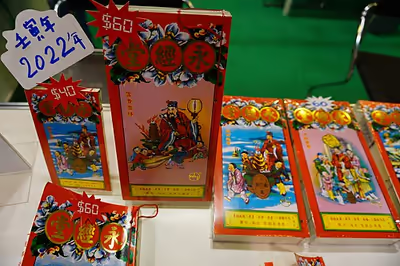
A solar calendar called the Tung Shing, the Yellow Calendar or Imperial Calendar (both alluding to Yellow Emperor) continued to see use as an almanac and agricultural guide throughout Chinese history.
Lunisolar calendars by dynasty
Lunisolar calendars involve correlations of the cycles of the sun (solar) and the moon (lunar).
Zhou dynasty
The first lunisolar calendar was the Zhou calendar (周曆; 周历), introduced under the Zhou dynasty (1046 BCE – 256 BCE). This calendar sets the beginning of the year at the day of the new moon before the winter solstice.
Competing Warring states calendars
Several competing lunisolar calendars were introduced as Zhou devolved into the Warring States, especially by states fighting Zhou control during the Warring States period (perhaps 475 BCE – 221 BCE). From the Warring States period (ending in 221 BCE), six especially significant calendar systems are known to have begun to be developed. Later on, during their future course in history, the modern names for the ancient six calendars were also developed: Huangdi, Yin, Zhou, Xia, Zhuanxu, and Lu.
Modern historical knowledge and records are limited for the earlier calendars. These calendars are known as the six ancient calendars (古六曆; 古六历), or quarter-remainder calendars, (四分曆; 四分历; sìfēnlì), since all calculate a year as 365+1⁄4 days long. Months begin on the day of the new moon, and a year has 12 or 13 months. Intercalary months (a 13th month) are added to the end of the year.
The state of Lu issued its own Lu calendar (魯曆; 鲁历).
The state of Jin issued the Xia calendar (夏曆; 夏历) with a year beginning on the day of the new moon nearest the March equinox.
The state of Qin issued the Zhuanxu calendar (顓頊曆; 颛顼历), with a year beginning on the day of the new moon nearest the winter solstice. The Qiang and Dai calendars are modern versions of the Zhuanxu calendar, used by highland peoples.
The Song state's Yin calendar (殷曆; 殷历) began its year on the day of the new moon after the winter solstice.
Qin and early Han dynasties
After Qin Shi Huang unified China under the Qin dynasty in 221 BCE, the Qin calendar (秦曆; 秦历) was introduced. It followed most of the rules governing the Zhuanxu calendar, but the month order was that of the Xia calendar; the year began with month 10 and ended with month 9, analogous to a Gregorian calendar beginning in October and ending in September. The intercalary month, known as the second Jiǔyuè (後九月; 后九月), was placed at the end of the year. The Qin calendar was used going into the Han dynasty.
Han dynasty Tàichū calendar
Emperor Wu of Han (r. 141 – 87 BCE) introduced reforms in the seventh of the eleven named eras of his reign, Tàichū (太初; 'Grand Beginning'), 104 BCE – 101 BCE. His Tàichū calendar (太初曆; 太初历; 'grand beginning calendar') defined a solar year as 365+385⁄1539 days (365;06:00:14.035), and the lunisolar month had 29+43⁄81 days (29;12:44:44.444). Since , the 19-year cycle used for the 7 additional months was taken as exact, and not as an approximation.
This calendar introduced the 24 solar terms, dividing the year into 24 equal parts of 15° each. Solar terms were paired, with the 12 combined periods known as climate terms. The first solar term of the period was known as a pre-climate (節氣; 节气), and the second was a mid-climate (中氣; 中气). Months were named for the mid-climate to which they were closest, and a month without a mid-climate was an intercalary month.
The Taichu calendar established a framework for traditional calendars, with later calendars adding to the basic formula.
Northern and Southern Dynasties Dàmíng calendar
The Dàmíng calendar (大明曆; 大明历; 'brightest calendar'), created in the Northern and Southern Dynasties by Zu Chongzhi (429 CE – 500 CE), introduced the equinoxes.
Tang dynasty Wùyín Yuán calendar
The use of syzygy to determine the lunisolar month was first described in the Tang dynasty Wùyín Yuán calendar (戊寅元曆; 戊寅元历; 'earth tiger epoch calendar').
Yuan dynasty Shòushí calendar
The Yuan dynasty Shòushí calendar (授時曆; 授时历; 'season granting calendar') used spherical trigonometry to find the length of the tropical year. The calendar had a 365.2425-day year, identical to the Gregorian calendar.
Ming and Qing Shíxiàn calendar
From 1645 to 1913 the Shíxiàn or Chongzhen calendar was developed. During the late Ming dynasty, the Chinese Emperor appointed Xu Guangqi in 1629 to be the leader of the Shixian calendar reform. Assisted by Jesuits, he translated Western astronomical works and introduced new concepts, such as those of Nicolaus Copernicus, Johannes Kepler, Galileo Galilei, and Tycho Brahe; however, the new calendar was not released before the end of the dynasty.
In the early Qing dynasty, Johann Adam Schall von Bell submitted the calendar which was edited by the lead of Xu Guangqi to the Shunzhi Emperor. The Qing government issued it as the Shíxiàn (seasonal) calendar. In this calendar, the solar terms are 15° each along the ecliptic and it can be used as a solar calendar. However, the length of the climate term near the perihelion is less than 30 days and there may be two mid-climate terms. The Shíxiàn calendar changed the mid-climate-term rule to "decide the month in sequence, except the intercalary month."
The present "traditional calendar" follows the Shíxiàn calendar, except:
- The baseline is Chinese Standard Time, rather than Beijing local time.
- Modern astronomical data, rather than mathematical calculations, is used.
Modern Chinese calendar
Despite the Chinese calendar losing its place as the country's official calendar at the beginning of the 20th century, its use has continued.
The Republic of China Calendar published by the Beiyang government of the Republic of China still listed the dates of the Chinese calendar in addition to the Gregorian calendar.
In 1929, the Nationalist government tried to ban the traditional Chinese calendar. The Kuómín Calendar published by the government no longer listed the dates of the Chinese calendar. However, Chinese people were used to the traditional calendar, and many traditional customs were based on the Chinese calendar. The ban failed and was lifted in 1934.
The latest Chinese calendar was "New Edition of Wànniánlì, revised edition", edited by Beijing Purple Mountain Observatory, People's Republic of China.
In China, the modern calendar is defined by the Chinese national standard GB/T 33661–2017, "Calculation and Promulgation of the Chinese Calendar", issued by the Standardization Administration of China on 12 May 2017.
Although modern-day China uses the Gregorian calendar, the traditional Chinese calendar governs holidays, such as the Chinese New Year and Lantern Festival, in both China and overseas Chinese communities. It also provides the traditional Chinese nomenclature of dates within a year which people use to select auspicious days for weddings, funerals, moving or starting a business. The evening state-run news program Xinwen Lianbo in the People's Republic of China continues to announce the months and dates in both the Gregorian and the traditional lunisolar calendar.
To optimize the Chinese calendar, astronomers have proposed a number of changes. Kao Ping-tse (高平子; 1888–1970), a Chinese astronomer who co-founded the Purple Mountain Observatory, proposed that month numbers be calculated before the new moon and solar terms to be rounded to the day. Since the intercalary month is determined by the first month without a mid-climate and the mid-climate time varies by time zone, countries that adopted the calendar but calculate with their own time could vary from the time in China.
Contributions from Chinese astronomy
The Chinese calendar has been a development involving much observation and calculation of the apparent movements of the Sun, Moon, planets, and stars, as observed from Earth.
Many Chinese astronomers have contributed to the development of the Chinese calendar. Many were of the scholarly or shi class (Chinese: 士; pinyin: shì), including writers of history, such as Sima Qian.
Notable Chinese astronomers who have contributed to the development of the calendar include Gan De, Shi Shen, and Zu Chongzhi
Early technological developments aiding in calendar development include the development of the gnomon. Later technological developments useful to the calendar system include naming, numbering and mapping of the sky, the development of analog computational devices such as the armillary sphere and the water clock, and the establishment of observatories.
Phenology
Early calendar systems, including the Chinese calendar, often were closely tied to natural phenomena. Phenology is the study of periodic events in biological life cycles and how these are influenced by seasonal and interannual variations in climate, as well as habitat factors (such as elevation). The plum-rains season (梅雨), the rainy season in late spring and early summer, begins on the first bǐng day after Mangzhong (芒種) and ends on the first wèi day after Xiaoshu (小暑). The Three Fu (三伏; sānfú) are three periods of hot weather, counted from the first gēng day after the summer solstice. The first fu (初伏; chūfú) is 10 days long. The mid-fu (中伏; zhōngfú) is 10 or 20 days long. The last fu (末伏; mòfú) is 10 days from the first gēng day after the beginning of autumn. The Shujiu cold days (數九; shǔjǐu; 'counting to nine') are the 81 days after the winter solstice (divided into nine sets of nine days), and are considered the coldest days of the year. Each nine-day unit is known by its order in the set, followed by "nine" (九). In traditional Chinese culture, "nine" represents the infinity, which is also the number of "Yang". According to one belief nine times accumulation of "Yang" gradually reduces the "Yin", and finally the weather becomes warm.
Names of months
Lunisolar months were originally named according to natural phenomena. Current naming conventions use numbers as the month names. Every month is also associated with one of the twelve Earthly Branches.
*Gregorian dates are approximate and should be used with caution. Many years have intercalary months.
Gregorian names for months cannot be used for name-equivalent months in the Chinese calendar; e.g. Dragon Boat Festival, which falls on the fifth day of the fifth month in the Chinese calendar, cannot be written as 5 May.
Horology
Horology, or chronometry, refers to the measurement of time. In the context of the Chinese calendar, horology involves the definition and mathematical measurement of terms or elements such observable astronomic movements or events such as are associated with days, months, years, hours, and so on. These measurements are based upon objective, observable phenomena. Calendar accuracy is based upon accuracy and precision of measurements.
The Chinese calendar is lunisolar, similar to the Hindu, Hebrew and ancient Babylonian calendars. In this case the calendar is in part based in objective, observable phenomena and in part by mathematical analysis to correlate the observed phenomena. Lunisolar calendars especially attempt to correlate the solar and lunar cycles, but other considerations can be agricultural and seasonal or phenological, or religious, or even political.
Basic horological definitions include that days begin and end at midnight, and months begin on the day of the new moon. Years start on the second (or third) new moon after the winter solstice. Solar terms govern the beginning, middle, and end of each month. A sexagenary cycle, comprising the heavenly stems (干; gān) and the earthly branches (支; zhī), is used as identification alongside each year and month, including intercalary months or leap months. Months are also annotated as either long (大; 'big' for months with 30 days) or short (小; 'small' for months with 29 days). There are also other elements of the traditional Chinese calendar.
Day
Days are Sun oriented, based upon divisions of the solar year. A day (日; rì) is considered both traditionally and currently to be the time from one midnight to the next. Traditionally, days (including the night-time portion) were divided into 12 double-hours, and in modern times, the 24-hour system has become more standard.
Week
As early as the Bronze Age Xia dynasty, days were grouped into nine- or ten-day weeks known as xún (旬). Months consisted of three xún. The first 10 days were the early xún (上旬), the middle 10 the mid xún (zhi|c=中旬}}), and the last nine (or 10) days were the late xún (下旬). Japan adopted this pattern, with 10-day-weeks known as jun (旬). In Korea, they were known as sun (순,旬).
The structure of xún led to public holidays every five or ten days. Officials of the Han dynasty were legally required to rest every five days (twice a xún, or 5–6 times a month). The name of these breaks became huàn (澣; 浣; 'wash').
Grouping days into sets of ten is still used today in referring to specific natural events. "Three Fu" (三伏), a 29–30-day period which is the hottest of the year, reflects its three-xún length. After the winter solstice, nine sets of nine days were counted to calculate the end of winter.
Seven-day week and 28-day cycle
The seven-day week was adopted from the Hellenistic system by the 4th century CE, although its method of transmission into China is unclear. It was again transmitted to China in the 8th century by Manichaeans via Kangju, spoken in a variant of Sogdian language (a Central Asian kingdom near Samarkand),.), an astrologer of the Jin dynasty.}} Its meaning is derived from the five classical planets, along with the Sun and Moon, making a total of seven celestial bodies highly visible in the sky, in Chinese translation 七曜. At that time, people created simple handwritten almanacs, where Sunday was marked with the character 密. The seven-day week had fallen out of favour for a long time, only to be revived when Christianity gained a foothold in China and later made mandatory by the government.
In between, a 28-day cycle system was used, borrowing from the Twenty-Eight Mansions system. Originally, these mansions tracked the moon's position against the stars in the sky, much like the sun and zodiac, and became part of the Chinese constellations. However, in this context, the 28-day cycle had no connection to astronomy and was used purely for fortune-telling. This information was documented and is still referenced in the Tung Shing, a Chinese almanac. When Westerners introduced the seven-day week system to China, whether for religious, business, or colonial reasons, both the Chinese and the Westerners found the 28-day cycle useful. Sunday, for instance, was written as "星房虛昴," indicating the corresponding four days on the 28-day cycle, as easily found in the almanac.
Following the calendrical reforms in China during the era of the Republic of China, a period marked by both rejection and integration, the seven-day week system became the most widely used, aligning with the Western world.
Month
Months are Moon oriented. Month (月; yuè), the time from one new moon to the next. These synodic months are about 29+17⁄32 days long. This includes the Date (日期; rìqī), when a day occurs in the month. Days are numbered in sequence from 1 to 29 (or 30). And, a Calendar month (日曆月; rìlì yuè), is when a month occurs within a year. Some months may be repeated.
Months are defined by the time between new moons, which averages approximately 29+17⁄32 days. There is no specified length of any particular Chinese month, so the first month could have 29 days (short month, 小月) in some years and 30 days (long month, 大月) in other years.
Since the beginning of the month is determined by when the new moon occurs, other countries using this calendar use their own time standards to calculate it, resulting in deviations. The first new moon in 1968 was at 16:29 UTC on 29 January. Since North Vietnam used UTC+07:00 to calculate their Vietnamese calendar and South Vietnam used UTC+08:00 (Beijing time) to calculate theirs, North Vietnam began the Tết holiday at 29 January at 23:29 while South Vietnam began it on 30 January at 00:15. The time difference allowed asynchronous attacks in the Tet Offensive.
Because astronomical observation determines month length, dates on the calendar correspond to moon phases. The first day of each month is the new moon. On the seventh or eighth day of each month, the first-quarter moon is visible in the afternoon and early evening. On the 15th or 16th day of each month, the full moon is visible all night. On the 22nd or 23rd day of each month, the last-quarter moon is visible late at night and in the morning.
Different eras used different systems to determine the length of each month. The synodic month of the Taichu calendar was 29+43⁄81 days long. The 7th-century, Tang-dynasty Wùyín Yuán Calendar was the first to determine month length by synodic month instead of the cycling method. Since then, month lengths have primarily been determined by observation and prediction.
The days of the month are always written with two characters and numbered beginning with 1. Days one to 10 are written with the day's numeral, preceded by the character Chū (初); Chūyī (初一) is the first day of the month, and Chūshí (初十) the 10th. Days 11 to 20 are written as regular Chinese numerals; Shíwǔ (十五) is the 15th day of the month, and Èrshí (二十) the 20th. Days 21 to 29 are written with the character Niàn (廿) before the characters one through nine; Niànsān (廿三), for example, is the 23rd day of the month. Day 30 (when applicable) is written as the numeral Sānshí (三十).
Year
A year (年; nián) is based upon the time of one revolution of Earth around the Sun, rounded to whole days. Traditionally, the year is measured from the first day of spring (lunisolar year) or the winter solstice (solar year).
A 12-month-year using this system has 354 days, which would drift significantly from the tropical year. To fix this, traditional Chinese years have a 13-month year approximately once every three years. The 13-month version has the same long and short months alternating, but adds a 30-day leap month (閏月; rùnyuè). Years with 12 months are called common years, and 13-month years are known as long years.
A solar year is astronomically about 365+31⁄128 days. A lunisolar calendar year is either 353–355 or 383–385 days long. The lunisolar calendar (日曆; rìlì) year usually begins on the new moon closest to Lichun, the first day of spring. This is typically the second and sometimes third new moon after the winter solstice.
The lunisolar year begins with the first spring month, Zhēngyuè (正月; 'capital month'), and ends with the last winter month, Làyuè (臘月; 腊月; 'sacrificial month'). All other months are named for their number in the month order. See below on the timing of the Chinese New Year.
Solar year and solar terms
The solar year (traditional Chinese: 歲; simplified Chinese: 岁; pinyin: Suì), the time between winter solstices of 365 or 366 days, is divided into 24 periods. Each of these solar terms corresponds to a 15°-portion of the ecliptic. The 24 moments of transition, known as jié qì (節氣), solar nodes, mark off the seasons (both Western and Chinese), corresponding to equinoxes, solstices, and other Chinese events.
The solar terms are paired: one corresponding to the sun being a multiple of 30° from a solstice, called "major" terms, or Zhōngqì hence marked Z, and the other corresponding to the sun being 15° further west (earlier in the year), called "minor" terms. The word jié qì can also be used to refer just to these (hence J).
The solar terms qīng míng (清明) around 5 April and dōng zhì (冬至) around 22 December are celebrated events in China.
The solar year (suì, 歲; 岁) begins on the December solstice and proceeds through the 24 solar terms. Since the speed of the Sun's apparent motion in the elliptical is variable, the time between major terms is not fixed. This variation in time between major terms results in different solar year lengths.
A solar year generally spans over 11 or 12 complete lunar months, plus two incomplete lunar months around the winter solstice. The complete months are numbered from 0 to 10, and the month split between two solar years is considered the 11th month. If there are 12 complete months within a solar year, it is known as a leap year (a year possessing an intercalary month). This intercalation makes the calendar lunisolar.
Different versions of the arithmetic solar calendar have different mean year lengths. For example, one solar year of the 1st century BCE Tàichū calendar averages at 365+385⁄1539 (365.25016) days. The mean solar year of the 13th-century Shòushí calendar is 365+97⁄400 (365.2425) days, identical to the Gregorian calendar. The additional 0.00766 day from the Tàichū calendar lead to a one-day shift every 130.5 years.
If there are 12 complete lunisolar months within a solar year, the first lunisolar month that does not contain a major term is designated the leap, or intercalary, month. (Quite rarely there is a year having a month that contains no major term but which is not counted as a leap month because there is another month later which contains two. This will happen in 2033.) Leap months are numbered with rùn 閏, the character for "intercalary", plus the name of the month they follow. In 2017, the intercalary month after month six was called Rùn Liùyuè, or "intercalary sixth month" (閏六月) and written as 6i or 6+. The next intercalary month (in 2020, after month four) is called Rùn Sìyuè (閏四月) and written 4i or 4+.
Leap months occur on average once in 2+5⁄7 years, or 33+4⁄7 months (because of the Metonic cycle of 19 years equaling 235 months), but this varies because the speed of the moon, and of the sun, varies.
Planets
The movements of the Sun, Moon, Mercury, Venus, Mars, Jupiter and Saturn (sometimes known as the seven luminaries) are the references for calendar calculations.
- The distance between Mercury and the sun is less than 30° (the sun's height at chénshí:辰時, 8:00 to 10:00 am), so Mercury was sometimes called the "chen star" (辰星); it is more commonly known as the "water star" (水星).
- Venus appears at dawn and dusk and is known as the "bright star" (啟明星; 启明星) or "long star" (長庚星; 长庚星).
- Mars looks like fire and occurs irregularly, and is known as the "fire star" (熒惑星; 荧惑星 or 火星). Mars is the punisher in Chinese mythology. When Mars is near Antares (心宿二), it is a bad omen and can forecast an emperor's death or a chancellor's removal (荧惑守心).
- Jupiter's revolution period is 11.86 years, so Jupiter is called the "age star" (歲星; 岁星); 30° of Jupiter's revolution is about a year on earth.
- Saturn's revolution period is about 28 years. Known as the "guard star" (鎮星), Saturn guards one of the 28 Mansions every year.
Stars
Big Dipper
The Big Dipper is the celestial compass, and its handle's direction indicates the season and month.
3 Enclosures and 28 Mansions
The stars are divided into Three Enclosures and 28 Mansions according to their location in the sky relative to Ursa Minor, at the center. Each mansion is named with a character describing the shape of its principal asterism. The Three Enclosures are Purple Forbidden, (紫微), Supreme Palace (太微), and Heavenly Market (天市). The eastern mansions are 角, 亢, 氐, 房, 心, 尾, 箕. Southern mansions are 井, 鬼, 柳, 星, 張, 翼, 軫. Western mansions are 奎, 婁, 胃, 昴, 畢, 參, 觜. Northern mansions are 斗, 牛, 女, 虛, 危, 室, 壁. The moon moves through about one lunar mansion per day, so the 28 mansions were also used to count days. In the Tang dynasty, Yuan Tiangang (袁天罡) matched the 28 mansions, seven luminaries and yearly animal signs to yield combinations such as "horn-wood-flood dragon" (角木蛟).
List of lunar mansions
The names and determinative stars of the mansions are:
Sexagenary system
Several coding systems are used to avoid ambiguity. The Heavenly Stems is a decimal system. The Earthly Branches, a duodecimal system, mark dual hours (時; 时; shí or 時辰; 时辰; shíchen) and climatic terms. The 12 characters progress from the first day with the same branch as the month (first Yín day (寅日) of Zhēngyuè; first Mǎo day (卯日) of Èryuè), and count the days of the month.
Years, months, days of the month and hours could traditionally numbered by the terminology of the Chinese sexagenary cycle.
The stem-branches is a sexagesimal system. The Heavenly Stems and Earthly Branches make up 60 stem-branches. The stem branches mark days and years. The five Wu Xing elements are assigned to each stem, branch, or stem branch.
For example, the year from 12 February 2021 to 31 January 2022 was a Xīnchǒu year (辛丑年) of 12 months or 354 days. The 60 stem-branches have been used to mark the year since the Shang dynasty (1600 BCE – 1046 BCE). Astrologers knew that the orbital period of Jupiter is about 12×361 = 4332 days, which they divided into 12 years (歲; 岁; suì) of 361 days each. The stem-branches system solved the era system's problem of unequal reign lengths.
Current naming conventions use numbers as the month names, although each month is also associated with one of the twelve Earthly Branches. Correspondences with Gregorian dates are approximate and should be used with caution. Many years have intercalary months.
Historically, Chinese had days of the month numbered with the 60 stem-branches:
天聖元年…二月…丁巳,奉安太祖、太宗御容于南京鴻慶宮.
Tiānshèng 1st year…Èryuè…Dīngsì, the emperor's funeral was at his temple, and the imperial portrait was installed in Nanjing's Hongqing Palace.
— History of Song Dynasty, "卷009" [Volume 9]. 宋史 [History of Song Dynasty] (in Chinese) – via Wikisource.
Fortune-tellers identify the heavenly stem and earthly branch corresponding to a particular day in the month, and those corresponding to its month, and those to its year, to determine the Four Pillars of Destiny associated with it, for which the Tung Shing, also referred to as the Chinese Almanac of the year, or the Huangli, and containing the essential information concerning Chinese astrology, is the most convenient publication to consult. Days rotate through a sexagenary cycle marked by coordination between heavenly stems and earthly branches, hence the referral to the Four Pillars of Destiny as, "Bazi", or "Birth Time Eight Characters", with each pillar consisting of a character for its corresponding heavenly stem, and another for its earthly branch. Since Huangli days are sexagenaric, their order is quite independent of their numeric order in each month, and of their numeric order within a week (referred to as True Animals in relation to the Chinese zodiac). Therefore, it does require painstaking calculation for one to arrive at the Four Pillars of Destiny of a particular given date, which rarely outpaces the convenience of simply consulting the Huangli by looking up its Gregorian date.
The Tang dynasty used the Earthly Branches to mark the months from December 761 to May 762. Over this period, the year began with the winter solstice.
China has used the Western hour-minute-second system to divide the day since the Qing dynasty. Several systems were in use historically; systems using multiples of twelve and ten were popular, since they could be easily counted and aligned with the Heavenly Stems and Earthly Branches.
Age reckoning
In modern China, a person's official age is based on the Gregorian calendar. For traditional use, age is based on the Chinese Sui calendar. A child is considered one year old at birth. After each Chinese New Year, one year is added to their traditional age. Their age therefore is the number of Chinese calendar years in which they have lived. Due to the potential for confusion, the age of infants is often given in months instead of years.
After the Gregorian calendar was introduced in China, the Chinese traditional-age was referred to as the "nominal age" (虛歲; 虚岁; xūsuì; 'incomplete age') and the Gregorian age was known as the "real age" (實歲; 实岁; shísùi; 'whole age'). In Hong Kong, they are called 虛齡; hui ling and 實齡; sut ling respectively.
Holidays
Various traditional and religious holidays shared by communities throughout the world use the Chinese (Lunisolar) calendar:
Chinese New Year
The date of the Chinese New Year accords with the patterns of the lunisolar calendar and hence is variable from year to year.
The invariant between years is that the winter solstice, Dongzhi is required to be in the eleventh month of the year This means that Chinese New Year will be on the second new moon after the previous winter solstice, unless there is a leap month 11 or 12 in the previous year.
This rule is accurate; however, there are two other mostly (but not completely) accurate rules that are commonly stated:
- The new year is on the new moon closest to Lichun (typically 4 February).
- The new year is on the first new moon after Dahan (typically 20 January)
It has been found that Chinese New Year moves back by either 10, 11, or 12 days in most years. If it falls on or before 31 January, then it moves forward in the next year by either 18, 19, or 20 days.
Holidays with the same day and same month
The Chinese New Year (known as the Spring Festival/春節 in China) is on the first day of the first month and was traditionally called the Yuan Dan (元旦) or Zheng Ri (正日). In Vietnam it is known as Tết Nguyên Đán (節元旦). Traditionally it was the most important holiday of the year. It is an official holiday in China including Hong Kong, Macau, and Taiwan regions, and, Vietnam, Korea, the Philippines, Malaysia, Singapore, Indonesia, and Mauritius. It is also a public holiday in Thailand's Narathiwat, Pattani, Yala and Satun provinces, and is an official public school holiday in New York City.
The Double Third Festival is on the third day of the third month.
The Dragon Boat Festival, or the Duanwu Festival (端午節), is on the fifth day of the fifth month and is an official holiday in China including Hong Kong, Macau, and Taiwan regions.
The Qixi Festival (七夕節) is celebrated in the evening of the seventh day of the seventh month.
The Double Ninth Festival (重陽節) is celebrated on the ninth day of the ninth month.
Full moon holidays (holidays on the fifteenth day)
The Lantern Festival is celebrated on the fifteenth day of the first month and was traditionally called the Yuan Xiao (元宵) or Shang Yuan Festival (上元節).
The Zhong Yuan Festival is celebrated on the fifteenth day of the seventh month.
The Mid-Autumn Festival is celebrated on the fifteenth day of the eighth month.
The Xia Yuan Festival is celebrated on the fifteenth day of the tenth month.
Celebrations of the twelfth month
The Laba Festival is on the eighth day of the twelfth month. It is the enlightenment day of Sakyamuni Buddha and in Vietnam is known as Lễ Vía Phật Thích Ca thành đạo.
The Kitchen God Festival is celebrated on the twenty-third day of the twelfth month in northern regions of China and on the twenty-fourth day of the twelfth month in southern regions of China.
Chinese New Year's Eve is also known as the Chuxi Festival and is celebrated on the evening of the last day of the traditional Chinese calendar. It is celebrated wherever the traditional Chinese calendar is observed.
Celebrations of solar-term holidays
The Qingming Festival (清明节) is celebrated on the fifteenth day after the Spring Equinox.
The Dongzhi Festival (冬至) or the Winter Solstice is celebrated.
Religious holidays based on the Chinese calendar
East Asian Mahayana, Daoist, and some Cao Dai holidays and vegetarian observances are based on the traditional Chinese calendar.
Celebrations in Japan
Many of the above holidays of the traditional Chinese calendar are also celebrated in Japan, but since the Meiji era on the similarly numbered dates of the Gregorian calendar.
Double celebrations due to intercalary months
In the case when there is a corresponding intercalary month, the holidays may be celebrated twice. For example, in the hypothetical situation in which there is an additional intercalary seventh month, the Zhong Yuan Festival will be celebrated in the seventh month followed by another celebration in the intercalary seventh month. The next such occasion will be 2033, the first such since the calendar reform of 1645.
Similar calendars
Like Chinese characters, variants of the Chinese calendar have been used in different parts of the Sinosphere throughout history: this includes Vietnam, Korea, Singapore, Japan and Ryukyu, Mongolia, and elsewhere.
Outlying areas of China
Calendars of ethnic groups in mountains and plateaus of southwestern China and grasslands of northern China are based on their phenology and algorithms of traditional calendars of different periods, particularly the Tang and pre-Qin dynasties.
Non-Chinese areas
Korea, Vietnam, and the Ryukyu Islands adopted the Chinese calendar. In the respective regions, the Chinese calendar has been adapted into the Korean, Vietnamese, and Ryukyuan calendars, with the main difference from the Chinese calendar being the use of different meridians due to geography, leading to some astronomical events — and calendar events based on them — falling on different dates. The traditional Japanese calendar was also derived from the Chinese calendar (based on a Japanese meridian), but Japan abolished its official use in 1873 after Meiji Restoration reforms. Calendars in Mongolia and Tibet have absorbed elements of the traditional Chinese calendar but are not direct descendants of it.