


Learn it on Lably
The region represents a significant part of European culture; the main socio-cultural characteristics of Eastern Europe have historically largely been defined by the traditions of the Slavs, as well as by the influence of Eastern Christianity as it developed through the Eastern Roman Empire and the Ottoman Empire. Another definition was created by the Cold War, as Europe was ideologically divided by the Iron Curtain, with "Eastern Europe" being synonymous with communist states constituting the Eastern Bloc under the influence of the Soviet Union.
The term is sometimes considered to be pejorative, through stereotypes about Eastern Europe being inferior (poorer, less developed) to Western Europe; the term Central and Eastern Europe is sometimes used for a more neutral grouping.
Definitions
Several definitions of Eastern Europe exist in the early 21st century, but they often lack precision and may be anachronistic. These definitions are debated across cultures and among experts, even political scientists, as the term has a wide range of geopolitical, geographical, cultural, and socioeconomic connotations. It has also been described as a "fuzzy" term, as the idea itself of Eastern Europe is in constant redefinition. The solidification of the idea of an "Eastern Europe" dates back chiefly to the (French) Enlightenment.
There are "almost as many definitions of Eastern Europe as there are scholars of the region". A related United Nations paper adds that "every assessment of spatial identities is essentially a social and cultural construct".
Geographical
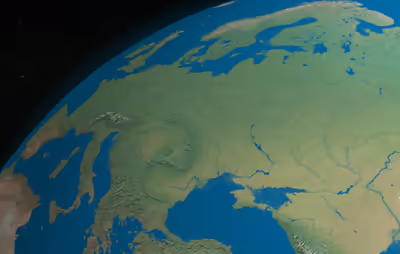
While the eastern geographical boundaries of Europe are well defined, the boundary between Eastern and Western Europe is not geographical but historical, religious, and cultural, and is harder to designate.
The Ural Mountains, Ural River, and the Caucasus Mountains are the geographical land border of the eastern edge of Europe. E.g. Kazakhstan, which is mainly located in Central Asia with the most western parts of it located west of the Ural River, also shares a part of Eastern Europe.
In the west, however, the historical and cultural boundaries of "Eastern Europe" are subject to some overlap and, most importantly, have undergone historical fluctuations, which makes a precise definition of the western geographic boundaries of Eastern Europe and the geographical midpoint of Europe somewhat difficult.
Religious and cultural influence
After the East–West Schism of 1054, significant parts of Eastern Europe developed cultural unity and resistance to Catholic Western and Central Europe within the framework of the Eastern Orthodox Church, Church Slavonic language and the Cyrillic alphabet.
The earliest concept of Europe as a cultural sphere (instead of simply a geographic term) was formed by Alcuin of York during the Carolingian Renaissance of the 9th century, limited to the territories that practised Western Christianity at the time. "European" as a cultural term did not include many of the territories under the influence of Eastern Christianity until the early nineteenth century.
A large section of Eastern Europe is formed by countries with dominant Orthodox churches, like Belarus, Bulgaria, Cyprus, Georgia, Greece, Moldova, Montenegro, North Macedonia, Romania, Russia, Serbia, and Ukraine, for instance, as well as Armenia, which is predominantly Armenian Apostolic. Moreover, followers of Eastern Orthodoxy form considerable portions of the populations of predominantly Muslim Albania, Bosnia and Herzegovina, Kazakhstan, and Kosovo, both historically and presently. The Eastern Orthodox Church has played a prominent role in the history and culture of Eastern and Southeastern Europe. To a lesser degree, forms of Eastern Protestantism and Eastern Catholicism have also been influential in Eastern Europe. Countries where Eastern Protestantism or Eastern Catholicism hold historical significance include Belarus, Croatia, the Czech Republic, Estonia, Hungary, Latvia, Lithuania, Poland, Slovakia, Slovenia and Ukraine.
The schism refers to the historical break of communion and theology between the Eastern (Orthodox) and Western (Catholic) churches. Later developments meant that the divide was no longer solely between Catholic and Orthodox churches. From the 16th century, both Western and Eastern forms of Protestantism began to emerge in Europe. Additionally, Eastern Catholic Churches began to spread in Europe during the 16th and 17th centuries, following the establishment of the Ukrainian Greek Catholic Church in 1596. However, the concept of Eastern Catholicism itself predates this.
Since the Great Schism of 1054, Europe has been divided between Catholic (and later additionally Protestant) churches in the West, and the Eastern Orthodox Christian (often incorrectly labelled "Greek Orthodox") churches in the east. The religious cleavage causes Eastern Orthodox countries to be often associated with Eastern Europe. A cleavage of this sort is, however, often problematic; for example, Greece is overwhelmingly Orthodox but is very rarely included in "Eastern Europe" for a variety of reasons, the most prominent being that Greece's history, for the most part, was more influenced by Mediterranean cultures and dynamics.
Cold War (1947–1991)
The fall of the Iron Curtain brought the end of the Cold War east–west division in Europe, but this geopolitical concept is sometimes still used for quick reference by the media. Another definition was used during the 40 years of Cold War between 1947 and 1989, and was more or less synonymous with the terms Eastern Bloc and Warsaw Pact. A similar definition names the formerly communist European states outside the Soviet Union as Eastern Europe, although historians and social scientists generally view such definitions as outdated or relegated.
EuroVoc
EuroVoc, a multilingual thesaurus maintained by the Publications Office of the European Union, classifies Bulgaria, Croatia, the Czech Republic, Hungary, Poland, Romania, Slovakia and Slovenia, plus the candidate countries Albania, North Macedonia and Serbia as Central and Eastern European.
Contemporary developments
In broadest definition, the countries are Albania, Armenia, Azerbaijan, Belarus, Bosnia and Herzegovina, Bulgaria, Croatia, the Czech Republic, Estonia, Hungary, Kosovo, Latvia, Lithuania, Moldova, Montenegro, North Macedonia, Poland, Romania, Russia, Serbia, Slovakia, Slovenia, Ukraine and, in rare cases, Greece, which is more commonly classified differently, albeit less commonly placed in Eastern Europe, all of which can be classified into 6 categories.
Despite being predominantly located in West Asia, the South Caucasus nations of Armenia, Azerbaijan, and Georgia are often categorized as part of Eastern Europe. Kazakhstan has approximately 4% of its territory located in Eastern Europe, but is regularly categorized as a Central Asian nation. While not considered to be part of Eastern Europe, the East Thrace region of Turkey is often grouped in as part of Southeast Europe.
Baltic states
UNESCO, EuroVoc, National Geographic Society, Committee for International Cooperation in National Research in Demography, and the STW Thesaurus for Economics place the Baltic states in Northern Europe, whereas the CIA World Factbook places the region in Eastern Europe with a strong assimilation to Northern Europe. Lithuania may alternatively be included in definitions of Central Europe because of its historical ties to Poland and the Catholic Church. Occasionally, Estonia and Latvia are also included. However, these countries are members of the Nordic-Baltic Eight regional cooperation forum whereas Central European countries formed their own alliance called the Visegrád Group. The Northern Future Forum, the Nordic Investment Bank, the Nordic Battlegroup, the Nordic-Baltic Eight and the New Hanseatic League are other examples of Northern European cooperation that includes the three countries collectively referred to as the Baltic states.
Caucasus states
The South Caucasus nations of Armenia, Azerbaijan, and Georgia are included in definitions or histories of Eastern Europe. They are located in the transition zone of Eastern Europe and Western Asia. They participate in the European Union's Eastern Partnership program, the Euronest Parliamentary Assembly, and are members of the Council of Europe, which specifies that all three have political and cultural connections to Europe. In January 2002, the European Parliament noted that Armenia, Azerbaijan, and Georgia may enter the EU in the future. Georgia and Armenia are seeking EU membership, with Georgia also seeking NATO membership alongside.
There are two de facto republics with limited recognition in the South Caucasus region that exist under the presence of Russian military. Both states participate in the Community for Democracy and Rights of Nations:
Former republics with limited recognition:
- Chechen Republic of Ichkeria (1991–2000) – existed in former Soviet territory until it was driven into exile during the Second Chechen War
- Republic of Artsakh (1991–2023) – breakaway state from Azerbaijan that ceased to exist by 1 January 2024
Post-Soviet states
Some European republics of the former Soviet Union are considered a part of Eastern Europe:
Unrecognized states:
Central Europe
The term "Central Europe" is often used by historians to designate states formerly belonging to the Holy Roman Empire, the Habsburg Empire, and the Polish–Lithuanian Commonwealth.
In some media, "Central Europe" can thus partially overlap with "Eastern Europe" of the Cold War Era. The following countries are labelled Central European by some commentators, though others still consider them to be Eastern European.
- Czech Republic
- Croatia (can variously be included in Southeastern or Central Europe)
- Hungary (most often placed in Central Europe but sometimes in Southeastern Europe)
- Lithuania (can variously be included in Northeastern or Central Europe)
- Poland
- Romania (can be included in Southeastern Europe or partially in Central Europe)
- Serbia (most often placed in Southeastern Europe but sometimes partially included in Central Europe)
- Slovakia
- Slovenia (most often placed in Central Europe but sometimes in Southeastern Europe)
Southeastern Europe / Balkan states
Some countries in Southeast Europe can be considered part of Eastern Europe. Some of them can sometimes, albeit rarely, be characterized as belonging to Southern Europe, and some may also be included in Central Europe.
In some media, "Southeast Europe" can thus partially overlap with "Eastern Europe" of the Cold War Era. The following countries are labelled Southeast European by some commentators, though others still consider them to be Eastern European.
The following eleven countries are generally considered to be part of the Balkans by most definitions:
- Albania
- Bosnia and Herzegovina
- Bulgaria
- Croatia (can variously be included in Southeastern or Central Europe)
- Greece (Sometimes grouped in Southern Europe with countries like Italy, Spain and Portugal)
- Montenegro
- North Macedonia
- Romania (can variously be included in Southeastern or Central Europe)
- Serbia (mostly placed in Southeastern but sometimes in Central Europe)
- Slovenia (most often placed in Central Europe but sometimes in Southeastern Europe)
- Turkey (East Thrace, the portion west of the Turkish Straits)
Additionally, although they have no territory on the Balkan Peninsula, the following countries are sometimes incorporated in the Balkans region, or Southeastern Europe, for cultural and historical affiliations:
- Cyprus (geographically in West Asia, though often considered a part of Southeastern Europe)
- Hungary (most often placed in Central Europe, sometimes considered part of Southeastern Europe and the Balkans)
- Moldova (usually grouped with the non-Baltic post-Soviet states, sometimes considered part of Southeastern Europe and the Balkans)
Partially recognized states:
Kazakhstan
Despite being frequently classified as a Central Asian country, about 4% of Kazakhstan's territory, situated west of the Ural River, geographically lies in Eastern Europe, thus making it a transcontinental country.
Sign in to keep reading
2 more chapters are free with a Lably account.
History
Classical antiquity and medieval origins
Ancient kingdoms of the region included Orontid Armenia, Caucasian Albania, Colchis and Iberia (not to be confused with the Iberian Peninsula in Western Europe), of which the former two were the predecessor states of Armenia and Azerbaijan respectively, while the latter two were the predecessor states of modern-day Georgia. These peripheral kingdoms were, either from the start or later on, incorporated into various Iranian empires, including the Achaemenid Persian, Parthian, and Sassanid Persian Empires. Parts of the Balkans and some more northern areas were ruled by the Achaemenid Persians as well, including Thrace, Paeonia, Macedon, and most of the Black Sea coastal regions of Romania, Ukraine, and Russia. Owing to the rivalry between the Parthian Empire and Rome, and later between Byzantium and the Sassanid Persians, the Parthians would invade the region several times, although it was never able to hold the area, unlike the Sassanids who controlled most of the Caucasus during their entire rule.
The earliest known distinctions between east and west in Europe originate in the history of the Roman Republic. As the Roman domain expanded, a cultural and linguistic division appeared. The mainly Greek-speaking eastern provinces had formed the highly urbanized Hellenistic civilization. In contrast, the western territories largely adopted the Latin language. The cultural and linguistic division was eventually reinforced by the later political east–west division of the Roman Empire. The division between these two spheres deepened during Late Antiquity and the Middle Ages because of a number of events. The Western Roman Empire collapsed in the 5th century, marking the start of the Early Middle Ages. By contrast, the Eastern Roman Empire, called the "Byzantine Empire" in the West, had a survival strategy that kept it alive for another 1,000 years.
The rise of the Frankish Empire in the west and in particular the Great Schism, which formally divided Eastern and Western Christianity in 1054, heightened the cultural and religious distinctiveness between Eastern and Western Europe. Much of Eastern Europe was invaded and occupied by the Mongols.
During the Ostsiedlung, towns founded under Magdeburg rights became centres of economic development and scattered German settlements were founded in parts of Eastern Europe. Introduction of German town law is often seen as a second great step after introduction of Christianity at the turn of the first and the second millennia. The ensuing modernization of society and economy allowed the increased role played by the rulers of Bohemia and Poland.
1453 to 1918
The conquest of the Byzantine Empire, the centre of the Eastern Orthodox Church, by the Ottoman Empire in the 15th century and the gradual fragmentation of the Holy Roman Empire (which had replaced the Frankish Empire) led to a change of the importance of Catholic/Protestant vs. Eastern Orthodox concept in Europe. Armour points out that Cyrillic-alphabet use is not a strict determinant for Eastern Europe, where from Croatia to Poland and everywhere in between, the Latin alphabet is used. Greece's status as the cradle of Western civilization and an integral part of the Western world in the political, cultural and economic spheres has led to it being nearly always classified as belonging not to Eastern but Southern or Western Europe. During the late-sixteenth and early-seventeenth centuries, Eastern Europe enjoyed a relatively high standard of living. This period is also called the east-central European golden age of around 1600. At the beginning of the 17th century, numeracy levels in eastern Europe were relatively low, although regional differences existed. During the 18th century, the region began to catch up with Western Europe, but did not develop as rapidly. Areas with stronger female autonomy developed more quickly in terms of numeracy.
Serfdom
Serfdom was a prevalent status of agricultural workers until the 19th century. It resembled slavery in terms of lack of freedom, with the distinction that the landowners could not buy and sell serfs separately from the specific plots of land to which they were permanently attached. The system emerged in the 14th and the 15th centuries while it was declining in Western Europe.
The climax came in the 17th and 18th century. The early 19th century saw its decline, marked especially by the abolition of serfdom in Russia with the Emancipation reform of 1861. Emancipation meant that the ex-serfs paid for their freedom with annual cash payments to their former masters for decades. The system varied widely by country and was not as standardized as in Western Europe. Historians until the 20th century focused on master-serf economic and labor relations, portraying the serfs as slave-like, passive, and isolated, and 20th-century scholars downplayed the evils and emphasized the complexities.
Lack of industrialization during the long nineteenth century
Before 1870 and to some extent until World War I (the end of the long nineteenth century), the industrialization that had started to develop in Northwestern and Central Europe and the United States did not extend in any significant way to the rest of the world. Even in Eastern Europe, industrialization lagged far behind. Russia, for example, remained largely rural and agricultural, and its autocratic rulers kept the peasants largely in serfdom.
World War I
The Eastern Front or Eastern Theater, of World War I, was a theater of operations that encompassed at its greatest extent the entire frontier between Russia and Romania on one side and Austria-Hungary, Bulgaria, the Ottoman Empire, and Germany on the other. It ranged from the Baltic Sea in the north to the Black Sea in the south, involved most of Eastern Europe, and stretched deep into Central Europe. The term contrasts with the Western Front, which was being fought in Belgium and France. Unlike the static warfare on the Western Front, the fighting on the geographically larger Eastern Front was more dynamic, often involving the flanking and encirclement of entire formations, and resulted in over 100,000 square miles of territory becoming occupied by a foreign power.
Interwar period (1919–1939)
A major result of World War I was the breakup of the Russian, Austro-Hungarian, and Ottoman Empires, as well as partial losses to the German Empire. A surge of ethnic nationalism created a series of new states in Eastern Europe, validated by the Versailles Treaty of 1919. Following the Treaty of Brest-Litovsk, Russian Civil War, and Polish-Soviet War Poland was reconstituted after the partitions of the 1790s had divided it between Prussia, Austria, and Russia. New or renewed countries included Finland, Estonia, Latvia, Lithuania, Ukraine (which was soon absorbed by the Soviet Union), Czechoslovakia and Yugoslavia. Austria and Hungary had much-reduced boundaries. The new states included sizeable ethnic minorities, which were to be protected according to the League of Nations minority protection regime. Throughout Eastern Europe, ethnic Germans constituted by far the largest single ethnic minority. In some areas, as in the Sudetenland, regions of Poland and parts of Slovenia, German-speakers constituted the local majority, which created conflict regarding demands of self-determination.
Romania, Bulgaria and Albania likewise were independent. Many of the countries were still largely rural, with little industry and only a few urban centres. Nationalism was the dominant force, but most of the countries had ethnic or religious minorities, which felt threatened by majority elements. Nearly all became democratic in the 1920s, but all of them (except Czechoslovakia and Finland) gave up democracy during the depression years of the 1930s in favour of autocratic, strong-man or single-party states. The new states were unable to form stable military alliances and one by one were too weak to stand up against Nazi Germany or the Soviet Union, which took them over between 1938 and 1945.
World War II
The region was the main battlefield in the Second World War (1939–45), with the German and Soviet Armies sweeping back and forth; millions of Jews and others being killed by the Nazis in Generalplan Ost; and millions of others killed by disease, starvation, and military action, or executed after being deemed as politically dangerous. During the final stages of World War II, the future of Eastern Europe was decided by the overwhelming power of the Soviet Army, which swept the Germans aside. It did not reach Yugoslavia and Albania, however. Finland was free but forced to be neutral in the upcoming Cold War. Throughout Eastern Europe, German-speaking populations were expelled to the reduced borders of Germany (or even Austria) in one of the largest ethnic cleansing operations in history. Regions where Germans had formed the local population majority were re-settled with Polish- or Czech-speakers.
Military history
The Eastern Front, also known as the Great Patriotic War, or the German–Soviet War, was a theatre of World War II fought between the European Axis powers and Allies, including the Soviet Union (USSR) and Poland. It encompassed Central Europe, Eastern Europe, Northeast Europe (Baltics), and Southeast Europe (Balkans), and lasted from 22 June 1941 to 9 May 1945. Of the estimated 70–85 million deaths attributed to the war, around 30 million occurred on the Eastern Front, including 9 million children. The Eastern Front was decisive in determining the outcome in the European theatre of operations in World War II and is the main cause of the defeat of Nazi Germany and the Axis nations. Historian Geoffrey Roberts noted that "more than 80 percent of all combat during the Second World War took place on the Eastern Front".
Generalplan Ost
The Generalplan Ost (German pronunciation: ; lit. 'Master Plan for the East'), abbreviated GPO, was Nazi Germany's plan for the settlement and "Germanization" of captured territory in Eastern Europe, involving the genocide, extermination and large-scale ethnic cleansing of Slavs, Eastern European Jews, and other indigenous peoples of Eastern Europe categorized as "Untermenschen" in Nazi ideology. The campaign was a precursor to Nazi Germany's planned colonisation of Central and Eastern Europe by Germanic settlers, and it was carried out through systematic massacres, mass starvations, chattel labour, mass rapes, child abductions, and sexual slavery.
The Holocaust
The Holocaust, known in Hebrew as the Shoah, was the genocide of European Jews during World War II. From 1941 to 1945, Nazi Germany and its collaborators systematically murdered around six million Jews across German-occupied Europe, approximately two-thirds of Europe's Jewish population. The murders were committed primarily through mass shootings across Eastern Europe and poison gas chambers in extermination camps, chiefly Auschwitz-Birkenau, Treblinka, Belzec, Sobibor, Chełmno and Majdanek death camps in occupied Poland. Concurrent Nazi persecutions killed millions of other non-Jewish civilians and prisoners of war (POWs); the term Holocaust is sometimes used to include the murder and persecution of non-Jewish groups, such as the Romani and Soviet POWs.
Cold War
The region fell to Soviet control, and communist governments were imposed. Yugoslavia, Albania and later Romania had their own communist regimes independent of Moscow. The Eastern Bloc at the onset of the Cold War in 1947 was far behind the Western European countries in economic rebuilding and economic progress. Winston Churchill, in his well-known "Sinews of Peace" address of 5 March 1946, at Westminster College in Fulton, Missouri, stressed the geopolitical impact of the "iron curtain":
From Stettin in the Baltic to Trieste in the Adriatic an iron curtain has descended across the Continent. Behind that line lie all the capitals of the ancient states of Central and Eastern Europe: Warsaw, Berlin, Prague, Vienna, Budapest, Belgrade, Bucharest, and Sofia.
Eastern Bloc
Eastern Europe after 1945 usually meant all the European countries liberated from Nazi Germany and then occupied by the Soviet Army. It included the German Democratic Republic (also known as East Germany), formed by the Soviet occupation zone of Germany. All countries in Eastern Europe adopted communist modes of control by 1948. They were officially independent of the Soviet Union, but the practical extent of this independence was quite limited. Yugoslavia and Albania had Communist control that was independent of the Kremlin.
The communists had a natural reservoir of popularity in that they had destroyed the German invaders. Their goal was to guarantee long-term working-class solidarity. The Soviet secret police, the NKVD, working in collaboration with local communists, created secret police forces using leadership trained in Moscow. This new secret police arrived to arrest political enemies according to prepared lists. The national communists then took power in a gradualist manner and were backed by the Soviets in many, but not all, cases. For a while, co-operative non-communist parties were tolerated. The communist governments nationalized private businesses, placed them under state ownership and monitored the media and the churches. When dividing up government offices with coalition partners, the communists took control of the interior ministries, which controlled the local police. They also took control of the mass media, especially radio, as well as the education system. They confiscated and redistributed farmland and seized control of or replaced the organizations of civil society, such as church groups, sports, youth groups, trade unions, farmers' organizations, and civic organizations. In some countries, they engaged in large-scale ethnic cleansing by moving ethnic groups such as Germans, Poles, Ukrainians and Hungarians far away from where they had lived, often with high loss of life, and relocating them within the new post-war borders of their respective countries.
Under Stalin's direct instructions, these nations rejected grants from the American Marshall Plan. Instead, they joined the Molotov Plan, which later evolved into the Comecon (Council for Mutual Economic Assistance). When NATO was created in 1949, most countries of Eastern Europe became members of the opposing Warsaw Pact, forming a geopolitical concept that became known as the Eastern Bloc. This consisted of:
- First and foremost was the Soviet Union (which included the modern-day territories of Russia, Belarus, Ukraine and Moldova and the illegally occupied Lithuania, Latvia and Estonia). Other countries dominated by the Soviet Union were the German Democratic Republic, People's Republic of Poland, Czechoslovak Socialist Republic, People's Republic of Hungary, People's Republic of Bulgaria, and Socialist Republic of Romania.
- The Socialist Federal Republic of Yugoslavia (SFRY; formed after World War II and before its later dismemberment) was not a member of the Warsaw Pact but was a founding member of the Non-Aligned Movement, an organization created in an attempt to avoid being assigned to either the NATO or Warsaw Pact blocs. The movement was demonstratively independent of both the Soviet Union and the Western bloc for most of the Cold War, which allowed Yugoslavia and its other members to act as a business and political mediator between the blocs.
- The Socialist People's Republic of Albania broke with the Soviet Union in the early 1960s as a result of the Sino-Soviet split and aligned itself instead with China. Albania formally left the Warsaw Pact in September 1968 after the suppression of the Prague Spring. When China established diplomatic relations with the United States in 1978, Albania also broke away from China.
Albania and especially Yugoslavia were not unanimously appended to the Eastern Bloc, as they were neutral for a large part of the Cold War.
Since 1989
With the fall of the Iron Curtain in 1989, the political landscape of the Eastern Bloc, and indeed the world, changed. In the German reunification, the Federal Republic of Germany peacefully absorbed the German Democratic Republic in 1990. In 1991, COMECON, the Warsaw Pact, and the Soviet Union were dissolved. Many European nations that had been part of the Soviet Union declared or regained their independence (Belarus, Moldova, Ukraine, as well as the Baltic States of Latvia, Lithuania, and Estonia). Czechoslovakia peacefully separated into the Czech Republic and Slovakia in 1993. Many countries of this region joined the European Union, namely Bulgaria, the Czech Republic, Croatia, Estonia, Hungary, Latvia, Lithuania, Poland, Romania, Slovakia and Slovenia. The term "EU11 countries" refers to the Central and Eastern European member states, including the Baltic states, that accessed in 2004 and after: in 2004 the Czech Republic, Estonia, Latvia, Lithuania, Hungary, Poland, Slovenia, and the Slovak Republic; in 2007 Bulgaria, Romania; and in 2013 Croatia.
The economic changes were in harmony with the constitutional reforms: constitutional provisions on public finances can be identified and, in some countries, a separate chapter deals with public finances. Generally, they soon encountered the following problems: high inflation, high unemployment, low economic growth, and high government debt. By 2000 these economies were stabilized, and between 2004 and 2013 all of them joined the European Union. Most of the constitutions define directly or indirectly the economic system of the countries parallel to the democratic transition of the 1990s: free-market economy (sometimes complemented with the socially [and ecologically] oriented sector), economic development, or only economic rights are included as a ground for the economy.
In the case of fiscal policy, the legislative, the executive and other state organs (Budget Council, Economic and Social Council) define and manage the budgeting. The average government debt in the countries is nearly 44%, but the deviation is great because the lowest figure is close to 10% but the highest is 97%. The trend shows that the sovereign debt ratio to GDP in most countries has been rising. Only three countries are affected by high government debt: Croatia, Hungary and Slovenia (over 70% of the GDP), while Slovakia and Poland fulfill the Maastricht requirement but only 10% below the threshold. The contribution to cover the finances for common needs is declared, the principle of just tax burden-sharing is supplemented sometimes with special aspects. Tax revenues expose typically 15–19 % of the GDP, and rates above 20% only rarely can be found.
The state audit of the government budget and expenditures is an essential control element in public finances and an important part of the concept of checks and balances. The central banks are independent state institutions, which possess a monopoly on managing and implementing a state's or federation's monetary policy. Besides monetary policy, some of them even perform the supervision of the financial intermediary system. In the case of a price stability function, the inflation rate, in the examined area, relatively quickly dropped to below 5% by 2000. In monetary policy the differences are based on the euro-zone: Estonia, Latvia, Lithuania, Slovakia, Slovenia use the common currency. The economies of this decade – similar to the previous one – show a moderate inflation. As a new phenomenon, a slight negative inflation (deflation) appeared in that decade in several countries (Croatia, Estonia, Hungary, Poland, Romania, Slovakia, and Slovenia), which demonstrates sensitivity regarding international developments. The majority of the constitutions determine the national currency, legal tender or monetary unit. The local currency exchange rate to the U.S. dollar shows that drastic interventions were not necessary. National wealth or assets are the property of the state or local governments and, as an exclusive property, the management and protection of them aim at serving the public interest.