

Parkinson's disease
Progressive neurodegenerative disease
- 30 min read
- 11 chapters

Related on Lably
Through Balance disorder, Mental disorder and Anxiety
Parkinson's disease has no single cause; rather, genetic and environmental factors interact to affect critical cellular processes. Parkinson's disease involves the gradual decay and loss of dopamine-producing neurons in a brain region called the substantia nigra and other related cell groups in the brainstem. Misfolded proteins, such as alpha-synuclein, aggregate to form clumps called Lewy bodies, if not cleared from cells by cellular degradation systems. Protein accumulation stimulates the release of pro-inflammatory molecules by the microglia, a protective response that can cause neuroinflammation, further neuronal damage, and disruption of metabolic systems, if remaining chronic.
Diagnosis is primarily based on signs and symptoms, typically motor-related, identified through neurological examination. Medical imaging techniques such as PET scanning can support the diagnosis. PD typically manifests in individuals over 60, with about one percent affected. In those younger than 50, the condition is termed "early-onset PD".
No cure for PD is known, and treatment focuses on alleviating symptoms. Initial treatment typically includes levodopa, MAO-B inhibitors, or dopamine agonists. As the disease progresses, these medications become less effective and may cause involuntary muscle movements. Diet and rehabilitation therapies can help improve symptoms. Deep brain stimulation is used to manage severe motor symptoms when drugs are ineffective. Little evidence exists for treatments addressing non-motor symptoms, such as sleep disturbances and mood instability. Life expectancy for those with PD is near-normal, but is decreased for early-onset.
Classification and terminology
Parkinson's disease is a neurodegenerative disease affecting both the central and peripheral nervous systems, characterized by the loss of dopamine-producing neurons in the substantia nigra region of the brain. It is classified as a synucleinopathy due to the abnormal accumulation of the protein alpha-synuclein, which aggregates into Lewy bodies within affected neurons.
The loss of dopamine-producing neurons in the substantia nigra causes movement abnormalities, leading to the categorization of Parkinson's as a movement disorder. In 30% of those with PD, disease progression leads to cognitive decline, resulting in Parkinson's disease dementia (PDD). Alongside dementia with Lewy bodies, PDD is one of the two subtypes of Lewy body dementia.
The four cardinal motor symptoms of Parkinson's—slowed movements (bradykinesia), postural instability, rigidity, and tremor—are called parkinsonism. Parkinsonism is not exclusive to Parkinson's disease and can occur in other conditions, including HIV infection and recreational drug use. Neurodegenerative diseases that feature parkinsonism, but have distinct differences are grouped under the umbrella of Parkinson-plus syndromes, or alternatively, atypical parkinsonian disorders.
Sign in to keep reading
10 more chapters are free with a Lably account.
Signs and symptoms
Motor
The cardinal motor features are tremor, bradykinesia, rigidity, and postural instability, collectively termed parkinsonism. Appearing in 70–75% of those with PD, tremor is often the predominant motor symptom. Resting tremor is the most common, but kinetic tremors—occurring during voluntary movements—and postural tremor—preventing upright, stable posture—also occur. Tremor largely affects the hands and feet: a classic parkinsonian tremor is "pill-rolling", a resting tremor in which the thumb and index finger make contact in a circular motion at 4–6 Hz frequency.
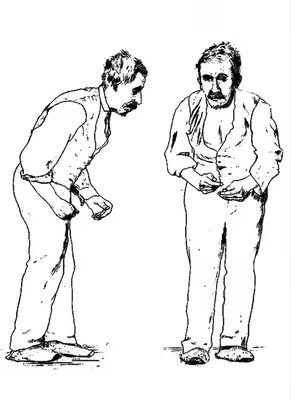
Bradykinesia describes difficulties in motor planning, beginning, and executing, resulting in overall slowed movement with reduced amplitude that affects sequential and simultaneous tasks. Bradykinesia can also lead to hypomimia, reduced facial expressions. Rigidity, also called rigor, refers to a feeling of stiffness and resistance to passive stretching of muscles. Postural instability typically appears in later stages, leading to impaired balance and falls. Postural instability also leads to a forward stooping posture.
Beyond the cardinal four, other motor deficits, termed secondary motor symptoms, commonly occur. Notably, gait disturbances result in the parkinsonian gait, which includes shuffling and paroxysmal deficits, where a normal gait is interrupted by rapid footsteps—known as festination—or sudden stops, impairing balance and causing falls. Most people with PD experience speech problems, including stuttering, hypophonic, "soft" speech, slurring, and festinating speech (rapid and poorly intelligible). Handwriting is commonly altered in PD, decreasing in size—known as micrographia—and becoming jagged and sharply fluctuating. Grip and dexterity are also impaired.
Neuropsychiatric and cognitive
Neuropsychiatric symptoms such as anxiety, apathy, depression, hallucination, and impulse control disorders occur in up to 60% of those with PD. They often precede motor symptoms, vary with disease progression, and may appear at any stage of the disease including the prodromal phase. Fluctuating symptoms including dysphoria (the opposite of euphoria), fatigue, and slowness of thought, are also common. Some neuropsychiatric symptoms are not directly caused by neurodegeneration, but rather by its pharmacological management.
Cognitive impairments rank among the most prevalent and debilitating non-motor symptoms. These deficits may emerge in the early stages or before diagnosis, and their prevalence and severity tend to increase with disease progression. Ranging from mild cognitive impairment to severe Parkinson's disease dementia, these impairments include executive dysfunction, slowed cognitive processing speed, and disruptions in time perception and estimation.
Autonomic
Autonomic nervous system failures, known as dysautonomia, can appear at any stage of PD. They are among the most debilitating symptoms and greatly reduce quality of life. Although almost all individuals with PD have cardiovascular autonomic dysfunction, only some are symptomatic. Chiefly, orthostatic hypotension—a sustained blood pressure drop of at least 20 mmHg systolic or 10 mmHg diastolic after standing—occurs in 30–50% of cases. This can result in lightheadedness or fainting; subsequent falls are associated with higher morbidity and mortality.
Other autonomic failures include gastrointestinal issues such as chronic constipation, impaired stomach emptying and subsequent nausea, excessive salivation, and dysphagia (difficulty swallowing); all greatly reduce quality of life. Dysphagia, for instance, can prevent pill swallowing and lead to aspiration pneumonia. Urinary incontinence, sexual dysfunction, and thermoregulatory dysfunction—including heat and cold intolerance and excessive sweating—also frequently occur.
Other
Sensory deficits appear in up to 90% of people with PD and are usually present at early stages. Nociceptive and neuropathic pain are common, with peripheral neuropathy affecting up to 55% of individuals. Visual impairments are also frequently observed, including deficits in visual acuity, color vision, eye coordination, and visual hallucinations. An impaired sense of smell is also prevalent. Individuals often struggle with spatial awareness, recognizing faces and emotions, and may experience challenges with reading and double vision.
Sleep disorders are highly prevalent in PD, affecting up to 98%. These disorders include insomnia, excessive daytime sleepiness, restless legs syndrome, REM sleep behavior disorder (RBD), and sleep-disordered breathing, many of which can be worsened by medication. RBD may begin years before the initial motor symptoms. Individual presentation of symptoms varies, although most people affected by PD show an altered circadian rhythm at some point of disease progression.
PD is also associated with a variety of skin disorders that include melanoma, seborrheic dermatitis, bullous pemphigoid, and rosacea. Seborrheic dermatitis is recognized as a premotor feature that indicates dysautonomia and demonstrates that PD can be detected not only by changes of nervous tissue, but also tissue abnormalities outside the nervous system.
Causes
Parkinson's disease has no single cause: rather, genetic and environmental factors interact and affect critical cellular processes in a complex interplay. Parkinson's disease (PD) involves the gradual degeneration of dopamine producing neurons in a brain region called the substantia nigra and other related cell groups in the brainstem. This is accompanied by the accumulation of misfolded proteins such as alpha-synuclein. Alpha-synuclein is normally found in the presynaptic terminals of neurons. If alpha-synuclein is mis-folded and not cleared from cells by cellular degradation systems, it can build up to form clumps of proteins called Lewy bodies and Lewy neurites. Accumulation stimulates the release of pro-inflammatory molecules by the microglia, a protective response that can cause inflammation and neuronal damage if it becomes chronic. Neuroinflammation causes the blood-brain barrier (BBB) to become more permeable, allowing dangerous substances and inflammatory cells to enter the brain and interfere with metabolic functions. Dysfunction in mitochondria, which are central to cellular energy production, increases oxidative stress and cell death. Protein aggregation, inflammation and metabolic dysregulation in lysosomal, endosomal, and mitochondrial systems are interconnected mechanisms which create a cycle of inflammation, cellular stress and damage in Parkinson's disease.
The cumulative effects of many different environmental exposures over a lifetime interact with underlying genetic factors to influence PD development and progression. Genetically, about 5–10% of cases are familial while others are classed as idiopathic with no clearly identifiable cause. Variations in specific genes have been identified as risk factors and linked to contributing neural mechanisms. Environmentally, exposures to pesticides, metals, solvents, other toxicants and air pollution are increasingly seen as major risk factors in PD development. The brain is particularly vulnerable to chemicals that are able to cross the blood-brain barrier. Body-first and brain-first models of Parkinson's disease have been proposed to explain the connection of PD mechanisms with exposure to known environmental risk factors via the gut and the olfactory system. Traumatic brain injury and Type 2 diabetes are additional risk factors. Exercise, coffee consumption, and diets rich in fruits, vegetables, whole grains, and fish are protective factors associated with lower risk of PD.
Genetic
Parkinson's can be narrowly defined as a genetic disease, as rare inherited gene variants have been firmly linked to monogenic PD, and most cases carry variants that increase PD risk. PD heritability is estimated to range from 22 to 40%. Around 15% of diagnosed individuals have a family history, of which 5–10% can be attributed to a causative risk gene mutation. Carrying one of these mutations may not lead to disease. Rates of familial PD vary by ethnicity; monogenic PD occurs in up to 40% of Arab-Berber and 20% of Ashkenazi Jewish people with PD.
Notable genetic risk variants include SNCA (which encodes alpha-synuclein), LRRK2, and VPS35 for autosomal dominant inheritance, and PRKN (parkin), PINK1, and DJ1 for autosomal recessive inheritance. LRRK2 is the most common autosomal dominant variant, responsible for 1–2% of all PD cases and 40% of familial cases. Parkin variants are associated with nearly half of recessive, early-onset monogenic PD. Mutations in the GBA1 gene are associated with cognitive decline.
Environmental
The limited heritability of Parkinson's suggests environmental factors are involved, though identifying these risk factors and establishing causality is challenging due to PD's decade-long prodromal (early signs) period.
Dorsey and Bloem (2024) argue that environmental toxicants such as pesticides, air pollution and trichloroethylene are linked to PD. Certain pesticides and herbicides—such as paraquat, glyphosate, and rotenone—are the most established environmental toxicants for PD and are likely causal. PD prevalence is associated with local pesticide use, and many pesticides are mitochondrial toxins. Paraquat, for instance, structurally resembles metabolized MPTP, which selectively kills dopaminergic neurons by inhibiting mitochondrial complex 1 and is widely used to model PD. Pesticide exposure after diagnosis may also accelerate disease progression.
Hypotheses
Prionic
The hallmark of PD is the formation of protein aggregates, beginning with alpha-synuclein fibrils and followed by Lewy bodies and Lewy neurites. The prion hypothesis suggests that alpha-synuclein aggregates are pathogenic and can spread to neighboring, healthy neurons and seed new aggregates. Some propose that the heterogeneity of PD may stem from different "strains" of alpha-synuclein aggregates and varying anatomical sites of origin. Alpha-synuclein propagation has been demonstrated in cell and animal models and is the most popular explanation for the progressive spread through specific neuronal systems. However, therapeutic efforts to clear alpha-synuclein have failed. Additionally, postmortem brain tissue analysis shows that alpha-synuclein pathology does not clearly progress through the nearest neural connections.
Braak's
In 2002, Heiko Braak and colleagues proposed that PD begins outside the brain and is triggered by a "neuroinvasion" of some unknown pathogen. The pathogen enters through the nasal cavity and is swallowed into the digestive tract, initiating Lewy pathology in both areas. This alpha-synuclein pathology may then travel from the gut to the central nervous system through the vagus nerve. This hypothesis could explain the presence of Lewy pathology in both the enteric nervous system and olfactory tract neurons, as well as clinical symptoms such as loss of smell and gastrointestinal problems. Environmental toxicants ingested in a similar manner might also trigger PD.
Risk factors
As 90% of PD cases are idiopathic, of an unknown cause, the identification of the risk factors that may influence disease progression or severity is critical. The most significant risk factor in developing PD is age, with a prevalence of 1% in those over 65 and around 4.3% in those over 85. Traumatic brain injury significantly increases PD risk. Consumption of milk and dairy products but not fermented milk and cheese is associated with a higher PD risk. Explanations such as environmental contamination of milk have been proposed. Individuals with PD have a higher risk of developing melanoma, with shared risk factors and some common clinical features. Also, an association was found between methamphetamine use and increased PD risk.
Protective factors
Although no compounds or activities have been mechanistically established as neuroprotective for PD, several factors have been found to be associated with a decreased risk. Exercise and diets rich in fruits, vegetables, whole grains, and fish are protective factors associated with lower risk of PD. Consumption of caffeine as an ingredient of coffee or tea is strongly associated with neuroprotection. Tobacco use and smoking are strongly associated with decreased risk, but it is unclear whether this results from a neuroprotective effect or reverse causation. Various tobacco and smoke components have been hypothesized to be neuroprotective, including nicotine, carbon monoxide, and monoamine oxidase B inhibitors.
Although findings have varied, usage of nonsteroidal anti-inflammatory drugs (NSAIDs) such as ibuprofen may be neuroprotective. Calcium channel blockers may also have a protective effect, with a 22% risk reduction reported. Higher blood concentrations of urate—a potent antioxidant—have been proposed to be neuroprotective. Alcohol consumption has been suggested to be associated with PD risk, but there is no clear relationship between alcohol consumption and PD.
Mechanisms
Parkinson's disease has two hallmark pathophysiological processes: the abnormal aggregation of alpha-synuclein that leads to Lewy pathology, and the degeneration of dopaminergic neurons in the substantia nigra pars compacta. The death of these neurons reduces available dopamine in the striatum, which in turn affects circuits controlling movement in the basal ganglia. By the time motor symptoms appear, 50–80% of all dopaminergic neurons in the substantia nigra have degenerated.
Cell death and Lewy pathology, though, are not limited to the substantia nigra. The six-stage Braak system holds that alpha-synuclein pathology begins in the olfactory bulb or outside the central nervous system in the enteric nervous system before ascending the brain stem. In the third Braak stage, Lewy body pathology appears in the substantia nigra, and by the sixth step, Lewy pathology has spread to the limbic and neocortical regions. Although Braak staging offers a strong basis for PD progression, around 50% of individuals do not follow the predicted model. Lewy pathology is highly variable and may be entirely absent in some persons with PD.
Alpha-synuclein pathology
Alpha-synuclein is an intracellular protein typically localized to presynaptic terminals and involved in synaptic vesicle trafficking, intracellular transport, and neurotransmitter release. When misfolded, it can aggregate into oligomers and protofibrils that in turn lead to Lewy body formation. Due to their lower molecular weight, oligomers and protofibrils may disseminate and be transmitted to other cells more rapidly.
Lewy bodies consist of a fibrillar exterior and a granular core. Although alpha-synuclein is the dominant proteinaceous component, the core contains mitochondrial and autophagosomal membrane components, suggesting a link with organelle dysfunction. Whether Lewy bodies themselves contribute to or are simply the result of PD pathogenesis is unclear; alpha-synuclein oligomers can independently mediate cell damage, and neurodegeneration can precede Lewy body formation. It is of note that although the alpha-synuclein seeding activity (the propensity to form aggregates) significantly differs between the CSF of PD patients and healthy controls, no statistically significant associations between baseline CSF alpha-synuclein seeding activity and PD progression have yet been found.
Pathways involved in neurodegeneration
Three major pathways—vesicular trafficking, lysosomal degradation, and mitochondrial maintenance—are known to be affected by and contribute to PD pathogenesis, with all three linked to alpha-synuclein. High-risk gene variants also impair all three of these processes. All steps of vesicular trafficking are impaired by alpha-synuclein. It blocks endoplasmic reticulum (ER) vesicles from reaching the Golgi—leading to ER stress—and Golgi vesicles from reaching the lysosome, preventing alpha-synuclein degradation and leading to its build-up. Risky gene variants, chiefly GBA, further compromise lysosomal function. Although the mechanism is not well established, alpha-synuclein can impair mitochondrial function and cause subsequent oxidative stress. Mitochondrial dysfunction can, in turn, lead to further alpha-synuclein accumulation in a positive feedback loop. Microglial activation, possibly caused by alpha-synuclein, is also strongly indicated. Additionally, oxidative stress and other bioenergetic challenges have also been implicated in PD progression independent of alpha-synuclein pathology.
Mitochondrial dysfunction
Mitochondrial dysfunction is well-established in PD. Increased oxidative stress and reduced calcium buffering may contribute to neurodegeneration. The finding that MPP+—a respiratory complex I inhibitor and MPTP metabolite—caused parkinsonian symptoms strongly implied that mitochondria contributed to PD pathogenesis. Additionally, faulty gene variants involved in familial PD—including PINK1 and Parkin—prevent the elimination of dysfunctional mitochondria through mitophagy.
Neuroinflammation
Some hypothesize that neurodegeneration arises from a chronic neuroinflammatory state created by local activated microglia and infiltrating immune cells. Mitochondrial dysfunction may also drive immune activation, particularly in monogenic PD. Some autoimmune disorders increase the risk of developing PD, supporting an autoimmune contribution. Additionally, influenza and herpes simplex virus infections increase the risk of PD, possibly due to a viral protein resembling alpha-synuclein. PD risk is also decreased with immunosuppressants.
Diagnosis
Diagnosis of PD is largely clinical, relying on medical history and examination of symptoms, with an emphasis on symptoms that appear in later stages. Although early-stage diagnosis is not reliable, prodromal diagnosis may consider previous family history of PD and possible early symptoms such as rapid eye movement sleep behavior disorder (RBD), reduced sense of smell, and gastrointestinal issues. Isolated RBD is a particularly significant sign, as 90% of those affected will develop some form of neurodegenerative parkinsonism. Diagnosis in later stages requires parkinsonism, specifically bradykinesia and rigidity or tremor. Further support includes other motor and non-motor symptoms and genetic profiling.
A PD diagnosis is typically confirmed by any two of these criteria: responsiveness to levodopa, resting tremor, levodopa-induced dyskinesia, or a dopamine transporter scan confirmation. If these criteria are not met, atypical parkinsonism is considered. Definitive diagnoses can only be made post mortem through pathological analysis. Misdiagnosis is common, with a reported error rate near 25%, and diagnoses often change during follow-ups. Diagnosis can be further complicated by multiple overlapping conditions.
Imaging
Diagnosis can be aided by molecular imaging techniques such as magnetic resonance imaging (MRI), positron emission tomography (PET), and single-photon emission computed tomography (SPECT). As both conventional MRI and computed tomography (CT) scans are usually normal in early PD, they can be used to exclude other pathologies that cause parkinsonism. Diffusion MRI can differentiate PD from multiple system atrophy. Emerging MRI techniques of at least 3.0 T field strength—including neuromelanin-MRI, 1H-MRSI, and resting state fMRI—may detect abnormalities in the substantia nigra, nigrostriatal pathway, and elsewhere.
Unlike MRI, PET and SPECT use radioisotopes for imaging. Both techniques can aid diagnosis by characterizing PD-associated alterations in the metabolism and transport of dopamine in the basal ganglia. Largely used outside the United States, iodine-123-meta-iodobenzylguanidine myocardial scintigraphy can assess heart muscle denervation to support a PD diagnosis.
Differential diagnosis
Differential diagnosis of Parkinson's is among the most difficult in neurology. Differentiating early PD from atypical parkinsonian disorders is a major difficulty. In their initial stages, PD can be difficult to distinguish from the atypical neurodegenerative parkinsonisms, including multiple system atrophy, dementia with Lewy bodies, and the tauopathies progressive supranuclear palsy and corticobasal degeneration. Other conditions that may present similarly to PD include vascular Parkinsonism, Alzheimer's disease, and frontotemporal dementia.
The International Parkinson and Movement Disorder Society has proposed a set of criteria that, unlike the standard Queen's Square Brain Bank Criteria, includes non-exclusionary "red-flag" clinical features that may not suggest PD. A large number of "red flags" has been proposed and adopted for various conditions that might mimic the symptoms of PD. Diagnostic tests, including gene sequencing, molecular imaging techniques, and assessment of smell may also distinguish PD. MRI is particularly powerful due to several unique features for atypical parkinsonisms.
Management
As of 2025, no disease-modifying therapies exist that reverse or slow neurodegeneration. Management typically combines lifestyle modifications with physical therapy. Current pharmacological interventions purely target symptoms, by either increasing endogenous dopamine levels or directly mimicking dopamine's effect on the patient's brain. These include dopamine agonists, MAO-B inhibitors, and levodopa—the most widely used and effective drug. The optimal time to initiate pharmacological treatment is debated, but initial dopamine agonist and MAO-B inhibitor treatment and later levodopa therapy are common. Invasive procedures such as deep brain stimulation may be used when medications are ineffective.
Medications
Levodopa
Levodopa is the most widely used and most effective therapy—the gold standard—for PD treatment. The compound occurs naturally and is the immediate precursor for dopamine synthesis in the dopaminergic neurons of the substantia nigra. Levodopa administration reduces the dopamine deficiency in parkinsonism.
Despite its efficacy, levodopa poses several challenges. Its administration has been called the "pharmacologist's nightmare". Its metabolism outside the brain by aromatic L-amino acid decarboxylase and catechol-O-methyltransferase can cause nausea and vomiting; inhibitors such as carbidopa, entacapone, and benserazide are usually taken with levodopa to mitigate these effects. Long-term levodopa use may also induce dyskinesia and motor fluctuations. Although this often causes levodopa use to be delayed to later stages, earlier administration leads to improved motor function and quality of life.
Dopamine agonists
Dopamine agonists are an alternative or complement to levodopa therapy. They activate dopamine receptors in the striatum, with reduced risk of motor fluctuations and dyskinesia, and are efficacious in both early- and late-stage PD. The agonist apomorphine is often used for drug-resistant OFF time in later-stage PD. After five years of use, impulse-control disorders may occur in over 40% of those taking dopamine agonists. A problematic, narcotic-like withdrawal effect may occur when agonist use is reduced or stopped. Compared to levodopa, dopamine agonists are more likely to cause fatigue, daytime sleepiness, and hallucinations.
MAO-B inhibitors
MAO-B inhibitors—such as safinamide, selegiline and rasagiline—increase the amount of dopamine in the basal ganglia by inhibiting the activity of monoamine oxidase B, an enzyme that breaks down dopamine. These compounds mildly alleviate motor symptoms when used as monotherapy, but can also be used with levodopa and at any disease stage. Common side effects are nausea, dizziness, insomnia, sleepiness, and orthostatic hypotension. MAO-Bs are known to increase serotonin and cause a potentially dangerous condition known as serotonin syndrome.
Other drugs
Treatments for non-motor symptoms of PD have not been well studied, and many medications are used off-label. A diverse range of symptoms beyond those related to motor function can be treated pharmaceutically. Examples include cholinesterase inhibitors for cognitive impairment and modafinil for excessive daytime sleepiness. Fludrocortisone, midodrine, and droxidopa are commonly used off-label for orthostatic hypotension related to autonomic dysfunction. Sublingual atropine or botulinum toxin injections may be used off-label for drooling. SSRIs and SNRIs are often used for depression related to PD, but a risk exists of serotonin syndrome with the SSRI or SNRI antidepressants. Doxepin and rasagiline may reduce physical fatigue in PD.
Invasive interventions
Surgery for PD first appeared in the 19th century, and by the 1960s, had evolved into ablative brain surgery that lesioned the basal ganglia, thalamus, or globus pallidus (a pallidotomy). The discovery of levodopa for PD treatment caused ablative therapies to largely disappear. Ablative surgeries experienced a resurgence in the 1990s, but were quickly superseded by newly developed deep brain stimulation (DBS). Although gamma knife and high-intensity focused ultrasound surgeries have been developed for pallidotomies and thalamotomies, their use is rare as of 2025.
DBS involves the implantation of electrodes called neurostimulators, which send electrical impulses to specific parts of the brain. DBS for the subthalamic nucleus and globus pallidus interna has high efficacy for up to 2 years, but long-term efficacy is unclear and likely decreases with time. DBS typically targets rigidity and tremor, and is recommended for PD patients who are intolerant or do not respond to medication. Cognitive impairment is the most common exclusion criteria.
Rehabilitation
Although pharmacological therapies can improve symptoms, autonomy, and the ability to perform everyday tasks is still reduced by PD. Rehabilitation is often useful, but the scientific support for any single rehabilitation treatment is limited.
Exercise programs are often recommended, with preliminary evidence of efficacy. Regular physical exercise with or without physical therapy can be beneficial to maintain and improve mobility, flexibility, strength, gait speed, and quality of life. Aerobic, mind-body, and resistance training may be beneficial in alleviating PD-associated depression and anxiety. Strength training may increase manual dexterity and strength, facilitating daily tasks that require grasping objects. Aerobic exercise, resistance training, and balance- and task-specific training have been found to improve strength, VO2 max and balance. While flexibility training is commonly used, it has a lower strength of recommendation compared to aerobic and resistance training.
In improving flexibility and range of motion for people experiencing rigidity, generalized relaxation techniques such as gentle rocking have been found to decrease excessive muscle tension. Other effective techniques to promote relaxation include slow rotational movements of the extremities and trunk, rhythmic initiation, diaphragmatic breathing, and meditation. Deep diaphragmatic breathing may also improve chest-wall mobility and vital capacity decreased by the stooped posture and respiratory dysfunctions of advanced Parkinson's. Rehabilitation techniques targeting gait and the challenges posed by bradykinesia, shuffling, and decreased arm swing include pole walking, treadmill walking, and marching exercises. Long-term physiotherapy (greater than six months) reduces the need for antiparkinsonian medication; multidisciplinary rehabilitation programs combined with physiotherapy can result in reduction in the levodopa-equivalent dose.
Speech therapies such as the Lee Silverman voice treatment may reduce the effect of speech disorders associated with PD. Occupational therapy as a rehabilitation strategy can improve quality of life by enabling people with PD to find engaging activities and communal roles, adapt to their living environment, and improve domestic and work abilities.
Diet
PD poses digestive problems such as constipation and prolonged emptying of stomach contents, and a balanced diet with periodical nutritional assessments is recommended to avoid weight loss or gain and minimize the consequences of gastrointestinal dysfunction. In particular, a Mediterranean diet is advised and may slow disease progression. As it can compete for uptake with amino acids derived from protein, levodopa should be taken 30 minutes before meals to minimize such competition. Low-protein diets may also be needed by later stages. As the disease advances, swallowing difficulties often arise. Using thickening agents for liquid intake and an upright posture when eating may be useful; both measures reduce the risk of choking. Gastrostomy can be used to deliver food directly into the stomach. Increased water and fiber intakes are used to treat constipation.
Palliative care
As PD is incurable, palliative care aims to improve the quality of life for both the patient and family by alleviating the symptoms and stress associated with illness. Early integration of palliative care into the disease course is recommended, rather than delaying until later stages. Palliative-care specialists can help with physical symptoms, emotional factors such as loss of function and jobs, depression, and fear, as well as existential concerns. Palliative-care team members also help guide difficult decisions caused by disease progression, such as wishes for a feeding tube, noninvasive ventilator or tracheostomy, use of cardiopulmonary resuscitation, and entering hospice care.
Prognosis
Because PD has multiple causes and can affect people in different ways, it is hard to predict how it will progress, and prognoses can be highly variable. On average, life expectancy is reduced in those with PD, with younger age of onset resulting in greater life expectancy decreases. Although PD subtype categorization is controversial, the 2017 Parkinson's Progression Markers Initiative study identified three broad scorable subtypes of increasing severity and more rapid progression - mild-motor predominant, intermediate, and diffuse malignant. Mean years of survival after diagnosis were 20.2, 13.1, and 8.1.
Around 30% of individuals with PD develop dementia, which is 12 times more likely to occur in the elderly with severe PD. Dementia is less likely to arise in tremor-dominant PD. Parkinson's disease dementia is associated with a reduced quality of life in people with PD and their caregivers, increased mortality, and a higher probability of needing nursing home care.
The incidence rate of falls is around 45–68%, three times that of healthy individuals, and half of such falls result in serious injuries. Falls increase mortality. Around 90% of those with PD develop hypokinetic dysarthria, which worsens with disease progression and can hinder communication. Over 80% develop difficulty swallowing; consequent inhalation of gastric and oropharyngeal secretions can lead to aspiration pneumonia.
Epidemiology
As of 2024, PD is the second-most common neurodegenerative disease and the fastest growing in total cases. As of 2023, global prevalence was estimated to be 1.51 per 1000. Men are reportedly 1.5 times more likely to have PD than women, but this may vary with different populations. Age plays the biggest role in the risk of getting PD. As global life expectancy has increased, PD prevalence has also risen, with an estimated increase in cases by 74% from 1990 to 2016. However, increased life expectancy does not fully explain this change: when age was accounted for, PD prevalence rates still increased by 21.7% in this time period. The number is predicted to rise to over 12 million by 2040.
This increase may be due to a number of global factors, including prolonged life expectancy, increased industrialisation, and decreased smoking. Although genetics is the sole factor in a minority of cases, most cases of PD are likely a result of gene-environment interactions; concordance studies with twins have found PD heritability to be just 30%. The influence of multiple genetic and environmental factors complicates epidemiological efforts.
Relative to Europe and North America, disease prevalence is lower in Africa, but similar in Latin America. Although China is predicted to have nearly half of the global PD population by 2030, estimates of prevalence in Asia vary. Potential explanations for these geographic differences include genetic variation, environmental factors, health care access, and life expectancy. Although PD incidence and prevalence may vary by race and ethnicity, significant disparities in care, diagnosis, and study participation limit generalizability and lead to conflicting results. Within the United States, high rates of PD have been identified in the Midwest, the South, and agricultural regions of other states, collectively termed the "PD belt". The association between rural residence and PD has been hypothesized to be caused by environmental factors including herbicides, pesticides, and industrial waste.
History
In 1817, English physician James Parkinson published the first full medical description of the disease as a neurological syndrome in his monograph An Essay on the Shaking Palsy. He presented six clinical cases, including three he had observed on the streets near Hoxton Square in London. Parkinson described three cardinal symptoms: tremor, postural instability, and "paralysis" (undistinguished from rigidity or bradykinesia), and speculated that the disease was caused by trauma to the spinal cord.
Little discussion of or investigation into the "shaking palsy" occurred until 1861, when Frenchman Jean-Martin Charcot—regarded as the father of neurology—began expanding Parkinson's description, adding bradykinesia as one of the four cardinal symptoms. In 1877, Charcot renamed the disease after Parkinson, as the tremor suggested by "shaking palsy" is not present in all. Subsequent neurologists who made early advances to the understanding of PD include Armand Trousseau, William Gowers, Samuel Kinnier Wilson, and Wilhelm Erb.
Although Parkinson is typically credited with the first detailed description of PD, many previous texts reference some of the disease's clinical signs. In his essay, Parkinson himself acknowledged partial descriptions by Galen, William Cullen, Johann Juncker, and others. Possible earlier but incomplete descriptions include a Nineteenth Dynasty Egyptian papyrus, the ayurvedic text Charaka Samhita, Ecclesiastes 12:3, and a discussion of tremors by Leonardo da Vinci. Multiple traditional Chinese medicine texts may include references to PD, including a discussion in the Yellow Emperor's Internal Classic (c. 425–221 BC) of a disease with symptoms of tremor, stiffness, staring, and stooped posture. In 2009, a systematic description of PD was found in the Hungarian medical text Pax corporis written by Ferenc Pápai Páriz in 1690, some 120 years before Parkinson. Although Páriz correctly described all four cardinal signs, it was only published in Hungarian and was not widely distributed.
In 1912, Frederic Lewy described microscopic particles in affected brains, later named Lewy bodies. In 1919, Konstantin Tretiakoff reported that the substantia nigra was the main brain structure affected, corroborated by Rolf Hassler in 1938. The underlying changes in dopamine signaling were identified in the 1950s, largely by Arvid Carlsson and Oleh Hornykiewicz. In 1997, Polymeropoulos and colleagues at the NIH discovered the first gene for PD, SNCA, which encodes alpha-synuclein. Alpha-synuclein was, in turn, found to be the main component of Lewy bodies by Spillantini, Trojanowski, Goedert, and others. Anticholinergics and surgery were the only treatments until the use of levodopa, which, although first synthesized by Casimir Funk in 1911, did not enter clinical use until 1967. By the late 1980s, deep brain stimulation introduced by Alim Louis Benabid and colleagues at Grenoble, France, emerged as an additional treatment.
Society and culture
Social consequences
For some people with PD, masked facial expressions and difficulty moderating facial expressions of emotion or recognizing other people's facial expressions can affect social well-being. As the condition progresses, tremor, other motor symptoms, difficulty communicating, or mobility issues may interfere with social engagement, causing individuals with PD to feel isolated. Public perception and awareness of PD symptoms such as shaking, hallucinating, slurring speech, and being off balance is lacking in some countries and can lead to stigma.
Cost
The economic cost of Parkinson's to both individuals and society is high. In many low- and middle-income countries, public health systems may not fully cover Parkinson's disease therapies, leading to disparities in access to treatment. In contrast, high-income countries with universal healthcare typically cover standard treatments such as levodopa and specialist care. Indirect costs include lifetime earnings losses due to premature death, productivity losses, and caregiver burdens. The duration and progressive nature of PD can place a heavy burden on caregivers; family members, such as spouses, dedicate around 22 hours per week to care.
In 2010, the total economic burden of PD across Europe, including indirect and direct medical costs, was estimated to be €13.9 billion (US$14.9 billion). The total burden in the United States was estimated to be $51.9 billion in 2017, and is projected to surpass $79 billion by 2037. As of 2022, no rigorous economic surveys had been performed for low- or middle-income nations. Preventive care has been identified as crucial to slow the rapidly increasing incidence of Parkinson's from overwhelming national health systems.
Advocacy
The birthday of James Parkinson, 11 April, has been designated as World Parkinson's Day. A red tulip was chosen by international organizations as the symbol of the disease in 2005; it represents the 'James Parkinson' tulip cultivar, registered in 1981 by a Dutch horticulturalist.
Advocacy organizations include the National Parkinson Foundation, which has provided more than $180 million in care, research, and support services since 1982, Parkinson's Disease Foundation, which has distributed more than $115 million for research and nearly $50 million for education and advocacy programs since its founding in 1957 by William Black; the American Parkinson Disease Association, founded in 1961; and Parkinson's Europe, founded in 1992.
Notable cases
In the 21st century, the diagnosis of PD among notable figures has increased the public's understanding of the disorder. Actor Michael J. Fox was diagnosed with PD at 29 years old, and has used his diagnosis to increase awareness of the disease. To illustrate the effects of the disease, Fox has appeared without medication in television roles and before the United States Congress. The Michael J. Fox Foundation, which he founded in 2000, has raised over $2 billion for Parkinson's research.
Boxer Muhammad Ali showed signs of PD when he was 38, but was undiagnosed until he was 42; he has been called the "world's most famous Parkinson's patient". Whether he had PD or parkinsonism related to boxing is unresolved. Cyclist and Olympic medalist Davis Phinney, diagnosed with PD at 40, started the Davis Phinney Foundation in 2004 to support PD research.
Musician Ozzy Osbourne was diagnosed with PD; he performed a 5 July 2025, farewell reunion concert with the band he co-founded, Black Sabbath, weeks before his death. The event raised over $190 million, some of which went to Parkinson's disease research.
Adolf Hitler is believed to have had PD, and the condition may have partially influenced his decision-making.
Clinical research
As of 2024, no disease-modifying therapies exist that reverse or slow the progression of PD. Active research directions include the search for new animal models of the disease and development and trial of gene therapy, stem cell transplants, and neuroprotective agents. Improved treatments will likely combine therapeutic strategies to manage symptoms and enhance outcomes. Reliable biomarkers are needed for early diagnosis, and research criteria for their identification have been established.
Neuroprotective treatments
Drugs that prevent alpha-synuclein oligomerization and aggregation or promote their clearance are under active investigation, and potential therapeutic strategies include small molecules and immunotherapies including vaccines and monoclonal antibodies. While immunotherapies show promise, their efficacy is often inconsistent. Anti-inflammatory drugs that target NLRP3 and the JAK-STAT signaling pathway offer another potential therapeutic approach.
As the gut microbiome in PD is often disrupted and produces toxic compounds, fecal microbiota transplants might restore a healthy microbiome and alleviate various motor and non-motor symptoms. Neurotrophic factors—peptides that enhance the growth, maturation, and survival of neurons—show modest results, but require invasive surgical administration. Viral vectors may represent a more feasible delivery platform. Calcium channel blockers may restore the calcium imbalance present in PD, and are being investigated as a neuroprotective treatment. Other therapies, such as deferiprone, may reduce the abnormal accumulation of iron in PD.
Cell-based therapies
In contrast to other neurodegenerative disorders, many PD symptoms can be attributed to the loss of a single cell type. Consequently, dopaminergic neuron regeneration is a promising therapeutic approach. Although most initial research sought to generate dopaminergic neuron precursor cells from fetal brain tissue, pluripotent stem cells—particularly induced pluripotent stem cells (iPSC)—have become an increasingly popular tissue source.
Both fetal and iPSC-derived DA neurons have been transplanted into patients in clinical trials. Although some individuals have seen improvement, the results are highly variable. Adverse effects, such as dyskinesia arising from excess dopamine release by the transplanted tissues, have also been observed.
Gene therapy
Gene therapy for PD seeks to restore the healthy function of dopaminergic neurons in the substantia nigra by delivering genetic material—typically through a viral vector—to these diseased cells. This material may deliver a functional, wild-type version of a gene, or knock down a pathological variant. Experimental gene therapies for PD have aimed to increase the expression of growth factors or enzymes involved in dopamine synthesis, such as tyrosine hydroxylase. The one-time delivery of genes circumvents the recurrent invasive administration required to administer some peptides and proteins to the brain. MicroRNAs are an emerging PD gene therapy platform that may serve as an alternative to viral vectors.