


Related on Lably
Through Spacecraft, Moon and Solar wind
As of April 2026, samples of Moon rock from Earth's Moon have been collected by robotic and crewed missions; the comet Wild 2 and the asteroids 25143 Itokawa, 162173 Ryugu, and 101955 Bennu have been visited by robotic spacecraft which returned samples to Earth; and samples of the solar wind have been returned by the robotic Genesis mission.
In addition to sample-return missions, samples from three identified non-terrestrial bodies have been collected by other means: samples from the Moon in the form of Lunar meteorites, samples from Mars in the form of Martian meteorites, and samples from Vesta in the form of HED meteorites.
Scientific use
Samples available on Earth can be analyzed in laboratories to further understanding and knowledge as part of the discovery and exploration of the Solar System. Until now, many important scientific discoveries about the Solar System were made remotely with telescopes, and some Solar System bodies were visited by orbiting or even landing spacecraft with instruments capable of remote sensing or sample analysis. While such an investigation of the Solar System is technically easier than a sample-return mission, the scientific tools available on Earth to study such samples are far more advanced and diverse than those that can go on spacecraft. Further, analysis of samples on Earth allows follow up of any findings with different tools, including tools that can tell intrinsic extraterrestrial material from terrestrial contamination, and those that have yet to be developed; in contrast, a spacecraft can carry only a limited set of analytic tools, and these have to be chosen and built long before launch.
Samples analyzed on Earth can be matched against findings of remote sensing for more insight into the processes that formed the Solar System. This was done, for example, with findings by the Dawn spacecraft, which visited the asteroid Vesta from 2011 to 2012 for imaging, and samples from HED meteorites (collected on Earth until then), which were compared to data gathered by Dawn. These meteorites could then be identified as material ejected from the large impact crater Rheasilvia on Vesta. This allowed deducing the composition of the crust, mantle and core of Vesta. Similarly, some differences in the composition of asteroids (and, to a lesser extent, different compositions of comets) can be discerned by imaging alone. However, for a more precise inventory of the material on these different bodies, more samples will be collected and returned in the future, to match their compositions with the data gathered through telescopes and astronomical spectroscopy.
One further focus of such investigation—besides the basic composition and geologic history of the various Solar System bodies—is the presence of the building blocks of life on comets, asteroids, Mars or the moons of the gas giants. Several sample-return missions to asteroids and comets are currently in the works. More samples from asteroids and comets will help determine whether life formed in space and was carried to Earth by meteorites. Another question under investigation is whether extraterrestrial life formed on other Solar System bodies like Mars or on the moons of the gas giants, and whether life might even exist there. The result of NASA's last "Decadal Survey" was to prioritize a Mars sample-return mission, as Mars has a special importance: it is comparatively "nearby", might have harbored life in the past, and might even continue to sustain life. Jupiter's moon Europa is another important focus in the search for life in the Solar System. However, due to the distance and other constraints, Europa might not be the target of a sample-return mission in the foreseeable future.
Sign in to keep reading
4 more chapters are free with a Lably account.
Planetary protection
Planetary protection aims to prevent biological contamination of both the target celestial body and the Earth in the case of sample-return missions. A sample return from Mars or other location with the potential to host life is a category V mission under COSPAR, which directs to the containment of any unsterilized sample returned to Earth. This is because it is unknown what the effects such hypothetical life would be on humans or the biosphere of Earth. For this reason, Carl Sagan and Joshua Lederberg argued in the 1970s that sample-return missions classified as category V should be performed with extreme caution, and later studies by the NRC and ESF agreed.
Sample-return missions
First missions
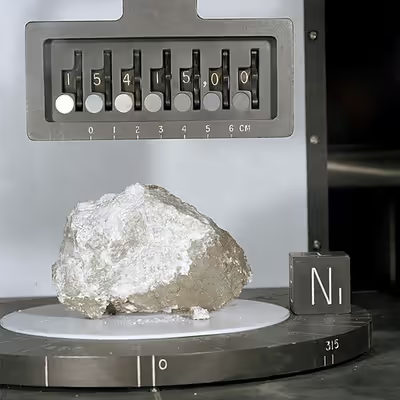
In July 1969, Apollo 11 achieved the first successful sample return from another Solar System body when it returned 22 kilograms (49 lb) of Lunar surface material. This was followed by 34 kilograms (75 lb) of material and Surveyor 3 parts from Apollo 12, 42.8 kilograms (94 lb) of material from Apollo 14, 76.7 kilograms (169 lb) of material from Apollo 15, 94.3 kilograms (208 lb) of material from Apollo 16, and 110.4 kilograms (243 lb) of material from Apollo 17. The Apollo program as a whole returned over 382 kg (842 lb) of lunar rocks and regolith, including lunar soil, to the Lunar Receiving Laboratory in Houston. Today, 75% of the samples are stored at the Lunar Sample Laboratory Facility built in 1979.
In 1970, the robotic Soviet mission Luna 16 returned 101 grams (3.6 oz) of lunar soil, followed by Luna 20's return of 55 grams (1.9 oz) in 1974, and Luna 24's return of 170 grams (6.0 oz) in 1976. Although they recovered far less than the Apollo missions, they did this fully automatically. Apart from these three successes, other attempts under the Luna programme failed. The first two missions were intended to compete with Apollo 11 and were undertaken shortly before it in June and July 1969. Luna E-8-5 No. 402 failed at start, and Luna 15 crashed on the Moon. Later, other sample-return missions failed: Kosmos 300 and Kosmos 305 in 1969, Luna E-8-5 No. 405 in 1970, Luna E-8-5M No. 412 in 1975 had unsuccessful launches, and Luna 18 in 1971 and Luna 23 in 1974 had unsuccessful landings on the Moon.
In 1970, the Soviet Union planned for a 1975 first Mars sample-return mission in the Mars 5NM project. This mission was planned to use an N1 rocket, but this rocket never flew successfully and the mission evolved into the Mars 5M project, which would use a double launch with the smaller Proton rocket and an assembly at a Salyut space station. This Mars 5M mission was planned for 1979, but was canceled in 1977 due to technical problems and complexity.
1990s
The Orbital Debris Collection (ODC) experiment deployed on the Mir space station for 18 months in 1996–97 used aerogel to capture particles from low Earth orbit, including both interplanetary dust and man-made particles.
2000s
The next mission to return extraterrestrial samples was the Genesis mission, which returned solar wind samples to Earth from beyond Earth orbit in 2004. Unfortunately, the Genesis capsule failed to open its parachute while re-entering the Earth's atmosphere and crash-landed in the Utah desert. There were fears of severe contamination or even total mission loss, but scientists managed to save many of the samples. They were the first to be collected from beyond lunar orbit. Genesis used a collector array made of wafers of ultra-pure silicon, gold, sapphire, and diamond. Each different wafer was used to collect a different part of the solar wind.
Genesis was followed by NASA's Stardust spacecraft, which returned comet samples to Earth on 15 January 2006. It safely passed by Comet Wild 2 and collected dust samples from the comet's coma while imaging the comet's nucleus. Stardust used a collector array made of low-density aerogel (99% of which is space), which has about 1/1000 of the density of glass. This enables the collection of cometary particles without damaging them due to high impact velocities. Particle collisions with even slightly porous solid collectors would result in the destruction of those particles and damage to the collection apparatus. During the cruise, the array collected at least seven interstellar dust particles.
2010s and 2020s
In June 2010 the Japan Aerospace Exploration Agency (JAXA) Hayabusa probe returned asteroid samples to Earth after a rendezvous with (and a landing on) S-type asteroid 25143 Itokawa. In November 2010, scientists at the agency confirmed that, despite failure of the sampling device, the probe retrieved micrograms of dust from the asteroid, the first brought back to Earth in pristine condition.
The Russian Fobos-Grunt was a failed sample-return mission designed to return samples from Phobos, one of the moons of Mars. It was launched on 8 November 2011, but failed to leave Earth orbit and crashed after several weeks into the southern Pacific Ocean.
JAXA launched the improved Hayabusa2 space probe on 3 December 2014. Hayabusa2 arrived at the target near-Earth C-type asteroid 162173 Ryugu (previously designated 1999 JU3) on 27 June 2018. It surveyed the asteroid for a year and a half and took samples. It left the asteroid in November 2019 and returned to Earth on 6 December 2020.
The OSIRIS-REx mission was launched in September 2016 on a mission to return samples from the asteroid 101955 Bennu. The samples are expected to enable scientists to learn more about the time before the birth of the Solar System, initial stages of planet formation, and the source of organic compounds that led to the formation of life. It reached the proximity of Bennu on 3 December 2018, where it began analyzing its surface for a target sample area over the next several months. It collected its sample on 20 October 2020, and landed back on Earth again on 24 September 2023, making OSIRIS-REx the fifth successful sample return mission for mankind, in its return of samples from an extra-terrestrial body. Shortly after the sample container was retrieved and transferred to an "airtight chamber at the Johnson Space Center in Houston, Texas", the lid on the container was opened. Scientists commented that they "found black dust and debris on the avionics deck of the OSIRIS-REx science canister" on the initial opening. Later study was planned. On 11 October 2023, the recovered capsule was opened to reveal a "first look" at the asteroid sample contents. On 13 December 2023, further studies of the returned sample were reported and revealed organic molecules as well as unknown materials which require more study to have a better idea of their composition and makeup. On 13 January 2024, NASA reported finally fully opening, after three months of trying, the recovered container with samples from the Bennu asteroid. The total weight of the recovered material weighed 121.6 g (4.29 oz), over twice the mission's goal.
China's CNSA launched the Chang'e 5 and 6 lunar sample-return mission on 23 November 2020 and 3 May 2024 respectively, which returned to Earth with 2 kilograms of lunar soil each on 16 December 2020 and 25 June 2024 respectively. These were the first lunar sample-return missions in over 40 years. The Chang'e 6 mission, which landed in the Apollo crater basin in the southern hemisphere of the lunar far side, was the first to retrieve samples from the far side of the Moon, as all previous collective lunar samples having been collected from the near side.
Current missions
CNSA's Tianwen-2 was launched in May 2025 with the aim to return samples from 469219 Kamoʻoalewa.
Future missions
CNSA plans for a Mars sample return mission by 2030.
JAXA is developing the MMX mission, a sample-return mission to Phobos that will be launched in 2026. MMX will study both moons of Mars, but the landing and the sample collection will be on Phobos. This selection was made because of the two moons, Phobos's orbit is closer to Mars and its surface may have particles blasted from Mars. Thus the sample may contain material originating on Mars itself. A propulsion module carrying the sample is expected to return to Earth in 2031.
NASA and ESA have long planned a Mars Sample-Return Mission. The Perseverance rover, deployed in 2020, is collecting drill core samples and stashing them on the martian surface. As of September 2023, it has gathered one atmospheric sample and 8 igneous rock samples, 11 sedimentary rock samples and a pair of regolith samples. On 22 November 2023, NASA announced that it was cutting back on the Mars sample-return mission due to a shortage of funds. In January 2024, the proposed NASA plan was challenged due to budget and scheduling considerations, and investigation into alternate plans begun.
Russia has plans for Luna-Glob missions to return samples from the Moon by 2027 and Mars-Grunt to return samples from Mars in the late 2020s.
Methods of sample return
Sample-return methods include, but are not restricted to the following:
Collector array
A collector array may be used to collect millions or billions of atoms, molecules, and fine particulates by using wafers made of different elements. The molecular structure of these wafers allows the collection of various sizes of particles. Collector arrays, such as those flown on Genesis, are ultra-pure in order to ensure maximal collection efficiency, durability, and analytical distinguishability.
Collector arrays are useful for collecting tiny, fast-moving atoms such as those expelled by the Sun through the solar wind, but can also be used for collection of larger particles such as those found in the coma of a comet. The NASA spacecraft known as Stardust implemented this technique. However, due to the high speeds and size of the particles that make up the coma and the area nearby, a dense solid-state collector array was not viable. As a result, another means for collecting samples had to be designed to preserve the safety of the spacecraft and the samples themselves.
Aerogel
Aerogel is a silica-based porous solid with a sponge-like structure, 99.8% of whose volume is empty space. Aerogel has about 1/1000 of the density of glass. An aerogel was used in the Stardust spacecraft because the dust particles the spacecraft was to collect would have an impact speed of about 6 km/s. A collision with a dense solid at that speed could alter their chemical composition or vaporize them completely.
Since the aerogel is mostly transparent, and the particles leave a carrot-shaped path once they penetrate the surface, scientists can easily find and retrieve them. Since its pores are on the nanometer scale, particles, even ones smaller than a grain of sand, do not merely pass through the aerogel completely. Instead, they slow to a stop and then are embedded within it. The Stardust spacecraft has a tennis-racket-shaped collector with aerogel fitted to it. The collector is retracted into its capsule for safe storage and delivery back to Earth. Aerogel is quite strong and easily survives both launching and space environments.
Robotic excavation and return
The risks and difficulties of sample-return missions that require landing on an extraterrestrial body, such as an asteroid, moon, or planet are mostly given by the time, financial and technical resources needed to initiate such plans. High precision and accuracy are required to assure that everything including launch, landing, retrieval and launch back to Earth go smoothly.
This type of sample return, although having the most risks, is the most rewarding for planetary science. Furthermore, such missions carry a great deal of public outreach potential, which is an important attribute for space exploration when it comes to public support. The only successful robotic sample-return missions of this type have been Soviet Luna and Chinese Chang'e lunar landers. While other missions collected materials from asteroids by various means, they did so without "landing", given their very low gravity.