

Sapphire
Gem variety of the mineral corundum
- 25 min read
- 7 chapters

Related on Lably
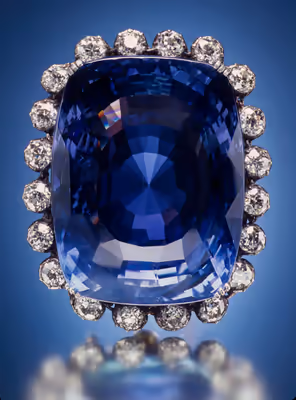
Natural sapphires form through metamorphic, magmatic, and metasomatic processes and may later be transported by younger magmas or concentrated in secondary sedimentary deposits. They are recovered from both bedrock occurrences and secondary deposits, using methods ranging from manual excavation and washing to mechanized mining and processing. Their color and appearance reflect trace-element chemistry, crystal growth, and microscopic inclusions. Some sapphires exhibit distinctive optical phenomena, notably asterism in star sapphires and color change under different illumination. As gemstones, sapphires are evaluated principally by their color, together with clarity, cut, size, treatment history, and, for some stones, geographic origin.
Natural sapphires are commonly heat-treated to modify color and transparency, while diffusion treatments can introduce externally supplied elements to alter coloration. The identification and disclosure of such treatments are important parts of modern gemology. Synthetic sapphire is laboratory-grown single-crystal corundum (α-Al2O3). Commercial production of synthetic corundum became practical in the early 20th century with the Verneuil process, and synthetic sapphire is now grown by several crystal growth methods for both gemological and industrial uses.
Beyond its use as a gemstone, synthetic sapphire is an important optical and engineering material. Its combination of hardness, abrasion resistance, broad optical transparency, high-temperature stability, and electrical insulating properties makes it useful for watch crystals, protective and optical windows, scientific instruments, and semiconductor substrates. Sapphire wafers are used in silicon on sapphire electronics and as substrates for gallium nitride devices, including blue LEDs, while doped sapphire crystals serve as laser gain media, notably in titanium-sapphire lasers.
Natural occurrence and geology
Natural sapphire occurs in several geological settings, and its present occurrence can reflect both the environment in which it crystallized and later geological transport. A crystal may remain in its growth rock, be carried by a younger magma, or be released by weathering and concentrated in sediment. Distinguishing these stages—formation, transport, and concentration—helps explain the diversity of sapphire deposits.
Formation and host rocks
Corundum consists of Al2O3 and forms where aluminium is abundant relative to the amount that can be incorporated into stable silicate minerals. In most crustal rocks, aluminium is held in aluminium-bearing silicates; corundum becomes stable when aluminium remains available and silica has sufficiently low chemical activity in the reacting system. Local reactions, partial melting, and chemical exchange between compositionally contrasting rocks can all create such conditions.
Sapphire can form through metamorphic, magmatic, and metasomatic processes, and several of these processes may contribute to the history of a single deposit. High-grade metamorphism can stabilize corundum in suitable aluminous rocks; in some igneous systems, corundum crystallizes directly from melt; and metasomatism can create corundum-bearing zones as fluids or melts transfer components between compositionally contrasting rocks. A deposit may therefore record a sequence of processes, such as partial melting followed by metamorphic or metasomatic modification.
Documented deposits illustrate the different geological pathways by which sapphire can form. At Dusi in central Kenya, corundum has been interpreted as an early magmatic mineral crystallized in a peraluminous monzonite. At the historic Paddar sapphire deposits in India, by contrast, quartz-poor sapphire-bearing pegmatitic bodies occur within altered ultramafic rocks, where sapphire formation has been linked to chemical exchange and silica loss along the contacts. These examples show that sapphire associated with igneous rocks can form either directly from magma or through reactions between igneous material and surrounding rocks.
Bedrock occurrences and secondary deposits
Sapphire may remain in the rock in which it crystallized, be transported in a younger igneous rock, or be released by weathering and deposited in sediment. These relationships can be described more precisely by distinguishing the growth rock, a carrier rock derived from magma that transported pre-existing crystals, and the sedimentary deposit in which weathered sapphire later accumulated. The terms primary and secondary are also used in the literature, but their meaning varies between studies; more explicit descriptions such as bedrock occurrence, carrier rock, and sedimentary deposit are therefore useful when describing the geological history of a deposit.
In some volcanic provinces, sapphire occurs as xenocrysts carried by basaltic, lamprophyric, or other magmas. The transported crystals may have earlier magmatic, metamorphic, or metasomatic histories, with the volcanic rocks representing a later stage of transport and emplacement rather than the original environment of crystal growth.
Weathering can release sapphire from bedrock or carrier rocks and concentrate it in surficial deposits. Residual concentrations close to the weathered source are termed eluvial; downslope accumulations are colluvial; and material deposited by running water is alluvial. Because corundum is hard, relatively dense, and resistant to weathering, sapphire can survive transport and become concentrated in placer deposits. Hydraulic sorting is influenced by density together with grain size, shape, flow conditions, and repeated sediment reworking. Older placer deposits may themselves later be eroded and recycled into younger gravels.
Representative geological provinces
Sapphire provinces can be compared by their geological setting as well as by geography, because a single region may contain several types of occurrence and similar processes can occur in widely separated areas. The examples below illustrate major relationships among growth rocks, carrier magmas, and secondary deposits across representative sapphire provinces.
Geological setting influences the trace-element chemistry, inclusion assemblages, and spectroscopic properties of sapphire, providing the basis for laboratory geographic-origin assessment. Because sapphire populations from different regions can overlap in individual characteristics, geographic origin is assessed from the combined pattern of chemical, inclusion, and spectroscopic evidence rather than from color, appearance, or any single chemical ratio.
Sign in to keep reading
6 more chapters are free with a Lably account.
Gemological properties
Color and its causes
Sapphires occur in nearly every hue. Gemologists commonly describe gemstone color in terms of hue, tone, and saturation: hue is the dominant color, tone describes its relative lightness or darkness, and saturation describes the strength or purity of the hue. The observed color of sapphire arises primarily from selective absorption of visible light. Its appearance reflects the nature and concentration of optically active centers in the crystal, together with the oxidation states and atomic configurations of their ions, the path of light through the crystal, crystal orientation, and the spectrum of the illumination.
In the corundum structure, aluminium ions occupy sixfold oxygen-coordinated sites, and many color-producing trace elements substitute for aluminium at these sites. Trivalent ions such as Cr3+ and V3+ can substitute directly for Al3+, while ions of different charge are incorporated together with charge-compensating impurities or crystal defects. These substituted ions and associated defects can produce several kinds of optical absorption, including transitions within individual transition-metal ions, interactions between neighboring ions, and defect-associated centers. The resulting color therefore depends on the specific optically active configurations present in the crystal as well as on the overall trace-element composition.
The characteristic blue color of sapphire arises principally from broad, strongly polarization-dependent charge-transfer absorption involving nearby iron and titanium substitutions. Additional iron-related absorption can modify the hue and tone, while overlapping blue- and yellow-producing absorption can give rise to greenish or teal appearances.
Pink to red coloration in corundum is produced principally by Cr3+, whose electronic transitions preferentially absorb parts of the violet-blue and yellow-green regions of the visible spectrum. Chromium-bearing corundum therefore spans a continuous pink-to-red range; the gemological distinction between pink sapphire and ruby is discussed below.
The principal documented color-producing pathways for the main sapphire colors are summarized below. Several mechanisms can contribute simultaneously, so similar appearances can arise from different combinations of absorbers.
Similar color-producing mechanisms can occur in both natural and synthetic corundum, so color mechanism alone does not determine natural or synthetic origin or treatment history. Heat treatment and diffusion can also change the populations or spatial distribution of color-producing constituents and defects; these effects are discussed separately in the Treatments section.
Pleochroism and color zoning
Sapphire is pleochroic because its anisotropic crystal structure absorbs light differently depending on polarization. As a uniaxial crystal, it has two characteristic polarized absorption spectra, so colored sapphire can appear different in hue or intensity when viewed along different crystallographic directions. The strength and colors of the effect depend on composition, saturation, and cut orientation, while internal reflections in a faceted stone can further modify the observed appearance. Pleochroism therefore describes direction-dependent color produced by differential absorption, whereas birefringence concerns differences in refractive index.
Color zoning is a spatial variation in color within a crystal. It develops when color-producing and charge-compensating constituents are incorporated differently during successive stages of growth or among growth sectors associated with different crystal faces. Zoning may appear as angular bands, patches, or sector-related regions. Similar growth structures and color zoning can also occur in synthetic corundum, so zoning is interpreted together with other gemological evidence when assessing natural or synthetic origin.
Parti-colored sapphire (or parti sapphire) is a descriptive term for sapphire showing two or more visibly distinct color regions, usually associated with color zoning. It should not be confused with pleochroism: in a parti-colored stone the color differs spatially from one region of the crystal to another, whereas pleochroism changes the apparent color from the same region with viewing direction.
Inclusions and transparency
Microscopic inclusions and growth features can strongly influence the transparency and visual appearance of sapphire. Fine needle-like inclusions, commonly rutile, are often referred to as silk. Dense clouds of very small particles can scatter light, reducing transparency and producing a hazy, soft, or sometimes "velvety", appearance. The fine particles responsible for such clouds are not always identified as rutile, and similar visual effects can occur in sapphires from different deposits.
In gemological examination, inclusions and internal growth features are interpreted alongside spectroscopy, chemical analysis, and comparison with reference samples. Gemologists combine these different lines of evidence to assess natural or synthetic origin, geographic origin, and treatment history, since the significance of an individual inclusion feature depends on the broader characteristics of the stone. Heating can partially dissolve rutile silk and alter scattering and transparency, while some inclusion particles may remain after heating; the condition of the silk is therefore interpreted as part of the overall treatment assessment.
Optical phenomena
Asterism
A star sapphire is a sapphire that displays asterism, a pattern of intersecting bright bands produced by light interacting with crystallographically oriented inclusions. The common six-rayed star arises from three differently oriented sets of fine inclusions; each set produces a bright band with two opposite arms through reflection and scattering. In sapphire, these inclusions are commonly fine rutile needles, although other iron–titanium oxide inclusions can also contribute to asterism.
Star sapphires are normally cut en cabochon and oriented so that the star appears near the center of the dome. A small, concentrated light source makes the moving bands most conspicuous. Twelve-rayed stars can form when two three-direction inclusion networks are superimposed at an angle of approximately 30°. Both networks can consist of the same mineral; twelve-rayed asterism produced by differently oriented networks of ilmenite inclusions has been documented in black sapphire.
Chatoyancy is a related optical phenomenon that produces a single bright band, whereas asterism produces intersecting bands. Heat treatment can alter or dissolve fine inclusions and thereby weaken or modify the star. Asterism is therefore interpreted together with other gemological evidence when assessing treatment history and natural or synthetic origin.
Color change
Color-change sapphire displays a noticeable change in apparent color under light sources with different spectral distributions. The effect arises from the interaction between the stone's wavelength-dependent transmission and the spectrum of the illuminant, so different regions of the transmitted visible spectrum can dominate under different lighting. Common examples appear blue or violet in daylight-equivalent illumination and purple to reddish purple under incandescent light, although the observed colors vary.
Several absorption mechanisms can produce this behavior. In natural sapphire, Cr3+, Fe3+, and Fe–Ti-related absorption can combine to produce color change, while V3+ provides another documented pathway. The observed effect is determined by the resulting transmission spectrum as a whole. Color change differs from pleochroism, in which appearance varies with viewing direction and polarization, and from photochromism, in which illumination changes the population of absorbing centers over time.
Fluorescence
The fluorescence response of sapphire varies with composition. Chromium-bearing pink sapphire and ruby can show red luminescence near 694 nm, while iron commonly suppresses this emission. In gemological examination, fluorescence color, intensity, and spatial distribution can contribute to identification when interpreted together with other observations. Natural and synthetic corundum can show overlapping responses, and treatment can also modify luminescence. Fluorescence is therefore used as part of a broader assessment of natural or synthetic origin and treatment history.
Gemological color terminology
Several sapphire names are based primarily on color and visual appearance. Sapphires of colors other than blue are commonly grouped in gemological and trade usage as fancy sapphires. Parti-colored sapphire, describing stones with visibly distinct color regions, is discussed above under color zoning.
Pink sapphire and ruby
Pink sapphire and ruby form a continuous range of chromium-bearing gem corundum. Cr3+ is the principal cause of their pink-to-red coloration, while the observed hue and depth of color are influenced by chromium concentration, optical path length, other absorbers, and viewing conditions. There is no universal chemical or chromium-concentration boundary between ruby and pink sapphire; gemological laboratories distinguish them primarily by observed color, and the precise boundary varies among conventions.
Padparadscha
Padparadscha is a gemological color designation for sapphire within a restricted pinkish-orange to orangey-pink range. Under current criteria of the Laboratory Manual Harmonisation Committee (LMHC), the designation is defined by appearance and color stability and applies irrespective of geographic origin. Its characteristic appearance can result from more than one absorbing contribution: pink and yellow-to-orange components may arise from different centers, and some natural padparadscha-like sapphires show reversible light-induced changes in their yellow or orange component. Similar pink–orange appearances can also be produced by beryllium diffusion, which is discussed further in the Treatments section.
Mining
Natural sapphire is recovered from both secondary deposits and bedrock occurrences using methods adapted to the material, its depth, and local conditions. Exposed deposits may be worked from the surface, while buried gem-bearing gravels can be reached through shafts and galleries. Operations range from predominantly manual workings to machine-assisted operations of different scales, and individual sites may combine hand labor with pumps, excavators, or processing equipment.
Placer and other secondary mining
Many sapphire-mining districts recover stones from loose or weathered secondary material. Exposed gravels and residual deposits can be excavated from the surface, while deeper gravel layers may be reached through supported shafts and lateral galleries. Secondary deposits also occur in settings other than active river channels, including terraces, buried channels, and older sedimentary deposits.
After excavation, gem-bearing material is commonly washed or disaggregated to remove fine sediment and release the heavier mineral grains. Screening separates the material into size fractions, and gravity-based concentration may then reduce the amount of waste material before the remaining concentrate is sorted for sapphire. Depending on the operation, these stages may be carried out by hand or with equipment such as pumps, screens, jigs, and washing plants; hand sorting can therefore form the final stage of an otherwise mechanized recovery process.
Field studies in Sri Lanka, Australia, and Thailand document this range of working methods, from hand-dug pits and manual washing to excavators, pumps, screens, and jigs. The degree of mechanization varies from one operation to another and does not by itself determine whether a mine is small- or large-scale.
Bedrock mining
Bedrock mining requires sapphire to be liberated from the rock that contains it, so extraction methods depend strongly on the degree of weathering and the mechanical strength of the enclosing rock. At Yogo Gulch in Montana, historical operations included both surface and underground workings. Less-weathered rock was blasted and then either allowed to weather or mechanically broken before the sapphire-bearing material was washed and processed.
The historic Paddar workings in India illustrate how several extraction methods can occur within the same district. Sapphire was recovered manually from altered material, while later bedrock workings used adits and blasting; separate valley-floor gravels were worked as placers. Together, these examples show that deposit type and access method are separate aspects of mining: bedrock occurrences and secondary deposits describe what is being worked, while surface and underground describe how it is reached.
Mining regions and history
The importance of sapphire-mining districts has shifted over time as new deposits were discovered and established workings expanded, contracted, or changed their methods. Sri Lanka has a long history of gem mining in secondary deposits, using pits, galleries, river workings, and washing methods ranging from manual techniques to selectively mechanized operations. In Madagascar, the discovery of rich sapphire-bearing gravels near Ilakaka in 1998 triggered a major mining rush, after which activity spread through the wider Ilakaka–Sakaraha district; both hand-dug workings and mechanized operations have been documented there.
Australia was an important sapphire source during the late 20th century and developed comparatively mechanized gravel-mining and processing operations, although its relative contribution later declined. Montana has a different pattern, with sapphire recovered from several secondary districts—including Rock Creek, the Missouri River, and Dry Cottonwood Creek—as well as from bedrock at Yogo Gulch. These districts have distinct extraction histories, ranging from placer recovery to surface and underground bedrock workings, with varying degrees of mechanization.
Other historic districts illustrate further contrasts. The Paddar sapphire deposits were intensively worked in the late 19th century, followed by periods of intermittent extraction. At Mogok in Myanmar, sapphire has been recovered from gem-bearing gravels reached by shafts and tunnels, by water-assisted excavation, and from weathered mineralized rock. In Chanthaburi, Thailand, a major 20th-century mining boom was followed by smaller and more localized workings, some of which continued to use mechanized recovery equipment.
Published sapphire-production figures are difficult to compare directly because national reporting differs in coverage, grade, processing stage, and the extent to which artisanal output is captured. Historical global estimates have been published, but the available figures do not provide a consistently defined current ranking of sapphire-producing countries.
Sapphire mining can disturb land and water and may leave open or unstable workings, with the type and scale of impact depending on the mining method and locality. Rehabilitation and pit-closure requirements form part of mining regulation in some regions, including Sri Lanka, while site-specific programs in Madagascar have addressed abandoned workings.
Treatments
Natural sapphire may be treated to alter its color, transparency, or the appearance of internal features. Treatment is distinct from synthetic growth: a treated sapphire may still be a natural crystal.
Heat treatment
Heat treatment consists of heating sapphire under controlled conditions to modify its appearance. It is widely used to modify color and transparency and can also alter microscopic inclusions. The outcome depends on the composition and internal structure of the stone as well as on the temperature, duration, atmosphere, and cooling conditions used during treatment.
Color modification is one of the principal uses of heating. In blue sapphire, heat treatment can alter Fe–Ti-related absorption and may either deepen or lighten the blue, depending on the starting material and treatment conditions. Heating can also reduce a blue component in some pink sapphires or develop stronger yellow coloration in suitable material.
Heating can also modify inclusions and transparency. Fine rutile silk may partially or extensively dissolve into the corundum lattice, reducing light scattering and redistributing titanium. Other inclusions and the oriented particles responsible for asterism may also be altered. Conversely, some lower-temperature treatments can change color while leaving many visible inclusions largely unchanged.
Sapphire is treated over a broad range of temperatures, and there is no single standardized boundary between "low-" and "high-temperature" treatment. The temperature required depends on the intended effect and the material being treated.
Diffusion and other treatments
In a diffusion treatment, chemical species are introduced into sapphire from an external source at elevated temperature so that they enter the corundum lattice and modify its color. This is distinct from ordinary heat treatment, even though atomic diffusion also occurs within a crystal during ordinary heating. In gemological usage, the important distinction is the introduction of externally supplied color-modifying constituents.
Titanium diffusion is used principally to produce or intensify blue coloration. The added titanium commonly produces a blue zone concentrated near the surface of the stone, although the depth depends on the treatment conditions and is not fixed. Because the color may be concentrated in this outer region, recutting or substantial repolishing can remove part of the treated color.
Beryllium diffusion became prominent in the early 2000s and can modify yellow, orange, pink-orange, and several other color appearances by changing charge-compensation relationships within the crystal rather than acting as a simple visible-light chromophore. Under suitable conditions, beryllium can penetrate substantially farther into sapphire than titanium, sometimes affecting much or nearly all of a small stone, although penetration remains dependent on treatment conditions and stone dimensions.
Other treatments affect fissures rather than the crystal lattice itself. High-temperature treatment with flux can partly heal fractures by promoting new corundum growth and may leave treatment residues. Glass filling introduces foreign material into fissures to reduce their visibility and, in some cases, contribute color. These treatments are distinct from lattice diffusion and are reported separately in gemological practice.
Detection and disclosure
Gemological laboratories identify sapphire treatments by combining microscopic examination with spectroscopic and, where necessary, chemical analysis. Heating can alter rutile silk, mineral inclusions, fissures, and spectroscopic features, while shallow titanium diffusion may be revealed by the distribution of color near the surface together with chemical evidence. Beryllium diffusion can require sensitive trace-element analysis because an obvious surface color zone may be absent. No single feature is diagnostic in every sapphire, particularly after relatively mild heating or where natural inclusions and trace-element signatures overlap with those seen in treated material.
Laboratory reports describe the evidence observed during examination rather than reconstructing a gemstone's complete history. The Laboratory Manual Harmonisation Committee (LMHC), for example, uses the terms indications of heating and no indications of heating for corundum, and maintains separate reporting terminology for lattice-diffusion treatment, residues associated with heating, and glass-filled fissures. A finding of no indications of heating means that diagnostic evidence of heat treatment was not identified in the examination; it is not a general statement that every possible treatment has been excluded.
Disclosure to buyers is related to, but separate from, laboratory identification. CIBJO standards call for treatment information to be communicated in gemstone descriptions, while in the United States the Federal Trade Commission Jewelry Guides address disclosure when a treatment is not permanent, requires special care, or significantly affects value. Such standards and legal guidance concern how treatments are described and disclosed; analytical identification is addressed separately through gemological examination and laboratory reporting.
Synthetic sapphire
Synthetic sapphire is laboratory-grown single-crystal corundum (α-Al2O3), also described in engineering contexts as single-crystal or monocrystalline alumina. It has the same corundum crystal structure as natural sapphire, but laboratory growth allows closer control of composition, orientation, and crystal dimensions. Synthetic crystals may be nearly colorless or deliberately doped to modify their optical properties; red chromium-doped synthetic corundum is conventionally termed synthetic ruby. Growth conditions can introduce defects such as bubbles, dislocations, inclusions, and residual stress, so synthetic sapphire is not inherently defect-free.
Synthetic sapphire should be distinguished from transparent polycrystalline alumina. Polycrystalline alumina consists of many crystalline grains separated by grain boundaries and can be made highly transparent, but it is not a sapphire single crystal.
The commercial term sapphire glass is commonly used for transparent sapphire components such as watch crystals and protective windows, but sapphire is a crystalline solid rather than an amorphous glass. In technical contexts, terms such as sapphire crystal, sapphire window, or single-crystal sapphire are therefore more precise.
Crystal growth
Synthetic sapphire is produced by growing a single corundum crystal from alumina under controlled conditions. Crystal growth methods differ in how material is supplied to the growing crystal and how heat is removed from the solid–liquid interface. These differences affect the attainable crystal size and shape, growth orientation, defect content, and manufacturing efficiency, so different methods are suited to different gemological and engineering applications.
The first widely practical process for synthetic corundum was developed by Auguste Verneuil, who announced his synthetic-ruby process in 1902 and published a detailed description in 1904. Blue synthetic sapphire followed in the early 20th century. In the flame-fusion process, fine alumina powder is fed through an oxyhydrogen flame to a small molten region at the top of a growing crystal. Material solidifies beneath this molten cap as the support is gradually lowered, producing an elongated crystal body known as a boule.
Because flame-fusion growth involves steep thermal gradients, the resulting boule can contain residual stress, bubbles, dislocations, and growth striations. Curved growth striae and gas bubbles are characteristic features of many flame-fusion synthetic sapphires and can aid gemological identification, although they are not necessarily visible in every specimen. Later crystal growth methods were developed to produce larger bulk crystals, different geometries, and material optimized for demanding optical and electronic applications.
Among the principal modern melt-growth methods are the Czochralski and Kyropoulos method processes. In Czochralski growth, an oriented seed is brought into contact with molten alumina and the growing crystal is gradually pulled upward while the thermal field and, typically, rotation are controlled. The method gives direct control over crystal orientation and diameter and is used to produce optical, laser, and substrate material. In Kyropoulos growth, by contrast, the seeded crystal enlarges predominantly within the melt as the furnace is cooled, rather than being continuously withdrawn as a long boule. This allows the growth of large bulk crystals while limiting thermal gradients during much of the process.
The heat exchanger method (HEM) is another seeded melt-growth technique used for large sapphire crystals. A seed is positioned near the bottom of the charge, and heat is extracted locally beneath it so that solidification advances upward and outward through the melt. This arrangement allows the thermal field to be controlled independently of simply pulling the crystal from the melt and has been used for large optical blanks.
The edge-defined film-fed growth (EFG) method is designed for shaped crystals rather than only large bulk boules. Molten alumina is supplied by capillary action through channels in a die to a thin liquid film at its upper edge, from which a seeded crystal is pulled. The die and the melt meniscus help determine the cross-section of the growing crystal, allowing ribbons, tubes, rods, and other profiles to be produced closer to their final geometry and reducing the amount of subsequent cutting and machining.
Other bulk crystal growth approaches include Bridgman and related gradient-solidification techniques, in which crystallization progresses through a controlled temperature gradient. Synthetic gem corundum can also be grown from high-temperature fluxes or by hydrothermal synthesis, although these solution-growth methods are less important for producing large engineering sapphire components.
Doping, crystal quality, and material forms
Synthetic corundum can be deliberately doped during growth to modify its optical properties. Chromium produces red synthetic corundum conventionally known as synthetic ruby, while titanium is used to produce Ti-doped sapphire with useful laser-active optical properties. In Ti-doped material, the charge state and distribution of titanium, together with growth-related defects, influence optical absorption and performance.
Crystal quality depends on more than chemical purity. Growth conditions can influence the formation of bubbles and inclusions, dislocations, residual stress, and small crystallographic misorientations, while dopants and unintended impurities can introduce additional optical absorption. The importance of these features depends on the intended use: a crystal suitable as a gemstone, for example, need not satisfy the same optical or structural requirements as a laser crystal or semiconductor substrate.
Sapphire produced by bulk crystal growth methods is commonly obtained as a boule and subsequently cored, sliced, ground, and polished into components such as wafers, windows, and optical blanks. Because sapphire is crystallographically anisotropic, the crystallographic orientation of a finished component need not coincide with the direction in which the original boule was grown; semiconductor wafers and optical components are therefore cut along selected crystallographic planes for their intended application. Shaped-growth methods such as EFG can instead produce ribbons, tubes, or rods closer to their final geometry, reducing the amount of material that must later be removed.
Applications
Synthetic sapphire is used in engineering applications that combine optical, mechanical, thermal, and electrical requirements. Its usefulness depends on the particular application rather than on any single material property: optical components make use of its transparency and surface durability, semiconductor devices use it as an oriented insulating substrate, and deliberately doped crystals serve as laser gain media.
Optical and protective components
Synthetic sapphire is widely used for optical windows and protective covers because it combines broad optical transmission with high hardness and resistance to scratching and abrasion. Sapphire can transmit from the ultraviolet through the visible spectrum and into the mid-infrared, although the useful range of a finished component depends on factors such as thickness, impurities, temperature, surface finish, and coatings. Sapphire is nevertheless a brittle crystalline material, so the strength and fracture resistance of a window or cover also depend on surface and subsurface flaws, geometry, mounting, and loading conditions.
Common protective uses include watch crystals and covers for cameras, sensors, and other small optical components. Sapphire windows are also used where optical access is required through vacuum, pressure, elevated temperature, or chemically demanding environments. Scientific instruments, for example, can use sapphire viewports for spectroscopy under combinations of high pressure and temperature, with the surrounding seals and mounting designed as part of the complete window assembly.
Crystal orientation can also matter in precision optical components because sapphire is birefringent. When light propagates close to the crystal's optic axis, birefringent effects are minimized; sapphire windows can therefore be cut and oriented to suit polarization-sensitive optical systems. The required optical orientation is a property of the finished component and need not coincide with the direction in which the original boule was grown.
Sapphire is also used in demanding protective-optics systems, including infrared sensor windows and as a hard transparent layer in some transparent armor laminates. In transparent armor, sapphire forms part of a multilayer system whose protective performance also depends on the backing materials, interfaces, geometry, and threat conditions.
Semiconductor substrates
Single-crystal sapphire wafers are used as electrically insulating substrates on which semiconductor layers can be grown and devices fabricated. The sapphire provides a stable, oriented crystalline support rather than acting as the active semiconductor itself. Its usefulness depends on the device system: electrical insulation is important in some technologies, while crystal orientation, surface quality, thermal behavior, wafer availability, and compatibility with epitaxial growth are important in others.
In silicon on sapphire (SOS), a thin layer of silicon is formed on an insulating sapphire substrate. SOS was one of the early forms of silicon on insulator technology and has been used where electrical isolation and reduced substrate coupling are useful, including specialized radio-frequency and radiation-tolerant electronics. Modern silicon-on-insulator technologies also use other substrate structures, so SOS represents one particular branch of the broader SOI family.
Sapphire is also an important substrate for III-nitride semiconductors such as gallium nitride (GaN), which are used in blue, green, and ultraviolet light-emitting diodes and related optoelectronic devices. Because GaN and sapphire differ in lattice spacing and thermal expansion, nitride epitaxy commonly uses engineered nucleation or buffer layers. Patterned sapphire substrates are also used in many LED processes to influence crystal growth and improve light extraction. Sapphire remains widely used as a growth substrate for nitride LEDs, including contemporary micro-LED technologies, although alternative substrates such as silicon carbide, silicon, and bulk GaN are used where their different thermal, electrical, or epitaxial properties are advantageous.
Lasers and photonics
Synthetic corundum is used as a laser gain medium when suitable optically active ions are incorporated into the crystal lattice. The corundum crystal acts as the host, while the dopant ions provide the electronic transitions responsible for optical gain. In ruby lasers, the active ions are Cr3+; Theodore Maiman used synthetic ruby in the first working laser, demonstrated in 1960.
In Ti:sapphire lasers, Ti3+ ions in the sapphire host provide a broad optical gain spectrum. This allows Ti:sapphire lasers to be tuned over a wide range of near-infrared wavelengths and makes them particularly useful for generating ultrashort pulses. Such pulses are commonly produced by mode-locking, together with appropriate cavity and dispersion control; the broad gain bandwidth of Ti:sapphire supports this operation but does not by itself produce mode locking.
Etymology and cultural associations
The English word sapphire derives through French saphir and Latin sapphirus or sappirus from Greek σάπφειρος (sappheiros). The ancient term did not necessarily refer to corundum in the modern mineralogical sense and has also been associated with lapis lazuli and other blue stones.
Sapphire has also acquired a number of modern symbolic associations. It is the traditional birthstone for September, and the term sapphire jubilee is used for a 65th anniversary; for example, the 65th anniversary of the accession of Elizabeth II in 2017 was described as her Sapphire Jubilee.
Notable sapphires
The following is a selective list of sapphires notable for their historical, cultural, institutional, or gemological significance. It is not a ranking by weight; see List of sapphires by size for a size-based list.