


Related on Lably
Through Mathematics, Physics and Buddhism
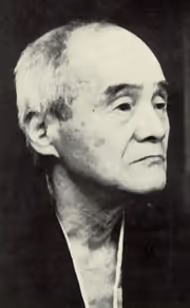
Tanabe was a key member of what has become known in the West as the Kyoto School, alongside philosophers Kitarō Nishida (also Tanabe's teacher) and Keiji Nishitani. He taught at Tōhoku Imperial University beginning in 1913 and later at Kyōto Imperial University, and studied at the universities of Berlin, Leipzig, and Freiburg in the 1920s under figures such as Edmund Husserl and Martin Heidegger. In 1947 he became a member of the Japan Academy, and in 1950 he received the Order of Cultural Merit.
Biography
Tanabe was born on February 3, 1885, in Tokyo to a household devoted to education. His father, the principal of Kaisei Academy, was a scholar of Confucius, whose teachings may have influenced Tanabe's philosophical and religious thought. Tanabe enrolled at Tokyo Imperial University, first as a mathematics student before moving to literature and philosophy. After graduation, he worked as a lecturer at Tohoku University and taught English at Kaisei Academy.
In 1916, Tanabe translated Henri Poincaré’s La Valeur de la Science. In 1918, he received his doctorate from Kyoto Imperial University with a dissertation entitled ‘Investigations into the Philosophy of Mathematics’ (predecessor to the 1925 book with the same title).
In 1919, at Nishida’s invitation, Tanabe accepted the position of associate professor at Kyoto Imperial University. From 1922 to 23, he studied in Germany — first, under Alois Riehl at the University of Berlin and then under Edmund Husserl at the University of Freiburg. At Freiburg, he befriended the young Martin Heidegger and Oskar Becker. One can recognise the influence of these philosophers in Tanabe.
In September 1923, soon after the Great Kantō Earthquake, the Home Ministry ordered his return, so Tanabe used the little time he had left — about a couple of months — to visit London and Paris, before boarding his return ship at Marseille. He arrived back in Japan in 1924.
In 1928, Tanabe translated Max Planck’s 1908 lecture, ‘Die Einheit des physikalischen Weltbildes’ for the Philosophical Essays [哲学論叢] translation series, which he co-edited, for his publisher Iwanami Shoten.
After Nishida's retirement from teaching in 1928, Tanabe succeeded him. Though they began as friends, and shared several philosophical concepts such as the absolute nothing [絶対無], Tanabe became increasingly critical of Nishida's philosophy. Many of Tanabe's writings after Nishida left the university obliquely attacked the latter's philosophy.
In 1935, Tanabe published his essay The Logic of Species and the World Schema wherein he formulated his own ‘logic of species’ for which he became known.
During the Japanese expansion and war effort, Tanabe worked with Nishida and others to maintain the right for free academic expression. Though he criticized the Nazi-inspired letter of Heidegger, Tanabe himself was caught up in the Japanese war effort, and his letters to students going off to war exhibit many of the same terms and ideology used by the reigning military powers. Even more damning are his essays written in defense of Japanese racial and state superiority, exploiting his theory of the logic of species to herald and abet the militaristic ideology. This proposed dialectic argued that every contradictory opposition is to be mediated by a third term in the same manner a species mediates a genus and an individual.
During the war years, however, Tanabe wrote and published little, perhaps reflecting the moral turmoil that he attests to in his monumental post-war work, Philosophy as Metanoetics. The work is framed as a confession of repentance (metanoia) for his support of the war effort. It purports to show a philosophical way to overcome philosophy itself, which suggests that traditional Western thought contained seeds of the ideological framework that led to World War II.
His activities, and the actions of Japan as a whole, haunted Tanabe for the rest of his life. In 1951, he writes:
But as the tensions of World War II grew ever more fierce and with it the regulation of thinking, weak-willed as I was, I found myself unable to resist and could not but yield to some degree to the prevalent mood, which is a shame deeper than I can bear. The already blind militarism had led so many of our graduates precipitously to the battlefields; among the fallen were more than ten from philosophy, for which I feel the height of responsibility and remorse. I can only lower my head and earnestly lament my sin.
He lived for another eleven years after writing these words, dying in 1962 in Kita-Karuizawa, Japan.
Sign in to keep reading
One more chapter is free with a Lably account.
Thought
As James Heisig and others note, Tanabe and other members of the Kyoto School accepted the Western philosophical tradition stemming from the Greeks. This tradition attempts to explain the meaning of human experience in rational terms. This sets them apart from other Eastern writers who, though thinking about what life means and how best to live a good life, spoke in religious terms.
Although the Kyoto School used Western philosophical terminology and rational exploration, they made these items serve the purpose of presenting a unique vision of reality from within their cultural heritage. Specifically, they could enrich a discussion of the ultimate nature of reality using the experience and thought of various forms of Buddhism like Zen and Pure Land, but embedded in an analysis that calls upon conceptual tools forged and honed in western philosophy by thinkers ranging from Plato to Descartes to Heidegger.
Tanabe's own contribution to this dialog between Eastern and Western philosophy ultimately sets him apart from the other members of the Kyoto School. His radical critique of philosophical reason and method, while stemming from Immanuel Kant and Søren Kierkegaard, which emerges in his work Philosophy as Metanoetics, easily sets him as a major thinker with a unique position on perennial philosophical questions. Some commentators, for example, suggest that Tanabe's work in metanoetics is a forerunner of deconstruction.
Tanabe engaged with philosophers of Continental philosophy, especially Existentialism. His work is often a dialogue with philosophers like Kierkegaard, Friedrich Nietzsche, and Heidegger. Because of his engaging these thinkers, especially the first two, Tanabe's thought has been characterized as Existentialist, though Makoto Ozaki writes that Tanabe preferred the terms "existentialist philosophy of history", or "historical existentialism". In his masterpiece, Philosophy as Metanoetics, Tanabe characterized his work as "philosophy that is not a philosophy", foreshadowing various approaches to thinking by deconstructionists.
Like other existentialists, Tanabe emphasizes the importance of philosophy as being meaning; that is, what humans think about and desire is finding a meaning to life and death. In company with the other members of the Kyoto School, Tanabe believed that the foremost problem facing humans in the modern world is the lack of meaning and its consequent Nihilism. Jean-Paul Sartre, following Kierkegaard in his Concept of Anxiety, was keen to characterize this as Nothingness. Heidegger, as well, appropriated the notion of Nothingness in his later writings.
The Kyoto School philosophers believed that their contribution to this discussion of Nihilism centered on the Buddhist-inspired concept of nothingness, aligned with its correlate Śūnyatā. Tanabe and Nishida attempted to distinguish their philosophical use of this concept, however, by calling it Absolute Nothingness. This term differentiates it from the Buddhist religious concept of nothingness, as well as underlines the historical aspects of human existence that they believed Buddhism does not capture.
Tanabe disagreed with Nishida and Nishitani on the meaning of Absolute Nothingness, emphasizing the practical, historical aspect over what he termed the latter's intuitionism. By this, Tanabe hoped to emphasize the working of Nothingness in time, as opposed to an eternal now. He also wished to center the human experience in action rather than contemplation, since he thought that action embodies a concern for ethics whereas contemplation ultimately disregards this, resulting in a form of monism, after the mold of Plotinus and Georg Wilhelm Friedrich Hegel. That is, echoing Kierkegaard's undermining in Philosophical Fragments of systematic philosophy from Plato to Baruch Spinoza to Hegel, Tanabe questions whether there is an aboriginal condition of preexisting awareness that can or must be regained to attain enlightenment.
Tanabe's insistence on this point is not simply philosophical and instead points again to his insistence that the proper mode of human being is action, especially ethics. However, he is critical of the notion of a pre-existing condition of enlightenment because he accepts the Kantian notion of radical evil, wherein humans exhibit an ineluctable propensity to act against their own desires for the good and instead perpetrate evil.
Tanabe's Demonstration of Christianity presents religion as a cultural entity in tension with the existential meaning that religion plays in individual lives. Tanabe uses the terms genus to represent the universality of form that all entities strive for, contrasting them with the stable, though ossified form they can become as species as social systems.
Tanabe contraposes Christianity and Christ, represented here as the opposition between Paul and Jesus. Jesus, in Tanabe's terms, is a historical being who manifests the action of Absolute Nothingness, or God understood in non-theistic terms. God is beyond all conceptuality and human thinking, which can only occur in terms of self-identity, or Being. God becomes, as manifested in human actions, though God can never be reduced to being, or self-identity.
For Tanabe, humans have the potential to realize compassionate divinity, Nothingness, through continual death and resurrection, by way of seeing their Nothingness. Tanabe believes that the Christian Incarnation narrative is important for explaining the nature of reality, since he believed Absolute Nothingness becoming human exemplifies the true nature of the divine, as well as exemplar to realization of human being in relationship to divinity. Jesus signifies this process in a most pure form, thereby setting an example for others to follow.
Ultimately, Tanabe chooses philosophy over religion, since the latter tends toward socialization and domestication of the original impulse of the religious action. Philosophy, understood as metanoetics, always remains open to questions and the possibility self-delusion in the form of radical evil. Therefore, Tanabe's statement is a philosophy of religion.